

The Ideal Soil Type That Helps Your Indoor Pothos Plant Thrive
We may receive a commission on purchases made from links.
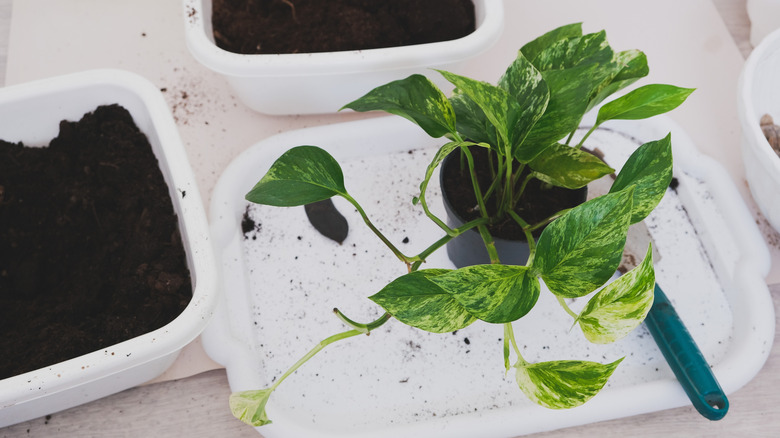
While online searches may or may not be an indication of popularity, pothos (Epipremnum aureum) could easily be considered one of the most researched houseplants. Few indoor gardeners would deny that it's a low-maintenance classic as far as houseplant species go, taking its place alongside ZZ plants, snake plants, spider plants, and the like. You've probably seen at least one pothos plant that has grown so large over the years that its vines trail gloriously across an entire wall or cascade down a bookshelf. While the plant may be enduringly popular, not everyone knows how to care for it. While it's not that fussy, it does prefer rich, well-draining, slightly acidic to neutral soil. An amended potting soil is ideal.
Pothos is considered a low-maintenance houseplant, making it an appropriate choice for beginners. If you're going to put your energy anywhere, it should be on the soil your plant is growing in. Nutrients, aeration, the correct pH level, and moisture retention are key requirements for this vine, along with good drainage that most houseplants need. Pothos is native to the tropical forests of the Society Islands in the South Pacific, and it thrives in a potting mix that mimics natural humus. This forest floor soil layer is rich in organic matter. Thankfully, you don't have to go island hopping to change your indoor plants' soil — you can make it at home with a few amendments.
Create a pothos soil mix that emphasizes nutrients, aeration, and moisture
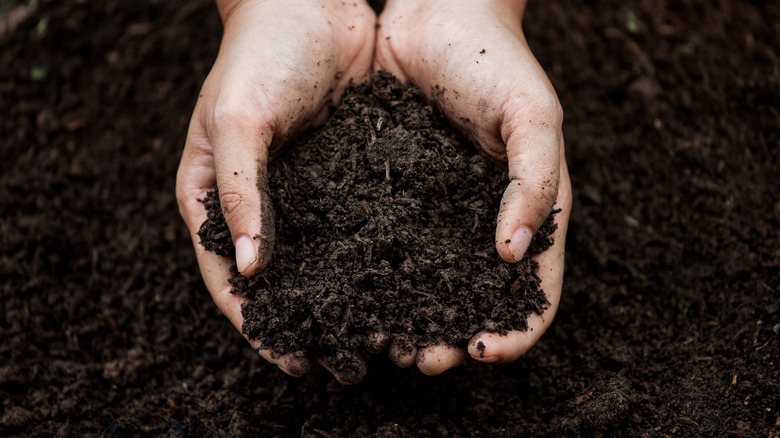
Start with a base of peat moss, such as Old Potters Organic Peat Moss, or general-purpose potting mix — something simple and widely available, like Miracle-Gro Indoor Potting Mix. Both will help your pothos plant retain moisture. For aeration and to keep the roots from rotting, consider adding perlite, vermiculite, tree bark, coconut husk chips, or sand. Perlite and vermiculite also aid drainage. Next, you need to add nutrients to the soil, ideally using organic materials — worm castings or biochar are good choices. Once you've created your bespoke pothos soil mix, you need to test your soil's pH levels using a Tadeto Digital pH Meter for Soil. Pothos prefers a pH range of 6 to 7, which is neutral to slightly acidic. If the soil is too alkaline, you can lower the pH by adding more organic material.
The right soil will get a new pothos off to a good start. However, it could also help a struggling vine you've had for a while. You need to repot your pothos plant at least every two to three years or whenever it shows signs of soil problems, such as yellowing leaves or stems, wilting, rotting roots, roots growing out of the drainage holes, or an overall lack of growth. Take this opportunity to switch out the old soil for your new, specially formulated pothos potting mix. It should prevent soil-related issues in new plants and remediate them in repotted plants — especially if your pothos is suffering from root rot or a lack of aeration.