

12 Easy Suet Recipes To Attract A Variety Of Birds
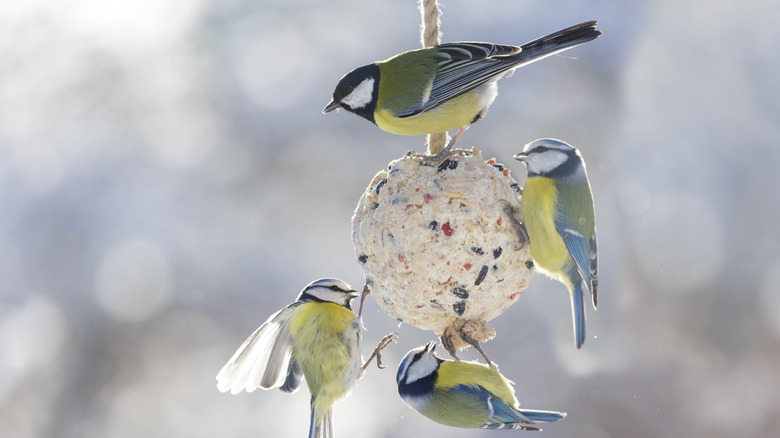
When winter blues hit and the garden looks bleak, encased in snow and bare branches, consider feeding the birds. These feathered visitors bring movement and color to the landscape as they brave the cold in search of food. While seeds work year-round, switching to suet in winter can be more beneficial. Suet, the fat trimmed from the loins and kidneys of sheep or cows, is one of the best foods to keep birds in your yard happy during the winter. It is rich in calories and fat, helping birds maintain body heat during cold weather.
Although you can buy suet cakes from bird feeding stores, it can get expensive. Plus, they often include filler seeds like flax or red millet that most birds will ignore, leading to waste. Preparing suet at home lets you customize the ingredients based on the birds common to your neighborhood, thus attracting a wider variety of birds. Traditionally, suet was sourced from a butcher shop, though that practice is less common today. Many recipes substitute suet with lard, beef tallow, or vegetable shortening. However, these substitutes tend to soften sooner when temperatures rise, making them unsuitable in warm climates.
With beef tallow, you must "render" it to sterilize it and prevent it from going rancid. To render it, melt the fat over low heat until only solid gray pieces remain. Sieve them out on a cheesecloth and allow the melted liquid to cool. As for shortening, avoid those made from palm oils. These hydrogenated oils have a low melting point, which means they go bad faster after sun exposure. Ingredients such as peanuts, cornmeal, and cracked corn can harbor bacteria if left out too long, so use them sparingly. Use them in limited quantities and keep the suet cakes containing them frozen until ready to use.
Sweetened lard mix
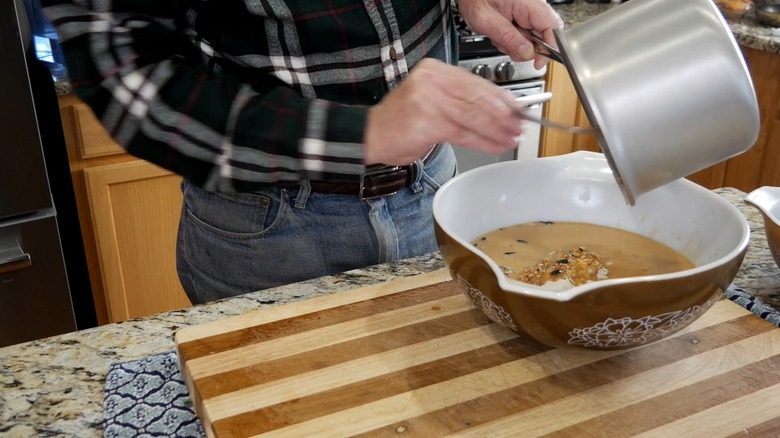
The National Gardening Association offers an easy suet recipe involving equal parts of lard and peanut butter. Melt these two together over medium heat, then stir in an equal amount of all-purpose flour. As the mixture heats up, add 2 cups each of cornmeal and oats. Finally, sweeten it with ¼ cup of sugar. Take the pan off the heat, pour the mixture on a tray, and refrigerate. Once it cools, cut it into thin cakes to place inside suet feeders. You may customize this recipe by adding raisins (after soaking overnight), nuts, or birdseed, especially sunflower seeds, if available.
Suet + corn mix
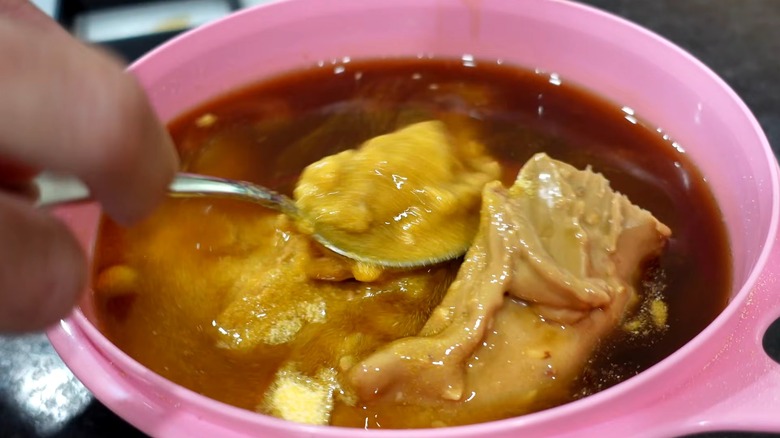
Year-round residents, such as cardinals, jays, and finches, enjoy morsels of cracked corn. You can supplement their diet by adding ground cornmeal or cracked corn to suet cakes. Start by melting 2 cups of lard over low heat. Once liquid, mix in 1 cup of peanut butter and 2 cups of cornmeal. Combine and let the mixture sit. Later, pour it into a can or tray and refrigerate. Cut into cakes and add a couple to the feeder. Wrap the remaining cakes in plastic wrap and freeze until ready to use. Be warned, this mix may also attract nuisance birds like grackles and starlings.
Suet + dry fruits
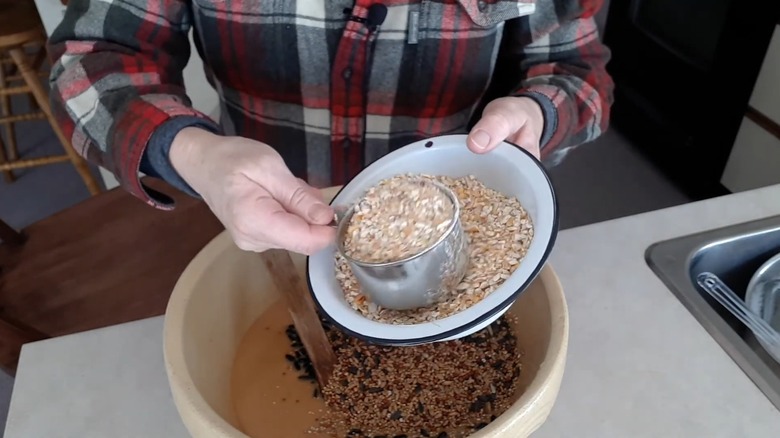
Woodpeckers and bluebirds enjoy their fair share of fruit. The same goes for orioles, which seek them out in early spring when they're migrating. If they're active in your area, consider adding dried fruits such as apples, grapes, oranges, melons, or berries to the suet recipe if available. For a big batch, melt 4 cups of lard over low heat. Pour in 2 cups each of peanut butter, unsalted peanuts, and cracked corn, along with 5 cups of mixed seeds. On top, add 2 cups of chopped apples and 4 cups of cranberries. Freeze and serve as needed.
Suet + millets mix
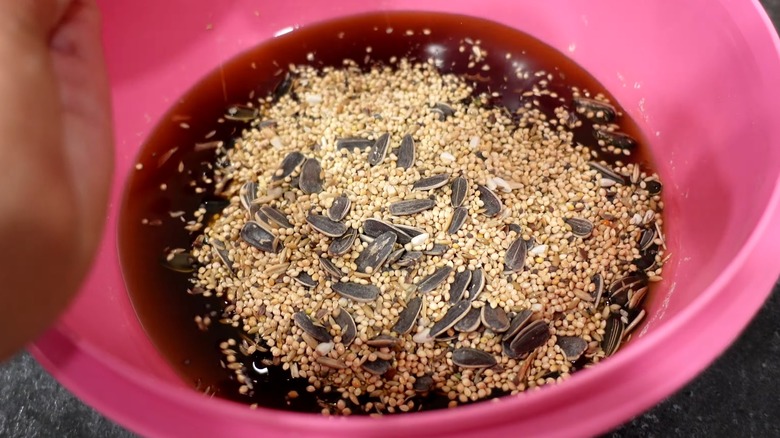
If ground-feeding birds, such as native sparrows, jays, juncos, doves, towhees, cardinals, buntings, or finches, visit your yard, consider juicing up suet cakes with white proso millet. To prepare this recipe, melt 1 pound of tallow or lard until it is fully liquefied. Pour in 1 cup of white proso millets (avoid red or golden millet, as many birds do not favor it). You can also add 1 cup each of sunflower seeds and raisins that were soaked overnight. Refrigerate the mix for a few hours, then slice and leave a few cakes on the ground or on pinecones.
No-melt suet
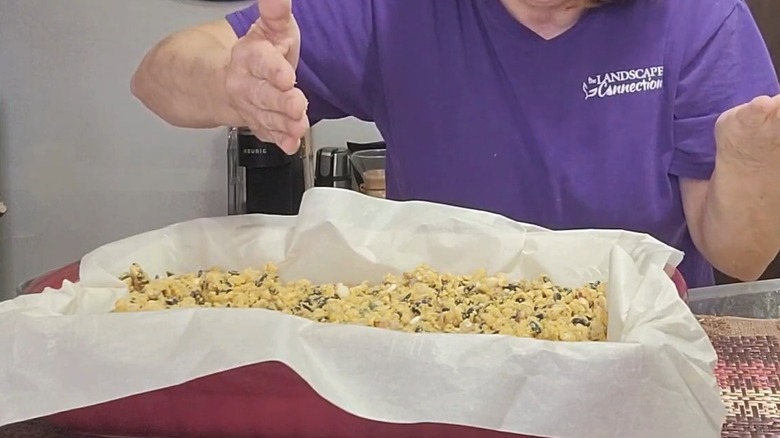
Suet cakes can become runny and clog the feeders in mild weather. To prevent this, create no-melt suet cakes, which retain their form for longer and can be safely frozen for up to six months. Microwave 1 cup of lard to liquify it. Next, pour in 1 cup of crunchy peanut butter and 2½ cups each of quick-cook oats and cornmeal, and mix well. Continue adding birdseed until the mixture is as thick as a Rice Krispies treat. Press the mix in a cake pan pre-lined with parchment paper and let it sit in the freezer overnight.
Vegetarian suet
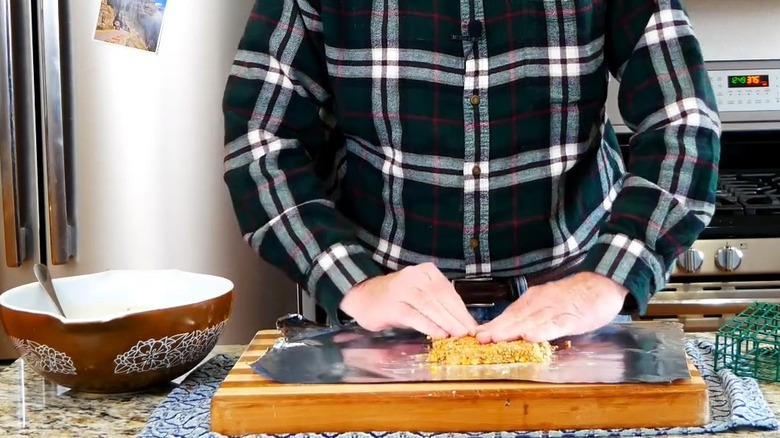
If you don't have animal fat handy, you can still make a lipid-rich meal for your backyard visitors, like woodpeckers and nuthatches, using palm oil-free shortening. Melt and mix 1½ cups of shortening and ¾ cups of nut butter until they're a gooey mix. Top it up with ½ cup of cornmeal, 1 cup of oats, and 3½ cups of birdseed. Stir the mixture well, then pour it into ice trays. Freeze for a couple of hours and fill the suet feeders as needed. Be aware, this mixture can spoil if temperatures rise above 50 degrees Fahrenheit.
Marvel Meal
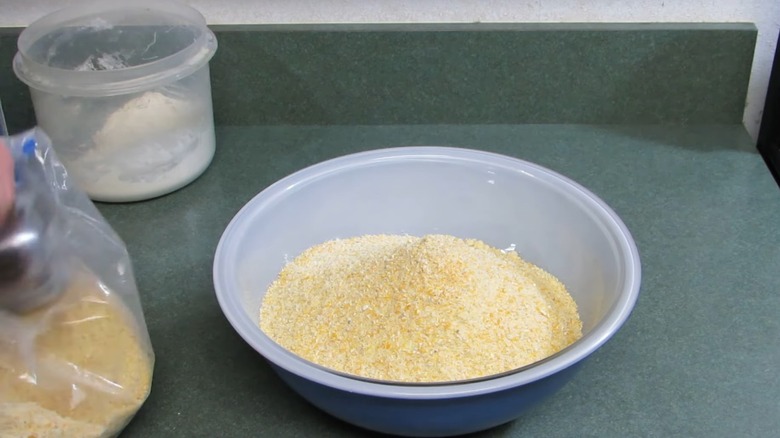
Developed by PennState Extension, "Marvel Meal" is another homemade treat that will have birds flocking to your yard, and one that your kids might enjoy making. For this recipe, add 1 cup each of peanut butter, flour, and vegetable shortening (preferably without palm oil) in a bowl. Add 4 cups of cornmeal and any leftover sunflower seeds or mealworms. After mixing well, spread the mixture onto the bark or into the cavities of trees and shrubs. Alternatively, freeze the mixture, cut it into cakes and place them on a platform feeder or inside log feeders.
Gelatin-based suet cake
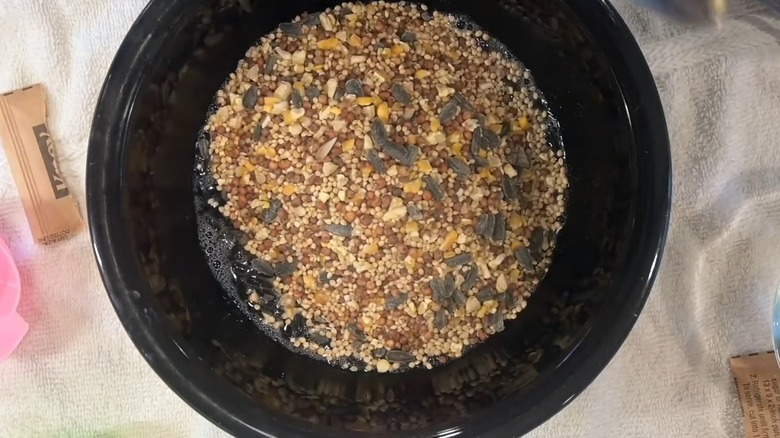
This recipe is a homemade knockoff of nutsie suet cakes, which substitute gelatin for lard (or vegetable shortening), but attract a similar variety of birds. First, you'll melt 14 grams of unflavored gelatin in ¼ cup of water over a low flame. Then sprinkle about 1¼ cups of your choice of birdseed, including extra sunflower seeds, which are nutrient-rich. Also include nuts if you've got woodpeckers around. After ensuring they've combined well, spoon the sticky mix into trays for hardening. You can place the hardened cakes in feeders after about a day.
No-crumbling, full-meal suet
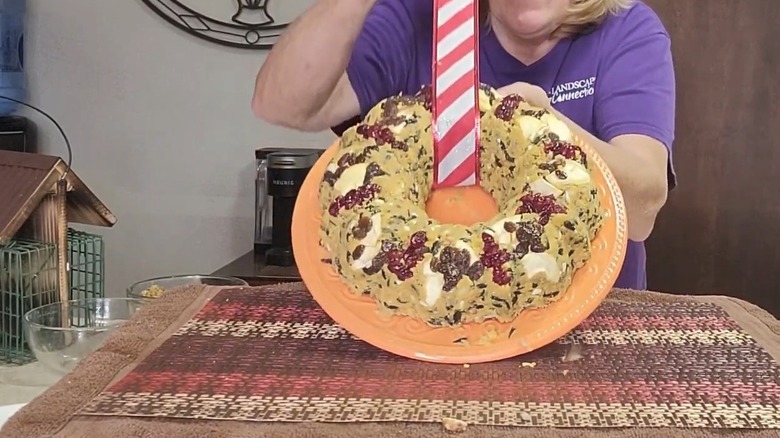
If you don't want to invest in a separate feeder but would still like to host a large flock, try a suet wreath. To create a solid binder, dissolve a pack of gelatin in ½ cup of water. Next, add 1 cup each of melted lard and peanut butter. Add in ½ cup of all-purpose flour, 3 cups of cornmeal, 4 cups of birdseed, and some dried fruits. Continue mixing until it has a cookie dough-like texture. Pour it 2 inches high in a Bundt pan and freeze overnight. Add a metal bracket between the layers to prevent the cake from disintegrating when birds peck it.
Chick starter-based suet (or Zick dough, improved)
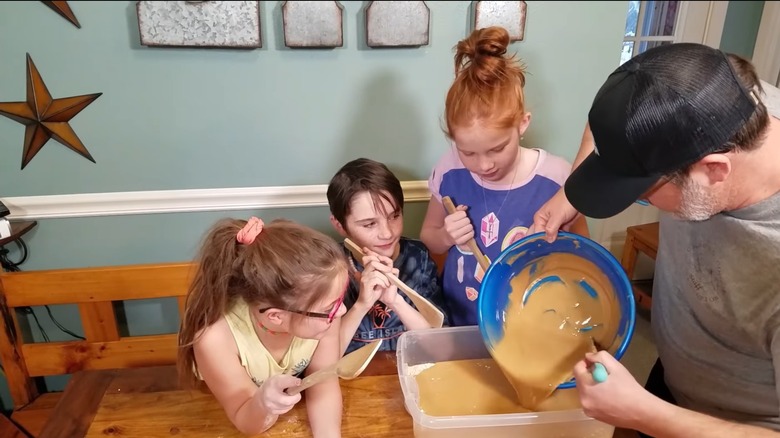
If birds aren't getting enough nutrition from suet alone, reinforce it with unmedicated chick starter, a calcium source that supports metabolism. Melt 1 cup each of lard and peanut butter, then pour over dry ingredients: 2 cups each of chick starter and quick oats, 1½ cups of cornmeal, and 3 cups of white flour. Stir into a crumbly dough and divide into 12 pieces. Offer no more than half a piece daily and freeze the rest. Use only when temperatures stay below 55 degrees Fahrenheit and place in covered feeders, such as those with plexiglass domes, to help prevent spoilage.
Suet + mealworms
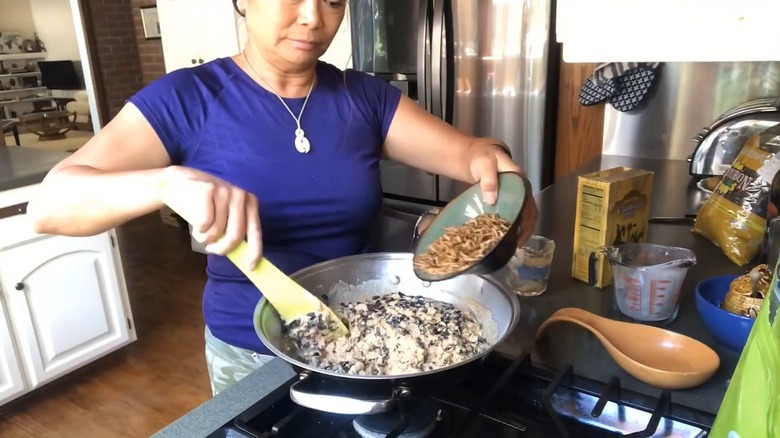
If bluebirds are present in your area during winter, you can support them by adding mealworms to suet recipes. For that, you must start with ¼ cup of beef tallow that you've rendered over a low or medium flame. Top up with ½ cup of mealworms, ensuring they're fully coated. Add in ¼ cup of crunchy peanut butter and twice as many frozen blueberries. You can also include raisins, cornmeal, unsalted peanuts, birdseed, or crushed eggshells, after boiling them, to attract other birds. Freeze for a couple of hours before serving.
Bluebird banquet
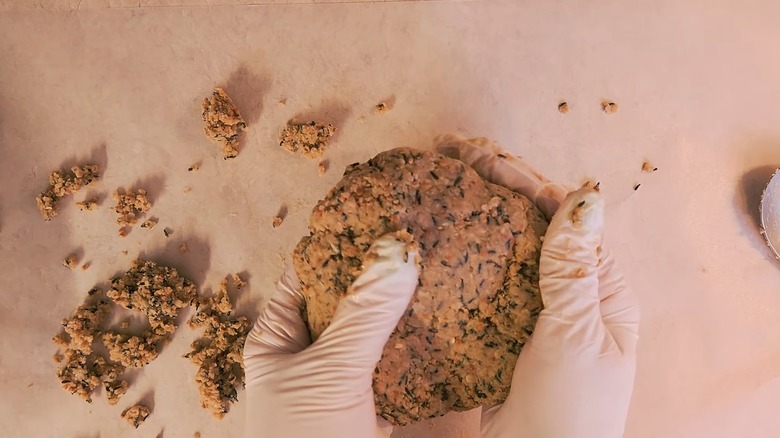
If you don't wish to deal with mealworms, you can use berries to attract bluebirds and other suet consumers. As usual, take 1 cup of softened suet. Mix in 1 cup each of white flour, peanut butter, sunflower seeds, and finely ground nuts. Based on what you have on hand, add 1 cup of raisins, cherries, or currants that were soaked overnight and then chopped. Also, add 4 cups of ground cornmeal. Make sure you have a dry, crumbly mix, and divide it into small pellets, as bluebirds prefer that form. Freeze the rest for later.