

Keep A Used Caulking Tube Fresh With An Essential You May Have On Hand
We may receive a commission on purchases made from links.
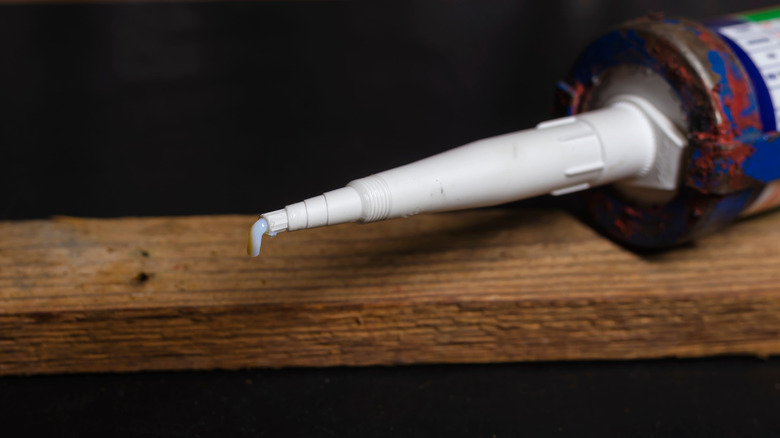
Caulk is an essential item for many DIY and construction projects because it can seal small gaps or spaces to make them airtight and help them appear visually flawless. However, finishing your project at the same time as you finish your container of caulk doesn't always happen, so it is likely that you will end up with a half-empty tube when you're done caulking. As such, you may be tempted to throw the whole tube away — once the tip has been cut off to begin the flow of caulk, the rest of the contents will dry out if left exposed to the air. This is because the oxygen will trigger the curing process, causing it to get hard inside the tube. But, tossing a tube of caulk can be frustrating, particularly if you are working on a budget or only used a small portion of the container. Electric tape could be the solution.
While plenty of tips and tricks have been suggested to re-seal a tube of caulk, there is one material that you may already have in your garage or junk drawer that's perfectly suited to this task. Rather than some other types of tape, which can allow a certain amount of oxygen through, electrical tape (especially self-fusing tape) is actually a super helpful alternative since it can be essentially airtight. This means that it will keep the contents of the tube moist and prevent the caulk from drying out. If you don't already have electrical tape lying around, you may want to consider grabbing some X-Treme self-fusing electrical tape because it is useful both for storing a caulk tube so it doesn't dry out as well as a range of other DIY tasks. So, how can you use electrical tape to seal your caulk?
How to place electrical tape over an opened caulk tube
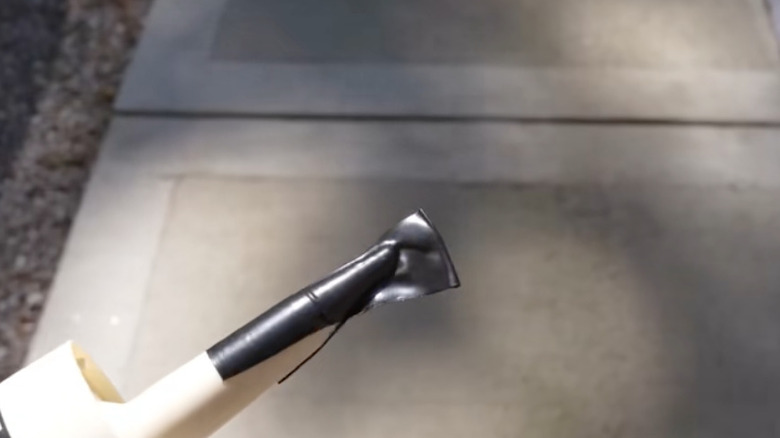
Putting tape over the end of a nozzle may seem like a straightforward task. However, if your goal is to store your caulk for an indefinite period, you need to make sure that no air is able to filter into the tube and dry out the material inside. As such, simply wrapping the end of the opened nozzle with tape won't cut it. This is because the end of the tape coil is likely to have little gap at the end, allowing oxygen to enter over time. Instead, try laying the tape over the nozzle in line with the tube, then folding it over so that the opening is covered by the crease. After that, press firmly around the nozzle so that the tape binds to itself and creates a seal.
One of the benefits of using this method is that it is relatively mess-free. While some hacks suggest hot glue, petroleum jelly, or candle wax, these can be difficult to apply to the end of the nozzle and hard to remove once you're ready to begin caulking again. By creating a handy tab of electrical tape, you can then easily remove in by pulling it until the tape detaches. This is certainly a handy way to use electrical tape around the house because it means you won't have to buy a new tube of caulk every time you start a project, saving you money and reducing waste at the same time. To help make caulk last in the tube after it has been opened for as long as possible, store your taped-up container in an upright position in a location that is not likely to experience extreme temperatures.