

12 Beautiful Trailing "String Of" Plants To Decorate Your Home
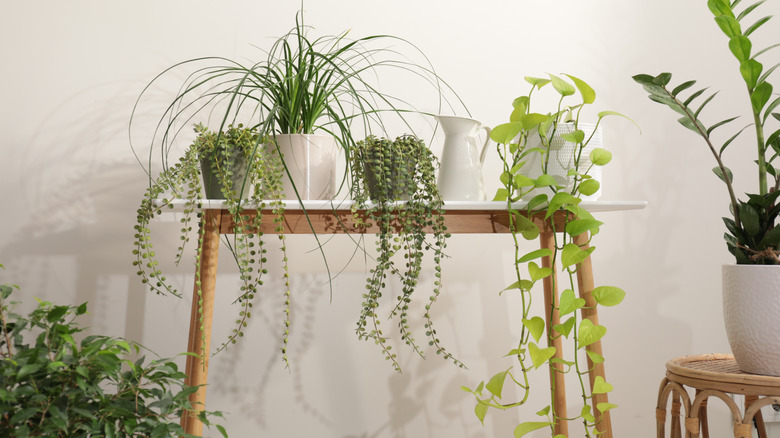
Houseplants are one of the best ways to style a home. Not only do they instantly lift the look of a room, but they also bring a sense of calm, peace, and serenity to the living space. They come in nearly endless varieties, so there's a houseplant to match almost any design style. Just take a look at those "strings of" plants like string of pearls, string of buttons, string of hearts, and string of tears. They offer the look of ornamental strings or decorative beads, with the added appeal of living, growing foliage. That said, don't sprint to the nursery just yet.
Instead, do your research first. Each plant has specific care requirements and preferred growing conditions. If you want your plant to thrive, those needs can't be ignored. Also, make sure to check the botanical names to avoid confusion. Many share common names and look similar. And lastly, since all of these plants are succulents, they will need well-draining soil to grow. So either get a quality potting mix or just DIY your own succulent soil. Honestly, it's pretty easy!
String of hearts
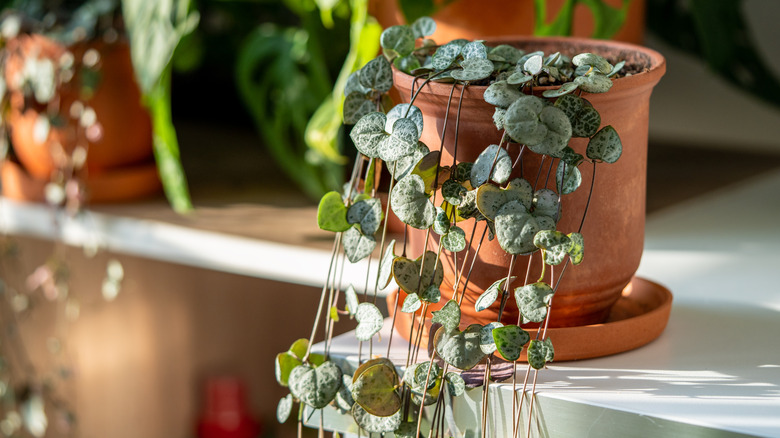
If there is one succulent that makes a thoughtful gift for decorating their home, it is probably the strings of hearts (Ceropegia woodii). The plant has heart-shaped leaves and delicate, vining stems that can grow as long as 3 to 10 feet. It is best to grow it in hanging baskets and shelves for a classy cascading look. String of hearts is also really easy to care for, is available readily in plant shops, and even comes in variegated varieties.
String of pearls
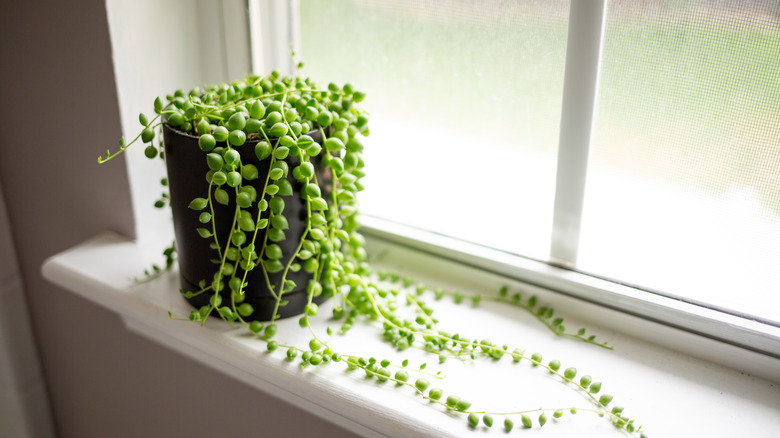
String of pearls (Senecio rowleyanus) is another popular hanging succulent and a favorite of many plant collectors. And for good reason, it features beautiful, pea-like leaves that grow on trailing stems, creating a mesmerizing spiller look when grown in hanging baskets. You can also grow it in a flat dish to create a mat-look (its natural growth habit in the wild). Just make sure you know how to water the string of pearls properly. Overwatering is one of the most common reasons it fails indoors.
String of buttons
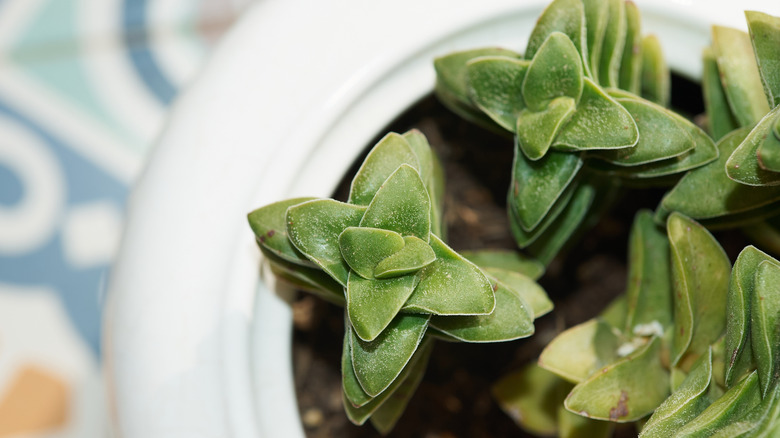
If you know anything about succulents, you must know that they are generally slow growers. String of buttons (Crassula perforata), however, is a cute exception. It grows relatively quickly, with leaves arranged in tight spirals along the stems, one on top of the other, creating a stacked look. You can put it in terrariums, shelves, or in a pot hanger to decorate your home. Just don't use a small container. Strings of buttons grow about 3 feet wide and may become overcrowded in small pots.
String of tears
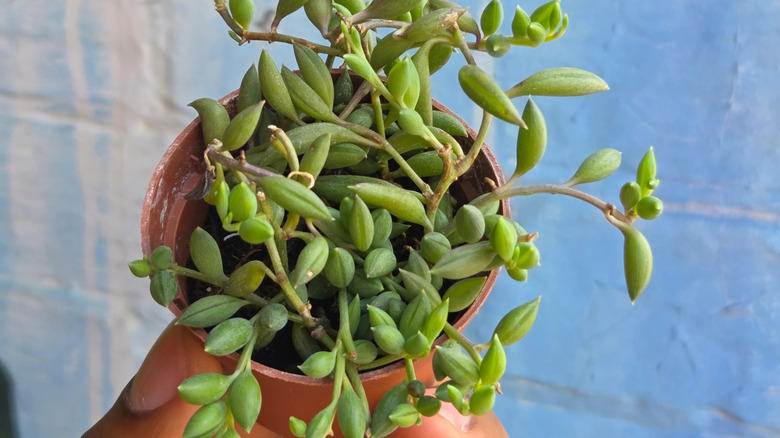
Next on the list, we have the string of tears (Curio citriformis). It is native to southern Africa and has teardrop-shaped leaves. The leaves have a blue-green tint, which often intensifies as the weather cools down. The string of tears has creeping stems and flowers as well. The blooms look like daisies and appear in early winter. As for its uses, you can put it alone in a pot or mix it with other succulents. Just don't grow it in a dimly lit area, or it will get leggy.
String of dolphins
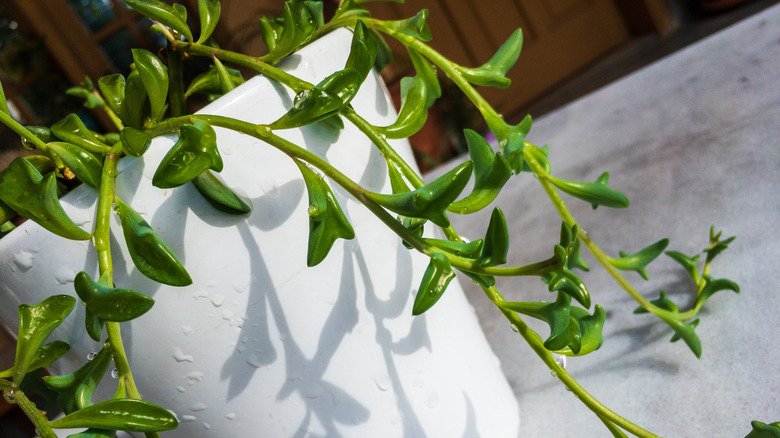
Do you want a plant that sparks conversation? Then, the string of dolphins (Senecio peregrinus) is definitely worth a look. It is a favorite among houseplant enthusiasts, thanks to its unique-looking leaves that look like leaping dolphins. You can put it on the corner of a stair rail or on a bookshelf. Also, just like a string of tears, it flowers as well. The flowers, however, are pretty small, but they do have a spicy and sweet scent.
String of fishhooks
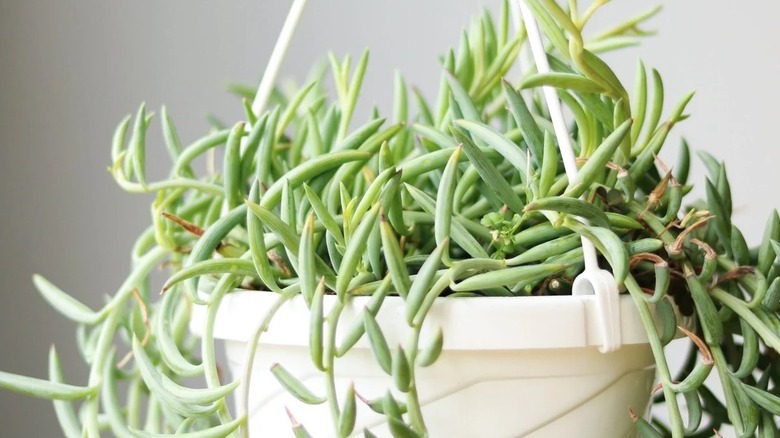
Another eye-grabbing plant is the string of fishhooks (Senecio radicans). If you haven't already guessed by its name, the leaves of a string of fishhooks have a curved, pointy appearance that makes them look like little fishhooks. The leaves are also somewhat translucent and grow on trailing stems. You can put it in containers hung from the wall near windows to decorate your home. However, it is toxic, so keep it away from pets.
String of needles
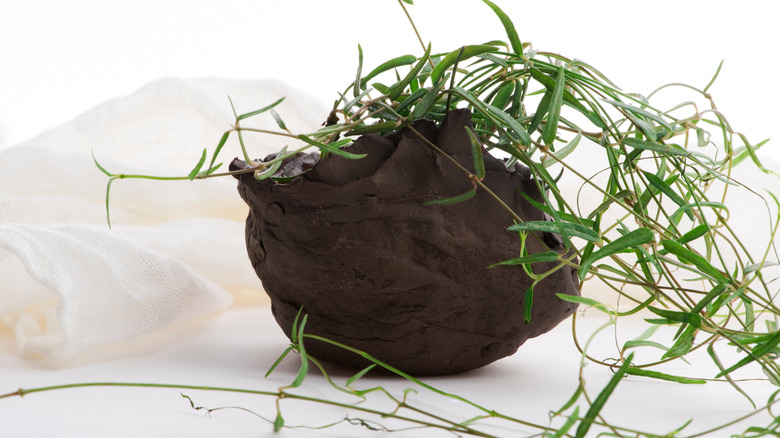
A string of needles (Ceropegia linearis) features slender, needle-like leaves scattered across its trailing stems, creating an elegant look that works well in vertical displays or hanging pots. It also produces flowers. The pink to purple flowers have a trumpet shape and appear on the plant in summer. Just make sure to plant it in a spot with filtered yet bright sunlight and don't water it too much.
String of turtles
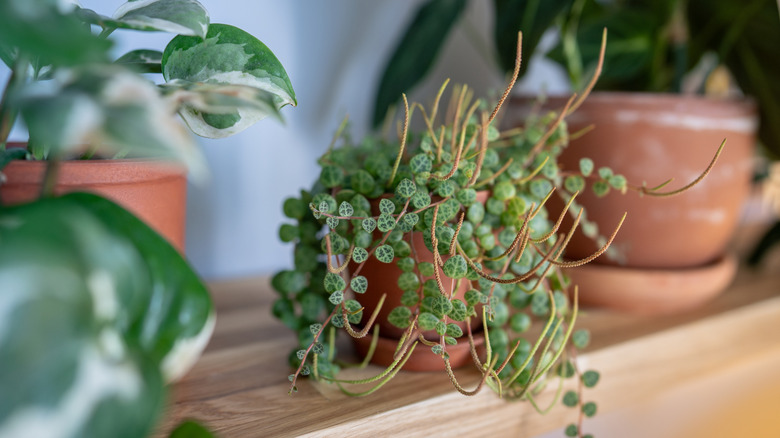
The string of turtles (Peperomia prostrata) is a low-growing, trailing succulent. Its green leaves have silver-white marbling that makes them look like turtle shells, giving the plant its name. Keep in mind that it grows very slowly, taking about 3 to 5 years to mature. If you are looking for fast-growing succulent plants, you may want to take it off your list. However, its small, compact size makes it a very good choice to decorate homes or places with limited space.
String of watermelons
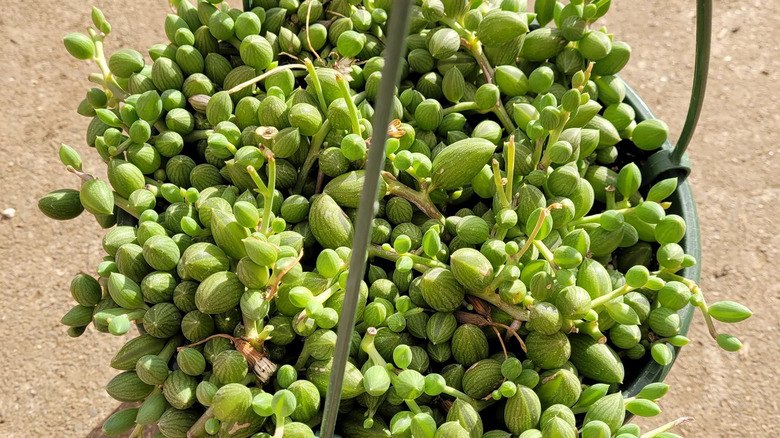
Just like the string of turtles, the string of watermelons (Senecio herreanus) also has striped leaves. However, its leaves are fleshier and look like tiny melons. It works well as a trailing accent in pots or hanging containers for a draping effect. Just don't keep it in direct sun, as this can cause its leaves to turn yellow and diminish its appearance. If it seems hard to find, try looking for it under another name, like string of beads or string of raindrops.
String of nickels
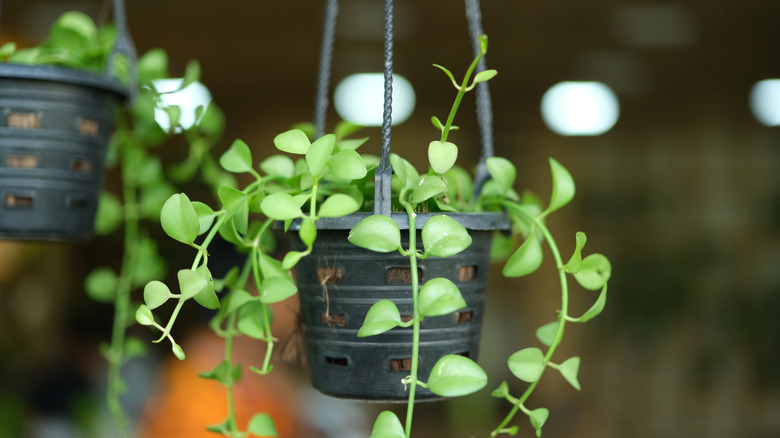
Money doesn't grow on plants, but nickels certainly do. Strings of nickel (Dischidia nummularia) is an epiphyte, which means it grows on other plants and gets its name from tiny, round, coin-like leaves. Its stems can grow about 3 meters long and have a cascading, trailing habit that works well when displayed on walls, in windows, or along shelves. Just make sure you keep it moist without overwatering.
String of rubies
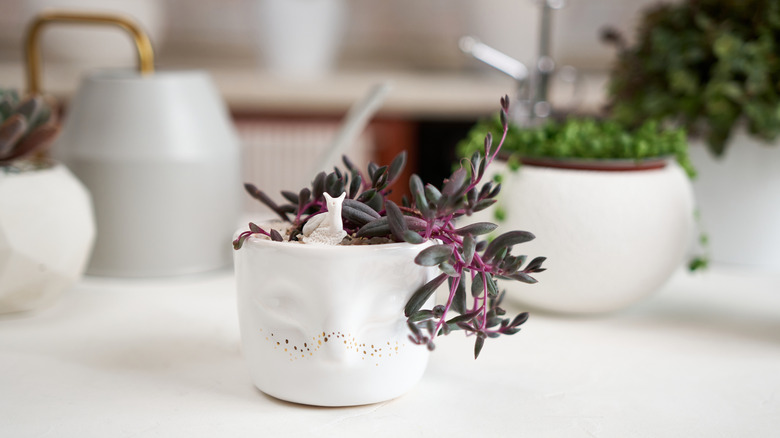
String of rubies (Othonna capensis) is another fast-growing succulent. It gets its name from the color-changing habit of its leaves, which turn from green to purple when the plant becomes dry or stressed. String of rubies also produces flowers, which are daisy-like and can appear throughout the year. You can place it in shelves, hanging baskets, or on tables and windowsills to decorate your home. Just trim it early in its growth cycle, which will help it grow fuller.
Stings of coins
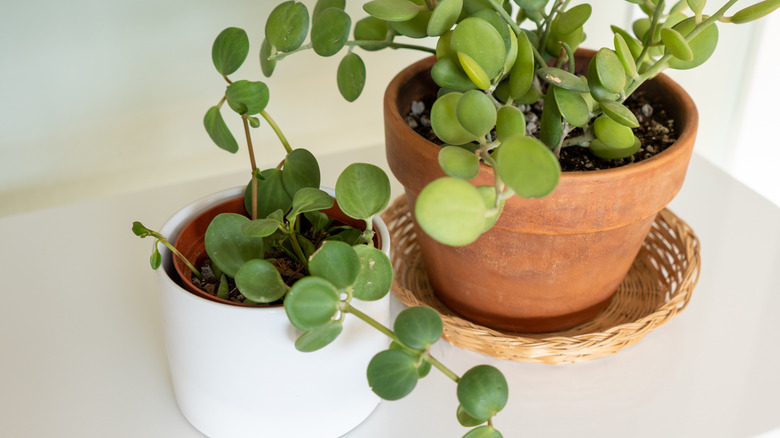
Last on the list is string of coins (Xerosicyos danguyi). It gets its name from its leaves, which develop a silvery tone as they mature and look like old coins. What makes it stand out are its stems with curly tendrils. If you give it something to climb, such as a pole, it will readily do so. However, if you just leave it alone, it will grow into a bushy form. Although it can tolerate some neglect, make sure to check it periodically, as the plant is susceptible to scale insects.