

How To Fertilize Roses In Late Winter For Bigger Spring Blooms
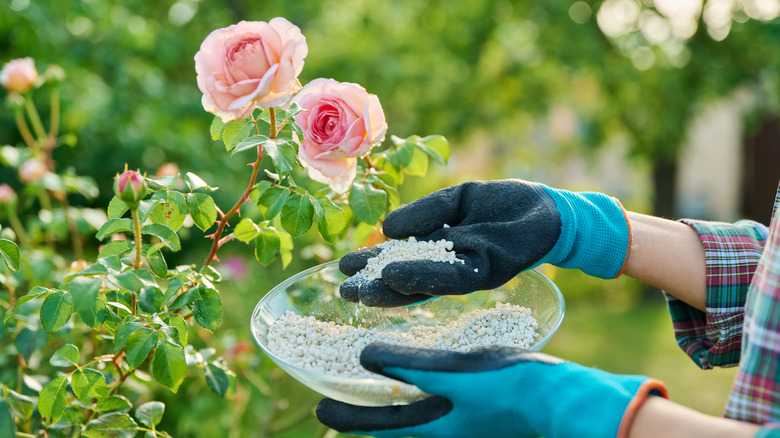
As the winter frost begins to thin out and the first hints of spring arrive, your roses are starting to stir beneath the soil. They may still look like dormant pokey sticks, but their root systems are actually preparing for a huge seasonal energy surge. This transitional period in late winter is the perfect time for gardeners to step in with fertilizer and give their roses some extra energy they can start using as soon as the soil warms up. It's a great way to get more blooms from your roses, and bigger ones, too. To apply fertilizer to your roses, spread it in a circle around each bush's base, and then water it down.
This proactive approach is the key to getting those heavy, magazine-worthy flushes of flowers. Before you even touch a bag of fertilizer, though, take a moment to clear away old mulch and any other debris from the area. This step stops any lingering fungal spores (like black spot) from hitching a ride on any new growth that's about to emerge.
Then, use a small hand rake to gently scuff the top inch of soil around the drip line (the space right under the bush's outermost stems). You aren't digging deep here, just breaking the surface crust so the fertilizer can fully reach the roots. Late-winter fertilization focuses less on immediate growth and more on giving your roses a head start; but you should also know when you can stop fertilizing roses too. It's all about helping the flowers build strong stems that'll support larger, heavier rose heads once the blooming season officially begins in early summer.
Choose the best fertilizer formula for bigger blooms
To get those coveted oversized blooms, you need to understand the numbers on the fertilizer bag you'll need to pick up. Roses are hardy across USDA Zones 5 to 11, and a slow-release formula that's balanced, such as a 10-10-10, is a good choice (that's 10% nitrogen, 10% phosphorus, and 10% potassium). You can also opt for a formula with slightly higher phosphorus, as phosphorus is the main driver for flower production and root development.
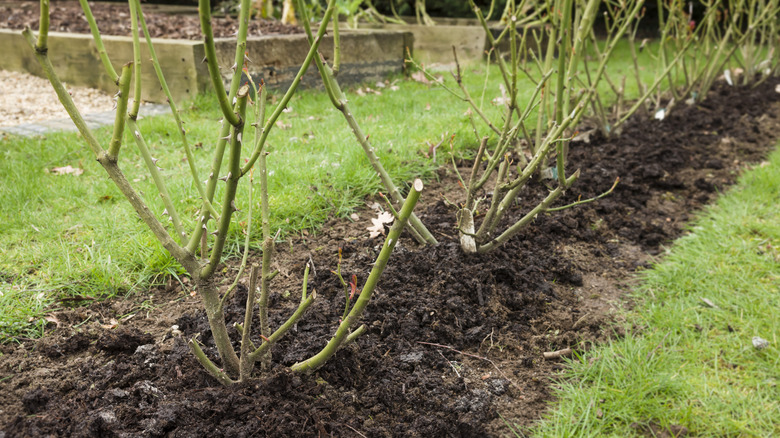
In addition to your fertilizer, or even in place of it, consider applying a layer of aged manure or compost. This will help improve the soil structure around your roses and allow a steady stream of nutrients. Apply your fertilizer in a circle around each bush's drip line. Also, avoid putting any directly against the woody canes; that can cause burn on the bark.
After spreading the fertilizer, the final step is to water the area thoroughly using a good watering method for your roses. A deep soak settles the nutrients into the earth and signals to the rose that it's time to start the growing process. If you expect a sudden hard freeze soon, wait a few days before starting, to keep the plant safe. With just a little bit of effort on your part in the cold air of late winter, you're helping to set the stage for a yard full of big, fragrant blossoms that your neighbors will be talking about for months.