

No Matter How Much You Clean It, This Is How Often You Should Replace A Doormat
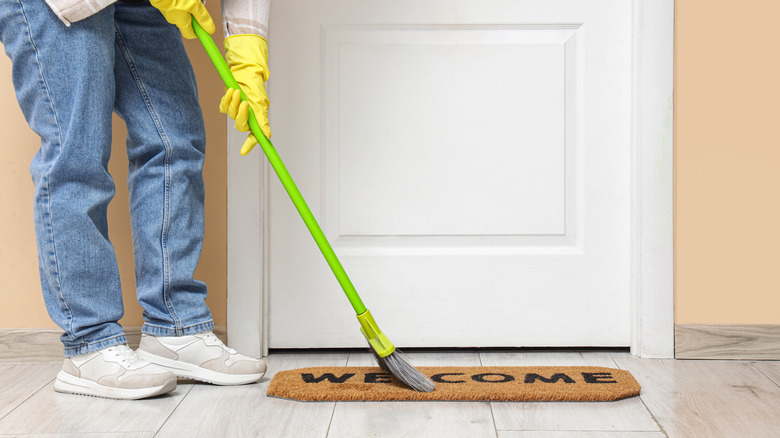
There are many common household products that don't get swapped out nearly often enough. Bathroom items like toilet seats and soap dispensers should be replaced a lot more than you think. Over in the kitchen, there are a number of signs that it's time to get a cutting board. And then you've got your doormats. Believe it or not, these tried and true entryway staples do not last forever — yes, even if you clean yours often. Your specific doormat's lifespan will depend on its location in your home and its material, some requiring replacement as quickly as every six months.
Doormats can keep our spaces clean and safe, stopping dirt, debris, and moisture from entering where we live and work. Putting a doormat in front of your front door can even prevent certain allergens from entering your home, and even increase the quality of your indoor air. As a doormat breaks down and flattens out over time, it not only loses its ability to catch allergens and dirt, but can become a breeding ground for mold. On top of that, a worn-out mat can become a tripping hazard. Even if you clean your doormat regularly, which should be anywhere from monthly to once a week, these items still gather a ton of grime and debris. It's important to not only regularly inspect the condition of your doormats, but replace them when the time comes. And that time may creep up faster than you expect.
Common types of doormats and how often you should replace them
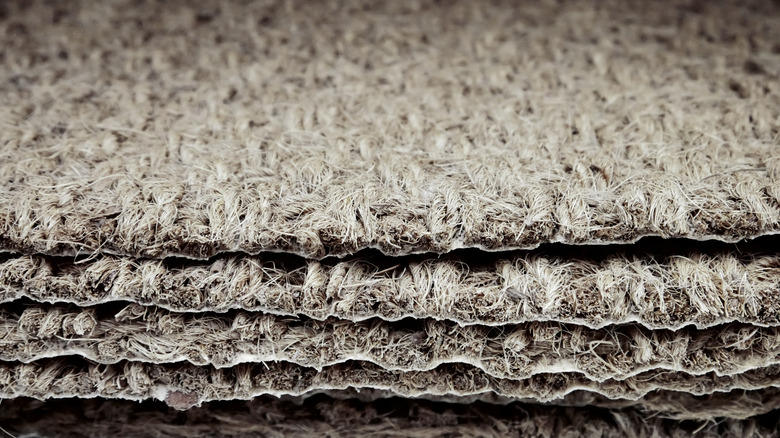
If you aren't sure what your doormat is made of, there's a good chance it's made of a natural material like coir. Coir is a popular material made from coconut husks, and the mats usually come in light brown and boast a tough texture. Some other natural mat materials include bamboo and jute. As dependable and durable as these materials are, they still require replacing every so often because they do wear down with use. You also may have a synthetic doormat, which can be made of polyester, rubber, or polypropylene. Indoor doormats are most often made of polyester.
Once you've determined the make of your doormat, consider its location. If it's in a high-traffic area of your home, like a front door, garage door, hallway, or mudroom, its lifespan will be significantly shorter than a mat placed in a low-traffic area, like a home office or balcony entrance. While some mats may make it as long as 5 years before it's time to swap, that certainly isn't the norm. In high-traffic areas, coir mats may need to be replaced every 6 to 12 months, while rubber or synthetic mats typically last 1 to 2 years. (If you want to try to extend the life of your coir doormat, there's a genius hack that simply involves coating the mat with sealant.) In low-traffic areas, coir mats usually can last 1 to 3 years, while rubber or synthetic can make it 2 to 3 years. If you have an indoor mat made of fabric, the general guidance is to replace it every 6 to 12 months. Of course, your mileage may vary.