

How To Grow A Clove Tree Indoors For A Fragrant & Flavorful Harvest
We may receive a commission on purchases made from links.
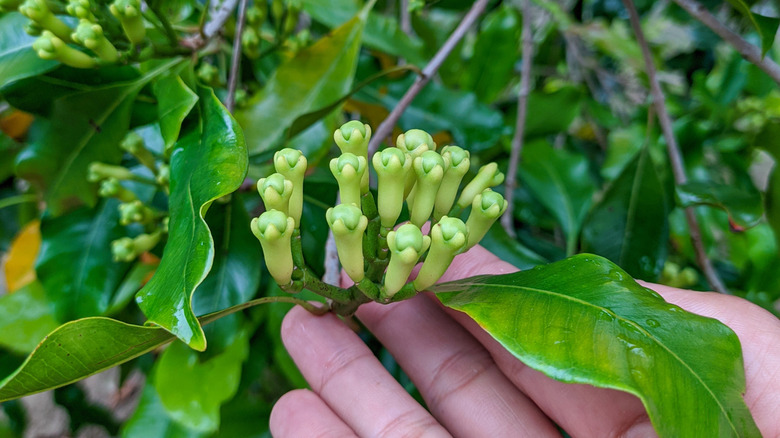
Cloves are one of the most valuable spices in the world. Luckily, you don't have to spend money on buying flavorful, fragrant cloves — you can easily grow a clove tree (Syzygium aromaticum) indoors. This is a big win since outdoor clove trees are only hardy in Zones 11 and 12. They're tropical plants, which means they hate the cold and need consistently warm temperatures, between 70 and 90 degrees Fahrenheit, to flourish. Since the rooms in our homes hover around this temperature year-round, growing a clove tree indoors shouldn't be an issue, provided you meet its other care needs. This includes making sure that you grow your shrub in the right pot, water it well, and keep the humidity high.
If you take care of your clove tree properly, it will reward you with more than just cloves. For instance, these shrubs look beautiful and are exceptionally fragrant, giving a natural boost to any living space. Did you know that clove trees number among the mosquito-repellent plants that actually work? The only problem is that this spicy shrub grows slowly. It can take a clove tree six to eight years to produce a good harvest. If the growing conditions aren't just right, you might have to wait even longer. For the quickest possible time to harvest indoors, purchase an established clove tree from a nursery instead of growing it from seed or sapling.
Choosing the right container for your indoor clove tree
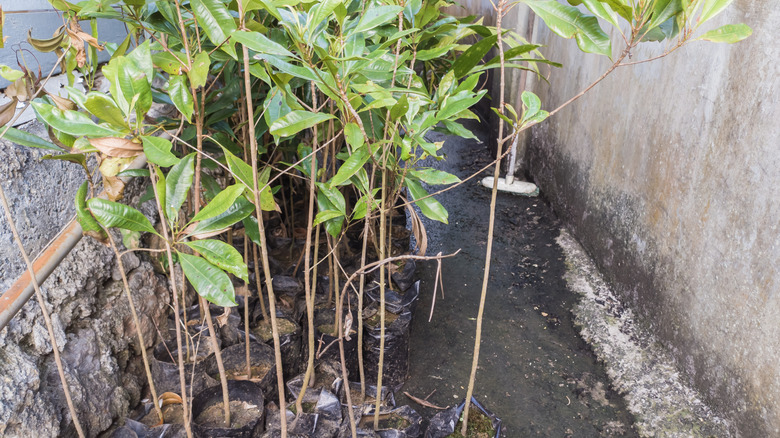
Let's start with the basics. The first thing you need to know when growing a clove tree indoors is that it is not a small plant. In the wild, clove trees can reach heights of 40 feet. Your shrub won't get anywhere near as tall if you grow it in a container in your living room — about 6½ feet tall is typical. However, clove trees have long taproots, which need plenty of space. If your plant gets root-bound, it will fail to grow properly. In other words, choosing the right container for your indoor plant is vital to its long-term health.
Choose a container that is at least 18 inches deep and equally wide. If you've started a new indoor clove tree in a smaller container, repot it immediately. Then, repot it in a bigger planter — about 1 to 2 inches larger than the current pot — every two to three years. Lastly, make sure that the container you choose has lots of drainage holes. Clove trees suffer in waterlogged soils, which can inhibit flowering. Once you have the planter sorted, the next step is to fill it up with the right soil. Clove trees prefer potting mix that is fertile, well-draining, and slightly acidic. A loamy soil with a mix of clay, sand, and silt is best.
Providing ideal conditions for a thriving clove tree indoors
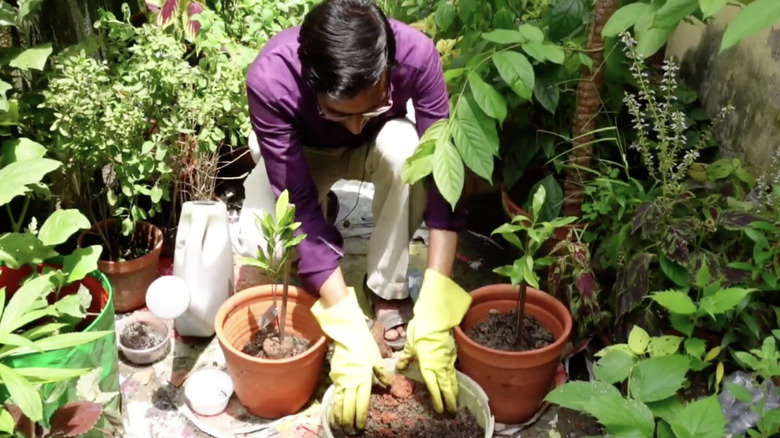
After planting your clove tree or seedling, choose a spot in your home that will provide plenty of light and high humidity. That usually means a south- or east-facing window that provides the plant with at least four hours of bright, filtered sunlight. It may need protection against extreme midday heat in summer. Clove trees benefit from occasional fertilization, especially during the growing season. Supply your indoor shrub with a tropical fertilizer that boosts flower production, such as Nelson Plant Food Plumeria and All Flowering Tropicals Granular Fertilizer, twice a year in early spring and the middle of summer.
Humidity is another key consideration when growing a clove tree indoors. Since clove trees are tropical plants, they don't do well in dry indoor spaces. If you want them to thrive, maintain relative humidity levels of 60% to 80%. Avoid placing your potted shrub near radiators or heating vents and look into ways to increase humidity for plants as needed. It could be as simple as placing the planter on a pebble tray or loosely covering the shrub with a plastic frame. Once you have the humidity sorted, water your clove tree often enough to keep the soil consistently moist, not soggy. Never let it dry out completely.