

Sick Of Your Cloudy Vase? Reach For These Household Staples
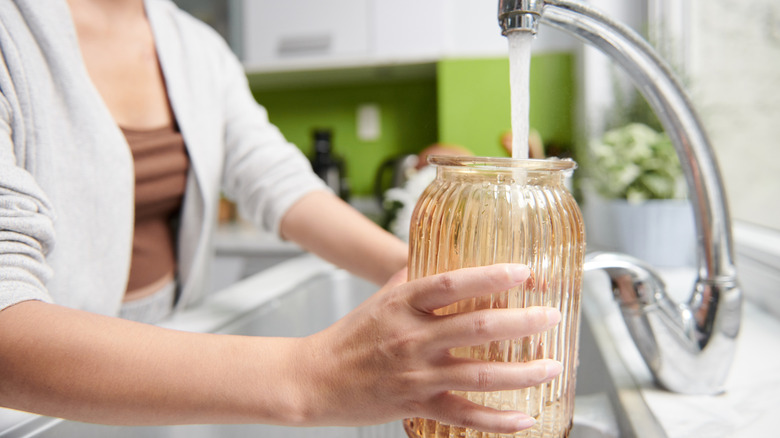
You just spent the morning wandering the flower market and found the perfect bouquet of peonies or tulips. Now, you're home and wanting to put them in your favorite glass vase, but you've noticed that it looks foggy and grey. And no matter how much dish soap you keep throwing at it, that stubborn white film (usually caused by calcium and magnesium deposits in hard water) refuses to scoot. It really doesn't feel right to put flowers into something so dingy looking, but how exactly do you restore a cloudy-looking vase? Forget using specialized cleaners. All you need are two common pantry staples — baking soda and white vinegar — to get your beloved vase looking bright and sparkly again in no time.
Baking soda and white vinegar are one of the best dynamic duos for cleaning at home. Together, they can tackle all sorts of messes, from electric stove burner stains to, yes, your cloudy-looking vase. What makes them so great, though? Vinegar is a solution of acetic acid, which is effective at breaking down the hard water mineral buildup that causes the cloudiness. Meanwhile, baking soda (aka sodium bicarbonate) acts as a gentle abrasive. Unlike steel wool or rougher sponges that can damage glass, baking soda lifts away organic residue and other gunk off the glass without scratching it. This basic chemistry lesson proves that these two household staples are all you need to clean, which should help you save a few bucks at the grocery store. Plus, it's a low-effort, high-reward DIY cleaning hack that'll help keep your vase looking crystal clear.
How to deep clean your glass vase in two easy steps
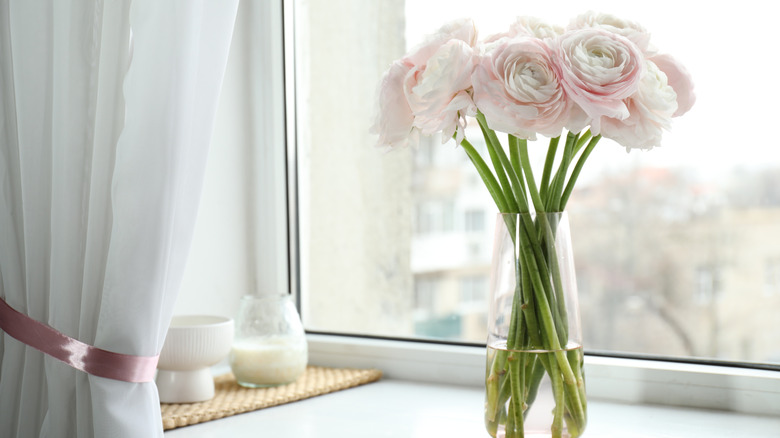
To start, fill your cloudy vase with equal parts warm water and white distilled vinegar (alternatively, you can pour the mixture into a stopped sink and soak the vase that way). Let it soak for around an hour, so the vinegar's acid has time to penetrate the crusty mineral layer. For narrow-necked vases where your hand can't reach, this soak is really important, and part of why vinegar is such a versatile cleaning tool. If there's a tough-looking spot of gunk, create a paste with water and baking soda, scrub the stain, then rinse the vase before soaking it in the vinegar solution. This simple bit of prep work ensures that the toughest buildup is softened (or removed outright) before you even begin the actual scrubbing process, making the whole thing feel like less of a chore.
For the final flourish, add a teaspoon of baking soda directly into the vinegar water. The resulting reaction creates bubbles that physically agitate any remaining debris in hard-to-reach spots. Feel free to even swirl this mixture around to make sure every last corner of your vase gets some attention and wipe any remaining bits of residue with a sponge. Once finished, rinse your vase out with cool water and dry immediately with a microfiber towel to prevent new water spots from forming. This quick drying step is the pro-level secret to getting that streak-free, high-gloss finish that makes your vase look brand new. Cleaning up a vase is just one one of many unexpected ways to use baking soda in your home. And now that your vase is clean, it's time to plop in your bouquet of flowers inside and let them take center stage.