

Always Keep Your Garden Hydrated With A Method That Collects Rainwater

With the increasing occurrence of extreme weather, it's getting harder and harder to manage irrigating gardens. Periods of drought are more frequent, and restrictions on watering lawns and gardens are becoming more common. Severe downpours are also increasingly common, leading to minor flooding, property damage, and washed-away landscaping. Collecting rainwater serves a triple purpose: It provides you with water when you can't rely on city water; the water it provides is free, thereby reducing your water bill; and it keeps water from pooling in areas of your property. Among the many stormwater drainage solutions for your home, installing a rain barrel may be the easiest and most useful for keeping your garden hydrated and healthy.
To get expert advice on using rain barrels in your garden, House Digest spoke exclusively with Swedish landscape designer Johanna Antonsson, owner of Moose Garden Landscape Design Studio. "Collecting water in barrels is cheap and easy to do yourself," Antonsson says. Simply connect your rain barrels to the downspouts of your house. Antonsson notes, "There are also connectors that allow you to distribute the water into several barrels and keep them out of sight." A rain barrel with a pump system is one of the best irrigation systems for flower beds.
Choose the right rain barrels for your home
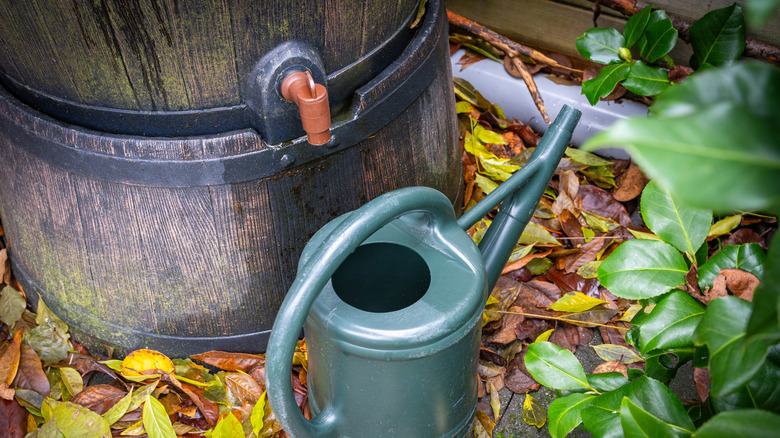
Johanna Antonsson urges homeowners to think long term when choosing a rain barrel. "People often end up buying cheap and very unattractive plastic containers and placing them in plain sight," she says in our exclusive interview. "This is a long-term investment, so think carefully about where you put your barrels and how they look." An unsightly rain barrel visible from the street might reduce your home's value or make it harder to sell. And once you've installed it, you're not likely to move it. When empty, a typical 55-gallon rain barrel can weigh 20 pounds. Filled with water, its weight is around 479 pounds!
There are many elegant alternatives to industrial-looking rain barrels. "I like to use repurposed oak wine barrels — they look so much better than plastic," says Antonsson. "They often come with a lid that's good for keeping the water fresh and safe for wildlife, while also preventing mosquitoes from laying eggs." Just don't buy cheap and end up regretting it later. "Choose quality and make sure your solution can handle increasing needs so they work well in the long term," Antonsson emphasizes.
Underground rainwater reservoirs
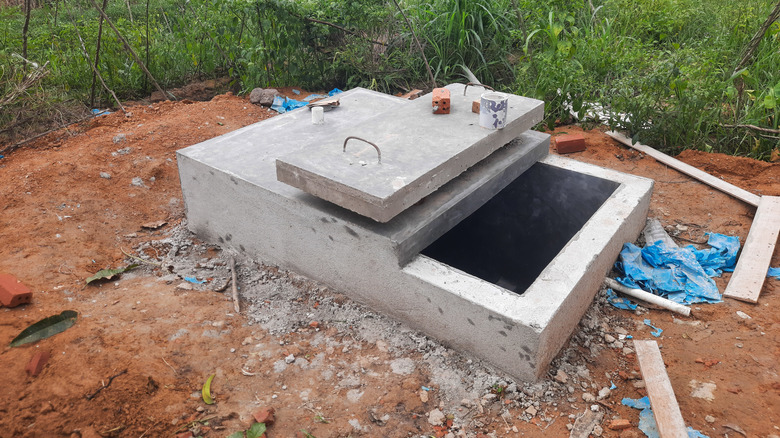
Landscape designer Johanna Antonsson points to another option in our exclusive interview: "If you don't have room for barrels or need a larger container, you can install an underground rainwater reservoir. ... If you choose the latter, I would recommend using a large container (at least the size [of] 3 barrels) and hiring a professional for the installation." Underground reservoirs require a bigger investment of time, money, and space, which can lead people to cut corners. "Those who invest in underground containers also tend to choose ones that are too small and of poor quality," Antonsson says.
However, it's worth starting small. Antonsson advises, "Start with some barrels ... and make them look good! If this works well for you, you can look into upgrading with an underground container."
Collecting rainwater helps your community as well as keeps your garden hydrated. Many municipalities encourage you to collect rainwater and offer discounts on the purchase of rain barrels or the installation of a rain collection system. This is because during downpours, excess rainwater can overwhelm water treatment plants. Rainwater rushing into city drains can contain chemicals and debris flowing from roofs, gardens, driveways, sidewalks, and streets, including bacteria, oils, pesticides, fertilizers, and organic material, which the water treatment plant spends time and money removing from rainwater runoff. Check with your local water or public works department to see if you can save money on your purchase.