

How To Revive A Dying Pothos Plant Before It's Too Late
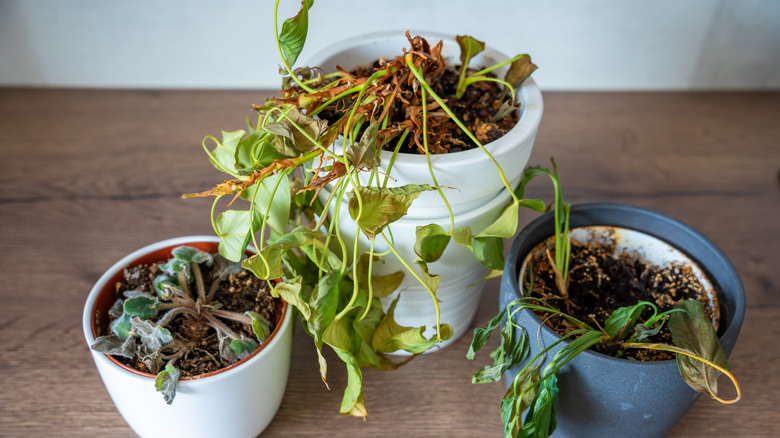
Yellowing and curling leaves, drooping, a musty smell — these are some of the most common and noticeable signs that your pothos plant (Epipremmum spp.) has seen better days. As disheartening as it may be to witness these symptoms, they don't mean that your plant is completely done for. In fact, there are usually a few simple reasons behind these outward signs, and most can be easily reversed with some adjustments to how you care for them. Pothos are resilient plants, and their revival is possible once you determine the root cause of the concerning symptoms. Care adjustments may include changing how you water your pothos plant, moving it to a different location in your home, amending its soil, or repotting it.
Pothos, one of the most popular and beginner-friendly plants for home gardeners, come in many varieties. There are 15 species and even more cultivars of pothos plants you can grow at home, including ones you've probably heard of, like 'Marble Queen' and 'Neon.' While they are easy to care for, they can also be negatively affected by seemingly small factors, like extreme room temperatures and harsh lighting. Once you've determined what is affecting your pothos plant, you can take the steps to revive it.
Adjust the sunlight levels and temperature for your pothos
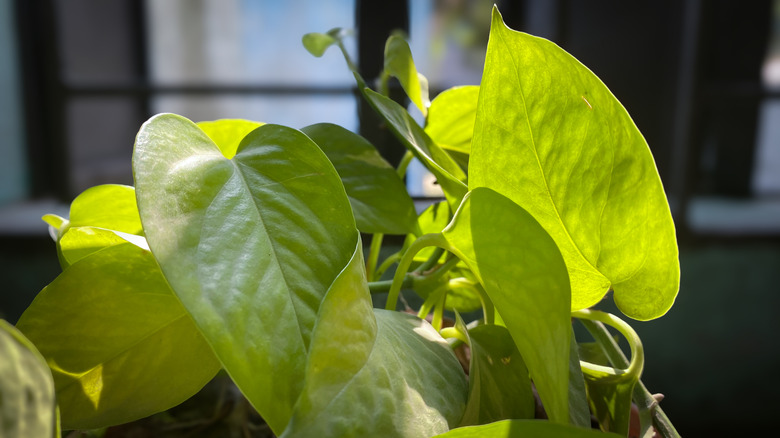
If you are unsure of what's causing the concerning symptoms in your pothos plant, checking its exposure to sunlight and various temperatures is a good start. If the leaves are pale or yellow-colored, it may be receiving too much direct sunlight, causing the leaves to "burn." Meanwhile, pothos leaves becoming sparse or losing variegation can indicate that the plant is not receiving enough sunlight. In either of these cases, you'll want to move the plant to another area in your home or adjust its light exposure with grow lights.
Pothos plants thrive best in medium, indirect light, which can also mean dappled light. You can usually tell which side of your plant is getting too much sun by looking at the color of the leaves. The side with too much sun will tend to be more yellow-colored, so you can adjust its placement accordingly.
You should also ensure the pothos is located in a room with the correct temperature. These plants originated from tropical environments; thus, they prefer temperature ranges between 65 and 80 degrees Fahrenheit. Cold drafts can be a silent killer of your pothos plants. Make sure yours isn't located near an area that may experience extreme temperatures, like open or drafty windows, air vents, or space heaters.
Ensure you water your pothos plant correctly
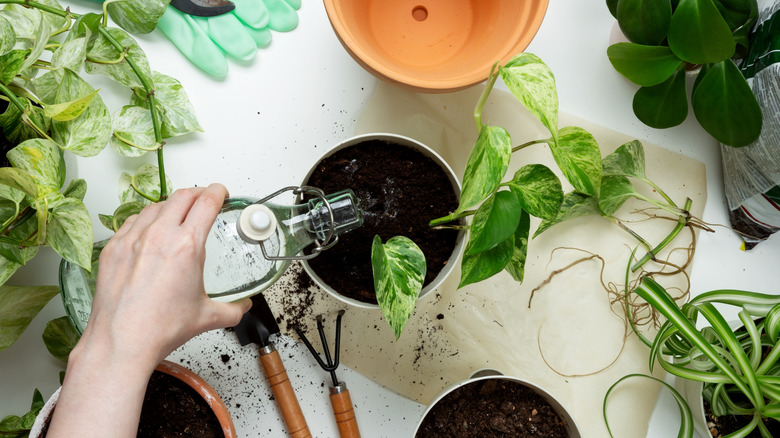
Pothos, though they are durable plants, can be easily affected by inconsistent watering. A lot of the time, you will not notice any concerning symptoms until the situation is truly dire, making it important to keep an eye out for these signs and treat them as soon as possible. If your pothos has started experiencing curling leaves, the plant is most likely under-watered, causing the leaves to close in on themselves to retain the water they do have, sometimes even drying and falling off completely. When watering your pothos plant, make sure the soil is completely dry before watering again. Also ensure you water the plant before the leaves start to droop.
If you're overwatering your plant, it can develop root rot, which is when the roots start deteriorating due to too much moisture, eventually suffocating from lack of oxygen. Your plant will most likely show signs like black and brown roots or an unknown, musty smell, subsequently also leading to yellowing or drooping leaves. To doctor this issue, you should de-pot the plant completely and remove any mushy stems. You can re-pot the pothos into new soil.
Address the soil, potting, and nutrition
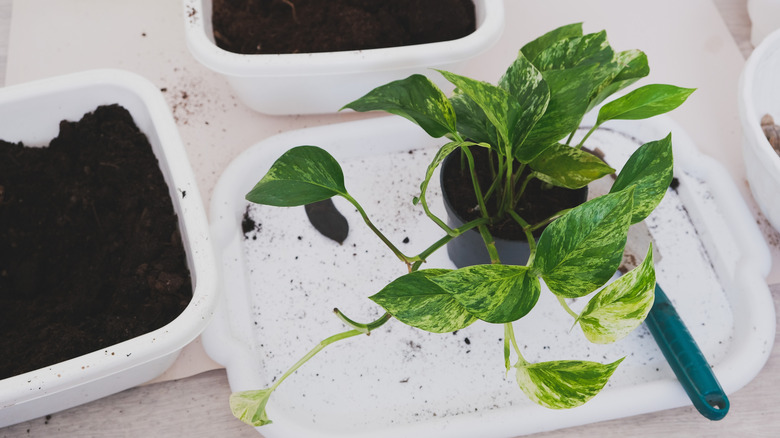
Last but not least, you will want to ensure your pothos plant is living in the correct type of soil and pot, as well as receiving the ideal nutrition. Pothos varieties thrive best in soil that is not only well draining but also chock-full of necessary nutrients. This means planting your pothos in materials or soil mixes such as perlite or peat moss and in a pot that has ample room for drainage at the bottom. If you need to repot your pothos plant, as well as change the soil, add your soil mix to the bottom first before adding in the plant. Next, surround the plant with soil, and add water until you can see the liquid draining from the pot.
When it comes to plant nutrition, pothos plants do not necessarily require additional fertilizer to live. However, adding some healthy nutrients to the soil about once a month during the spring and summer can help boost the overall health of your pothos. If you've noticed that your pothos' leaves have started to turn yellow or its growth has halted, it may benefit from a nutritional boost. If you're unsure of what type of fertilizer to add, you can't go wrong with the classic trio: nitrogen, phosphorous, and potassium. This combination can be in liquid or granular form.