

The Antique Material That's More Valuable Than You Think
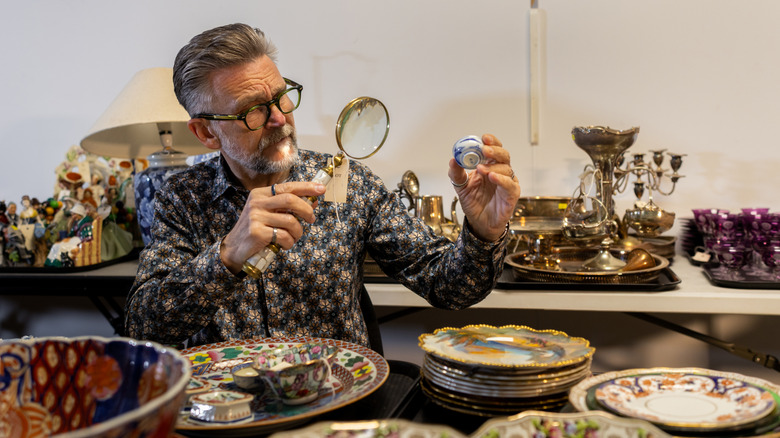
All kinds of antique materials can be valuable, from textiles and tin toys to wood and glassware. Sometimes what we think of as common items are worth more than expected. For example, there is vintage Pyrex you'll be lucky to find. Another material that's more valuable than you might imagine is sterling silver. What was once seen as a sign of good taste and indispensable for fine dining is now often considered too ornate. Yet prices have rocketed.
To be fair, the current boom is not due to a sudden change in fashion, but to the record value of silver itself. At the time of writing it was over $80 an ounce. Individual pieces might have great intrinsic value depending on their history and the silversmith who made them, but in terms of common flatware, cutlery, etc., the real money is in melting them down. That's because sterling silver is 92.5% pure.
So where can you find this treasure? Antique and collectible stores are likely to be fully aware of what they have, so there's little chance of finding a bargain. Flea markets are a good place to search, as are thrift stores. You never know your luck. There are also opportunities if you know the best time to hit up an estate sale. That said, it's important to proceed with caution. A lot of what's described as silver isn't the real deal. Let's look at how you can tell the good stuff from the fakes.
How to know if it's really sterling silver when you're on the go
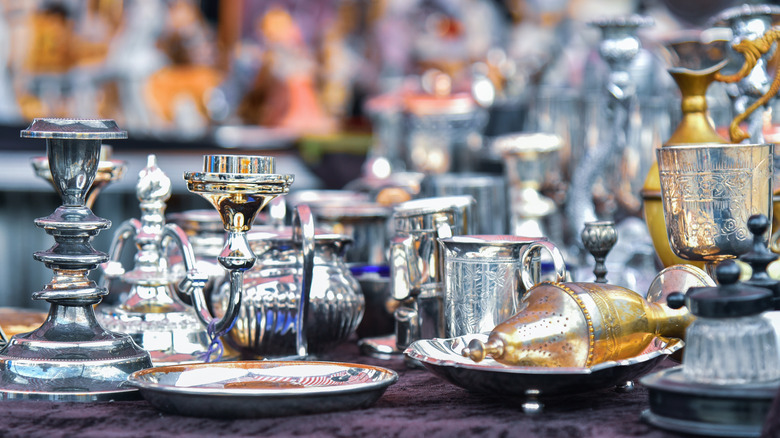
There is only one foolproof way to determine if something is silver, but it requires a special test. However, there can be identifying marks on the items, and there are simple checks you can try yourself.
The term "silverware" is misleading. It might contain silver, but it's often a thin layer over copper, nickel, or other metals. If you find an EP or EPNS mark, it indicates electro-plated nickel silver, which is basically worthless. Perhaps surprisingly, German silver contains no silver at all.
Genuine antique articles are often stamped "sterling silver" or just "sterling." More recently, "925" and "STER" have been used. English and Scottish sterling silver might be stamped with a lion. Frustratingly, not all sterling silver is marked. The only solution then would be to test it.
There are two items that are useful to have with you when you search for sterling silver: a magnet and a white cloth. Sterling silver is not magnetic. So if the magnet sticks, it's only silver-plated. Additionally, sterling silver doesn't rust, but it does tarnish. If you rub dirty silver with a white cloth, it will leave a black stain. Unfortunately, although often recommended, this test is not particularly accurate because EPNS has a small amount of silver and tarnishes in a similar way. It might sound strange, but you could also give it a sniff. Sterling silver has no odor. If it smells like pennies, it's very likely to be plated.