

Save Space In Your Small Bathroom With This Stunning Shower Design
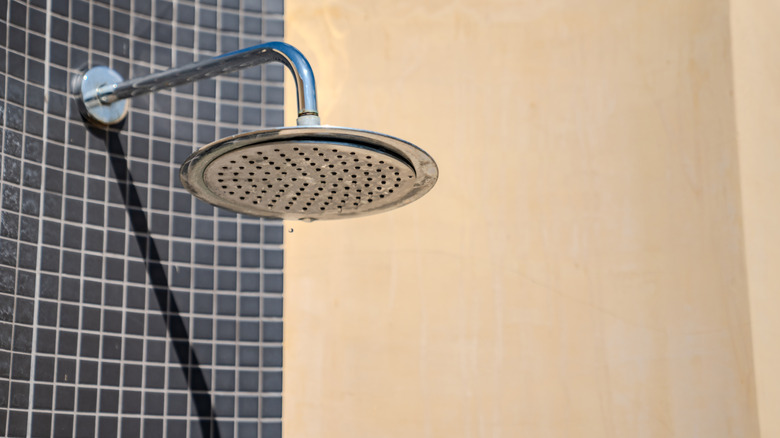
If you're in the market for small bathroom ideas that will make your space feel bigger and leave your space looking intentional and stylish, then consider installing a round (or curved) shower enclosure. These are built from the wall out, using curved framing to form a semi-circular shape that is then sealed off and waterproofed. From there, it can be designed like any other walk-in shower, with vertical wall tiling (although learning how to successfully tile curved shower surfaces is a skill in itself), a central drainage area, and any built-in niches that you want. With the tiles continuing over the top of the shower head, you have the opportunity to make a real statement with a mosaic effect or radial pattern by using smaller tiles that follow the curve of the walls and ceiling.
It's a gorgeous feature installation that will give your shower space a cozy and enclosed feel, regardless of whether you choose to close the unit off with a curved glass door or keep it open and airy. There are no sharp corners, so it gives your bathroom an overall much softer look, creating a spa-or hotel-like atmosphere, even in a room with limited space.
Curved showers are a smart move for small bathrooms because, without sharp corners and hard lines, they take up much less space both literally and visually. Using rounded edges instead of strong and sharp lines allows your eyes to travel more smoothly across a room, which is often said to create a sense of flow and make a space feel more open.
What to know before installing it
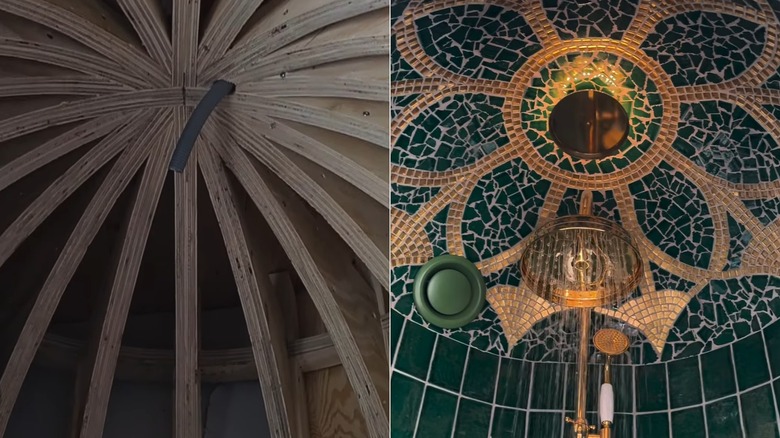
All that said, it isn't exactly the simplest installation, as curved and custom framework like this does have to be precise in measurement. Plus, installing the shower tiles is a much tougher job on curved walls. There's also the importance of ventilation in a shower, as the way steam rises and condenses on walls could be more of an issue if the area is partially enclosed.
To make sure that this shower design stays functional while also saving you space, its overall dimensions should be between 30 and 36 inches. The minimum shower size allowed by many building codes is 30-by-30 inches. But the most common, comfortable size for everyday use is actually closer to 36-by-36 inches. If you plan to take this design on, going with a professional might be the smartest move (even for a seasoned DIY-er). When it's done right, a curved shower stall is an incredible centerpiece that turns a small bathroom into a space that's making a real statement.