

For More Stunning Blue Flowers, Avoid Planting These Perennials In The Shade
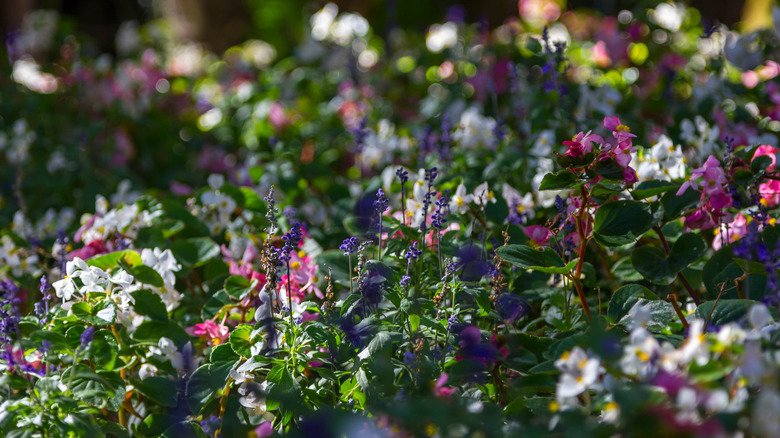
It's best to put plants in a location where they prefer to grow. Give them adverse conditions, and they won't perform well in your garden. Sage (Salvia spp.) is no exception. Hardy in zones 5 through 10, these lovely perennials will put on a stunning floral show when they're happy and thriving in the sun. But when they're in a poorly lit spot, they'll grow leggy and weak, and their flowers won't be as abundant or bright compared to specimens with sufficient light levels.
Most sages thrive in full sun, which equates to a direct sun exposure of six or more hours. However, the preferred lighting conditions vary depending on the Salvia species, and some perform better in partial shade (i.e. between two and four hours of daily direct sunlight), especially in hot regions with intense summer heat waves. The best way to know how much light to give your sage is to identify the species. Once you know the type of sage you have, you can research its optimal lighting conditions. Guatemalan leaf sage (Salvia cacaliifolia), for example, will tolerate full sun but has better blooms in partial shade. Chiapas sage (Salvia chiapensis), too, prefers partial shade in the hottest regions. Apart from proper lighting, be sure to water these perennials properly and provide just enough nutrition to get the best blooms.
Water and fertilize sage properly for the best blooms
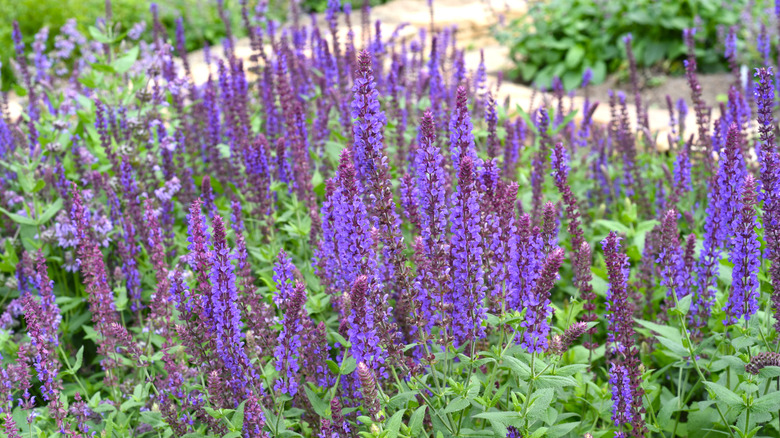
Salvias benefit from growing in well-drained soil, and many types tolerate droughts during the summer. Sages that grow in areas with summer rainfall require semi-regular watering, while those in dryer regions benefit from a deep soaking once a month during the warm seasons. For the best bloom color, give your sages an adequate amount of water: not too much or too little. Overwatering is one of many mistakes everyone makes when growing sage.
While Salvias don't need fertilizer to thrive, you'll find that adding a bit of compost in the spring will encourage the plants to produce more abundant blooms. A 1-inch application will suffice. That said, take care not to overfertilize — too much nutrition can weaken the plants and make them leggy.
Note that blue isn't the only color sage flowers come in. Different species and cultivars, like these 24 gorgeous ornamental sage varieties, will give you a mix of hues when you're planning your flower beds. Which variety is right for you depends on the color palette you're going for, but as long as you give your sages the lighting conditions they need, they can reward you with bright pink, purple, orange, red, and blue flowers during the warm months.