

The Melon To Plant In Spring For A Juicy Summer Harvest
It's a warm summer day and you need something refreshing. Sure, you could reach for a sugary carbonated drink, but did you know that cantaloupes (Cucumis melo) are about 90% water? If you plant your own cantaloupe seeds this spring, you can have a healthy, juicy, refreshing drink straight from the garden, without all the additives you're likely to find in a bottled refreshment — all for the cost of a packet of seeds that are easy to grow in your own backyard.
Cantaloupe is an annual plant in the cucumber family that can grow virtually anywhere that you can grow cucumbers or other melons. Your limit will be time, rather than USDA Hardiness Zone. Cantaloupes can take 70 to 90 days to mature and develop fruit. If you have a short growing season, plant your cantaloupes in a lighter soil, more on the sandy side, which will produce an earlier but smaller harvest. If you're lucky enough to have a longer growing season, a heavier loamy soil will produce more fruit, but later in the year.
Before attempting to grow cantaloupe from seed, make sure you purchase the right seeds. In North America, the terms cantaloupe and muskmelon are often used interchangeably, though that's not fully accurate. Cantaloupes are just one type of muskmelon, just as honeydew melons are. Even more confusing, North American cantaloupes (Reticulatus group) are different from European ones (Cantalupensis group), which are not widely grown in North America. The latter is also edible, but if you want to grow the fruit that you've likely been buying at the store, you'll want Reticulatus seeds.
How to grow cantaloupe from seed
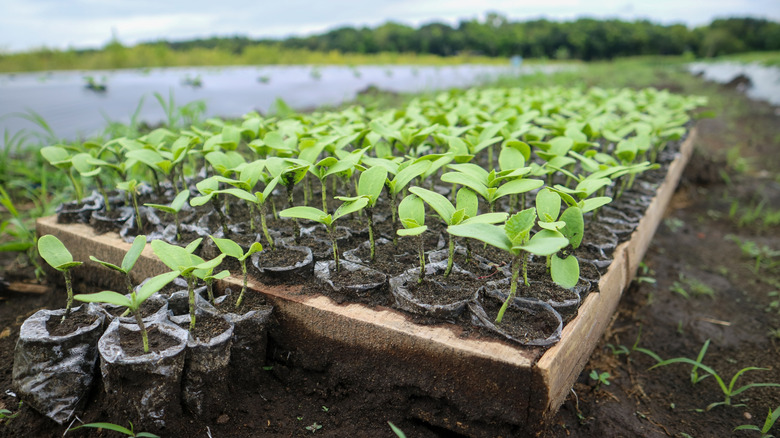
If you're planting your seeds directly outdoors, plant the seeds after the last frost. However, cantaloupe is one of those juicy fruit seeds that you can start in late winter. Start the seeds indoors four to six weeks before the last frost, after which you can bring your seedlings outdoors.
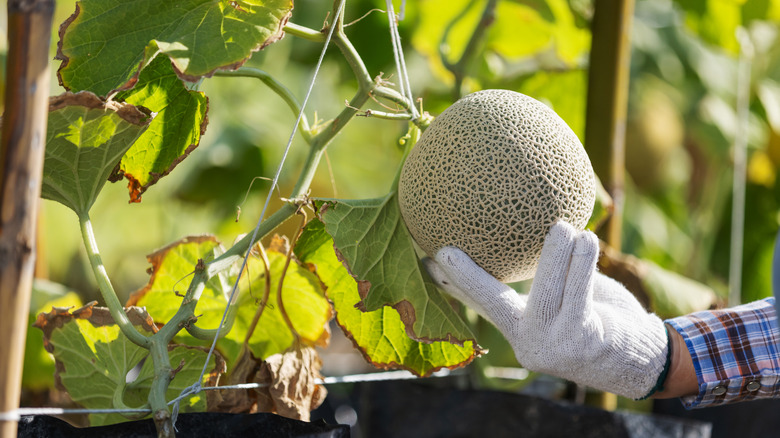
In either case, give your seedlings ample room in your garden. Their vines can grow up to 9 feet long and 3 feet wide, with leaves that are 3 to 6 inches wide, so a single cantaloupe plant will crowd out many other plants if you plant everything too closely together. If you have space and sunshine, you can grow cantaloupe along the ground, but growing cantaloupe vertically, up a trellis or other support structure, has numerous benefits, including potentially healthier plants and higher yields.
To grow a fruit the size of a juicy cantaloupe, you need lots of the three main ingredients that nearly every plant needs: soil, sun, and water. Plant your seeds or seedlings in full sun, in neutral to acidic soil that's rich in organic matter. Be sure to keep the soil moist but well-draining. Mulch with compost around the plant to keep moisture in and slowly fertilize the plants as the compost works its way into the soil. Avoid using pesticides that can harm bees: Bees love cantaloupe flowers, and you'll need their pollination if you want the flowers to turn into the juicy, delicious fruit you're hoping for.