

Don't Let Spring Showers Ruin Your Lawn — Try A Sandy Hack
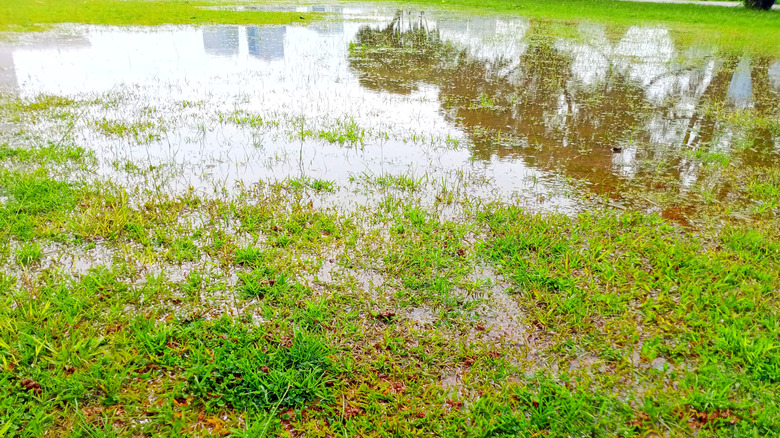
If your lawn transforms into a giant puddle every time a spring storm rolls through, you might be tempted to keep everyone off the grass until summer arrives. Soggy turf and standing water are often signs that the soil is holding too much moisture. This can lead to yellowing grass blades, weakened turfgrass roots, and lots of mud. Adding sand to a lawn can improve drainage, helping to keep your yard healthy during rainy periods. Standard dirt is often too dense; coarse sand creates space, allowing the air to reach the roots of your lawn grass.
While many homeowners assume that more topsoil is the answer to wet depressions in a lawn, adding it can trap even more water. Most turfgrasses don't respond well to prolonged spring flooding — the roots eventually drown. Even the toughest grasses won't last long without the chance to dry out. The overlooked solution for better-looking grass is simple: add a layer of coarse sand. It creates minute pores in the soil that, aided by gravity, filter moisture away from the surface. Even heavy rain will soak in and flow away instead of pooling on the surface. The sand reduces water retention, to which soils high in clay and organic matter are particularly prone. It also discourages the growth of algae that thrive in stagnant water.
How to use sand to improve lawn drainage
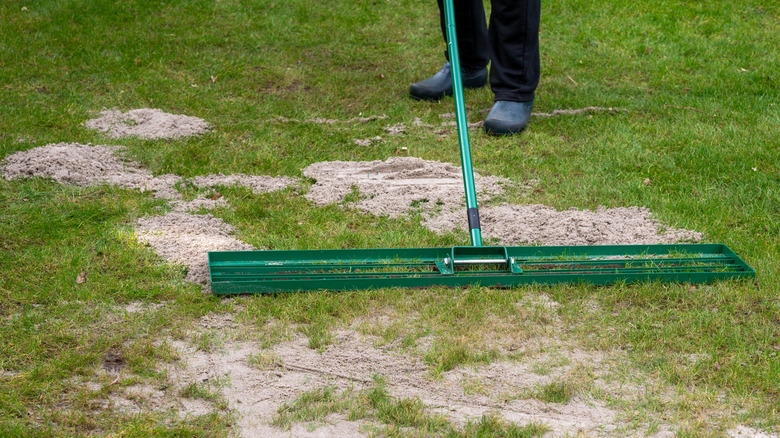
Don't just dump a pile of sand onto a wet patch of lawn and hope for the best. There's a technique to applying sand to a soggy yard so that it's helpful, not messy. This hack works best when you combine the application of sand with improving aeration. Use a fork or powered aerator (for large lawns) to pull cores out of the ground, creating holes for the sand to sink into. Once the problem area is covered in holes, spread a 2-inch layer of coarse horticultural or builder's sand over the surface. Unlike fine play sand, which can mix with dense soils to create something similar to concrete, coarse horticultural sand opens up the soil's structure.
This technique allows the sand to reach deep into the root zone where soil compaction is often at its worst. It's particularly useful for heavy clay soils that drain poorly. The extra air that sand lets in benefits your turfgrass — it encourages the grass to spread out into thinning or bare patches that might otherwise be overtaken by moss if they remain damp. Since the grass needs to be actively growing to recover well, spring (or fall) are the best times of year to topdress your lawn with sand.
Benefits of topdressing lawns with sand for drainage
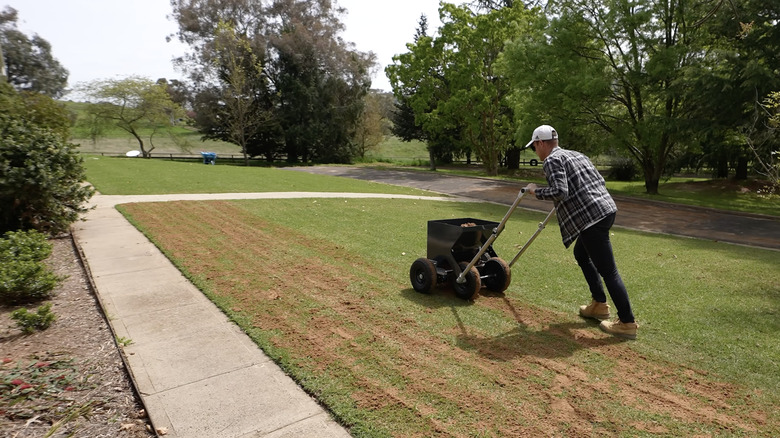
The long-term advantages of using a sandy topdressing on your lawn go beyond surviving a few rainy spring weeks a year. If you consistently add sand to your lawn, you're slowly boosting resilience against regular spring rainfall, even if it's heavy. This method is also an affordable way to level a bumpy lawn without heavy equipment. The sand fills in minor dips where water naturally pools, preventing puddles from forming. Over time, the grit works its way down into the soil, breaking up compaction and making nutrients more available to grass roots. Regular applications also reduce thatch buildup — a spongy surface layer of organic debris — that can trap water and attract pests that like soggy, decaying matter.
Lawn grass can struggle with disease if the ground stays wet for too long. A yard that drains well is far less likely to deal with fungal pathogens, which love moisture. By helping the surface dry out faster and more evenly with sand, you keep pests at bay and your grass grows in thicker. Plus, since waterlogged soil takes much longer to warm up in the spring, sand helps maintain consistent soil temperatures. A firmer yard also means you won't leave deep footprints or lawn mower ruts when doing yard work. Instead of wading through mud, you'll have a beautiful, level, healthy yard.