

13 Thrift Store Vases That Can Turn Out To Be Quite Valuable
We may receive a commission on purchases made from links.
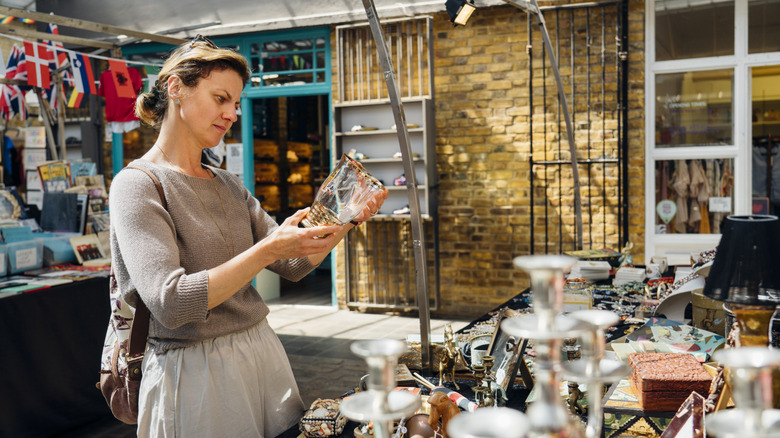
Everyone loves shopping for bargains at the thrift store. Whether you're looking for clothes, books, or novel gifts, they can be a great place to pick up excellent goods for little outlay. What you may not realize, however, is that antiques and collectables often nestle overlooked amongst other humdrum items. It's often hard to tell a piece that is simply nice from one that may be very valuable.
Vases, being practical as well as decorative, routinely crop up in thrift stores, often at deceptively low prices. Before you set off in search of a thrift store treasure, have a look through our handy guide, which will give you a good idea of what to look for. From English royalty to sparkling crystal, we've got you covered.
Libbey Glass vases are cool and clear and can easily be dated
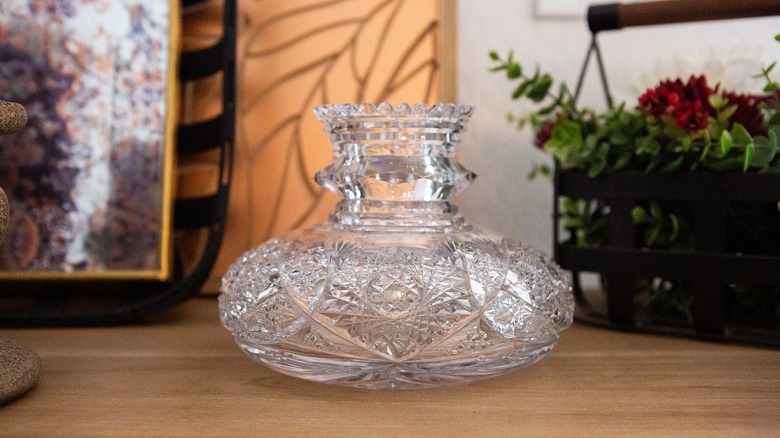
Libbey was originally founded way back in 1818 in Cambridge, Massachusetts, as the New England Glass Company. In 1888, the company relocated to Ohio, where it was rebranded as Libbey Glass Co. It is now known as Libbey, Inc., but glassware has always been at the center of its product lines.
Libbey glass vases tend to be cool and clear, with textural lines. Vintage Libbey pieces are well worth picking up, and you can narrow down the manufacturer date by finding the maker's distinctive logo. Vases made between 1924 and 1937 will feature a cursive 'L' trademark, situated inside two circles. Between 1937 and 1955, the logo appeared as an 'L' inside one circle broken into three parts. From 1955 onward, you'll see the 'L' inside one plain circle. Value varies from $20 to several hundred dollars. You'll want to thrift this dreamy vintage glassware before it becomes a collector's must-have.
Indigenous Acoma Pueblo vases are highly collectable
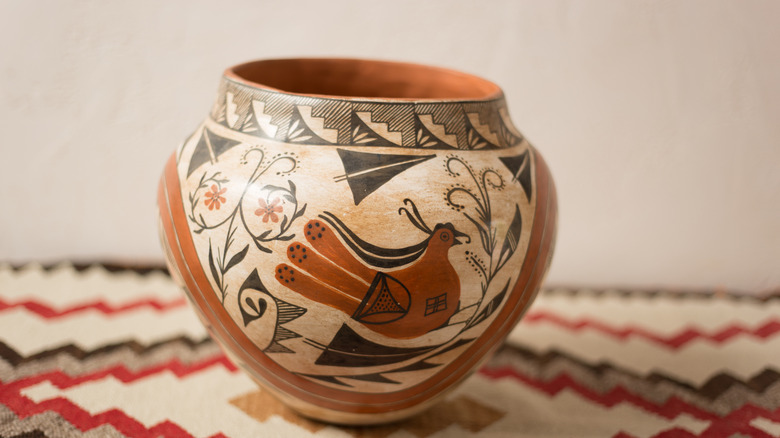
Pueblo pottery is an ancient art form found within Native American culture. It's frequently handmade, without the use of a potter's wheel, using traditional techniques. Pueblo pottery has been made this way for many centuries and is still created today. Acoma pottery, which originates from one of the country's oldest continuously populated towns, has earned a reputation as one of the finest examples of Pueblo work to be found.
Particular features of Acoma Pueblo pottery include delicate construction, fluted rims, and beautiful geometric designs. These are highly decorative pieces that are also intended for practical use, and picking one up is a great way to get the southwest vibe in your home when decorating. To identify a genuine piece, look for the aforementioned characteristics, hand-painted in muted, warm colors, often black, white, and orange. Acoma vases are objects of fine art, and as such can be worth anywhere from $75 up to several thousand.
Elegant and fun Fitz & Floyd pieces can lighten any home
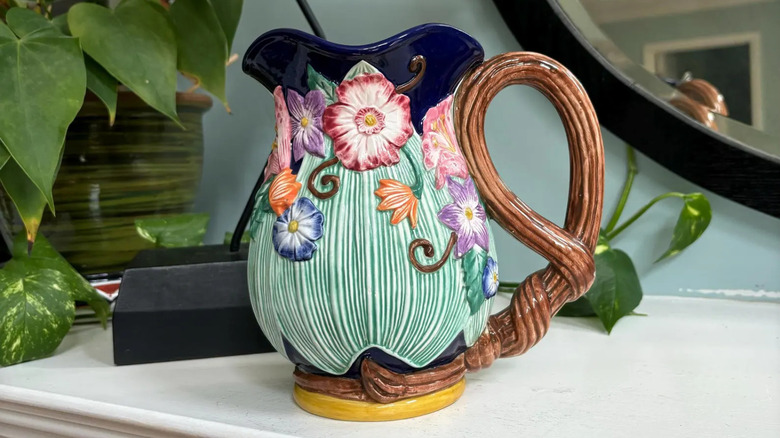
This is one of those home decor brands that will win you over with nostalgia. Fitz & Floyd was started by Pat Fitzpatrick and Bob Floyd in Dallas in 1960. The company's team of in-house designers produces upwards of 500 hand-painted pieces per year. When it comes to vases, Fitz & Floyd's products can be found in a variety of shapes, colors, and sizes, from elegant pure black, red, and crystal to fun, multi-color designs decorated with flowers, birds, cats, and other animals.
Larger Fitz & Floyd vases will have the company's name hand-engraved upon them. Smaller pieces often feature just the initials, FF, and a copyright symbol. The value of the vases varies depending on age, condition, and availability. Limited editions and discontinued lines are understandably worth more, and the only way to find out whether a particular vase falls into one of these categories is through research. You could be looking at as low as $50 up to several hundred dollars.
Nothing sparkles quite like genuine Cumbria crystal
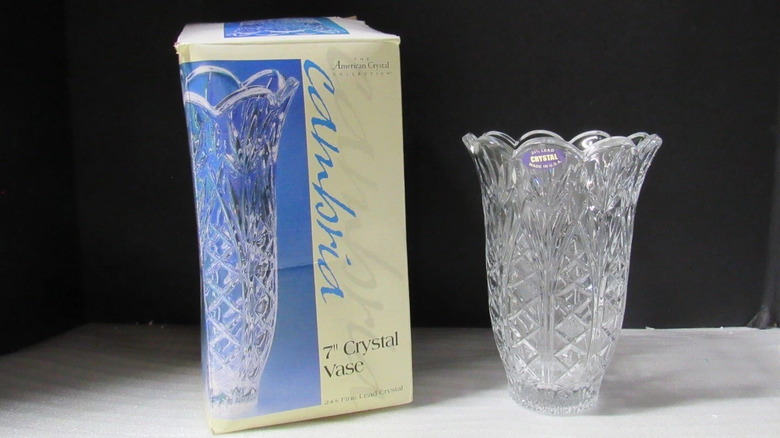
When it comes to royal vibes, you can't get much better than Cumbria Crystal, which was founded in 1976 by Lord and Lady Cavendish. The factory is based in Ulverston, England, and the products are sold by notable London retailers. If you're a fan of classic English dramas such as "Downton Abbey" or the big-screen adventures of super spy James Bond, chances are that you've seen Cumbria crystal pieces decorating the set.
To spot an antique Cumbria vase in your local thrift store, look for one that comes with the original packaging. If not, check any glass pieces for typical signs of lead glass wear, such as micro scratches and cloudiness. These are sure signs that a piece is old and loved, rather than produced within the last 10 years. Prices for resold Cumbria vases start at around $50, but more elaborate pieces can be worth hundreds.
Pick up Wedgwood for a slice of true British history
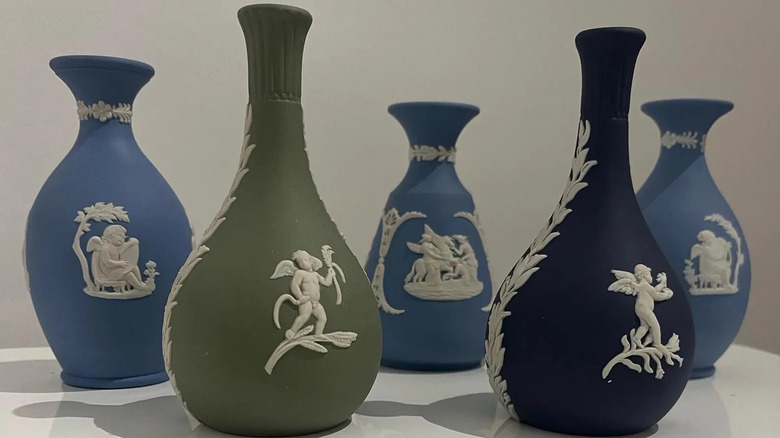
One of the most cherished names in British ceramics and a stunning antique brand that people are thrifting for like crazy, Wedgwood pottery, dates back to 1759. The company has become synonymous with producing pieces that unite art with practicality. Founder, Josiah Wedgwood I, was a true pioneer in many fields. When it comes to pottery, Wedgwood's major innovations include Queensware, a strong material made with flint and white clay. He also introduced Black Basalt, a fine-grained stoneware with a deep hue. Perhaps Wedgwood's greatest achievement in the world of pottery was Jasper Ware, a unglazed stoneware perfectly suited to coloring in a variety of hues.
When hunting for genuine Wedgwood vases, keep an eye out for neoclassical decorations with Roman, Greek, and Egyptian themes. Light blue and pale green were often used for Wedgwood vases. Raised white decorations are another feature to watch for, and Wedgwood will almost always be stamped, either with 'Wedgwood England', 'Wedgwood Made in England', or 'Wedgwood of Etruria & Barlaston.' Antique Wedgwood vases have sold for several hundred thousand dollars at auction.
Beautiful and classy Tiffany vases are a must-buy
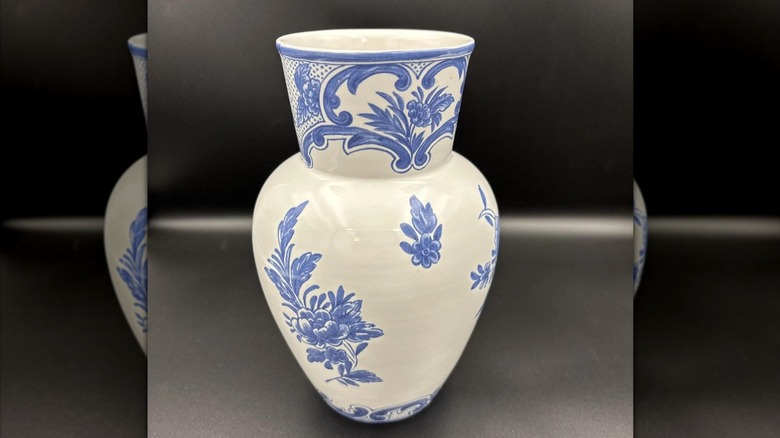
The world-famous Tiffany & Co. was founded in 1837 by Charles Lewis Tiffany. It also grew and saw great success under his son, Louis Comfort Tiffany, an artist and designer who specialized in glass. Tiffany's glassware included windows, mosaics, jewelry, and ceramics. The styles range from feminine and pretty to bold and glamorous, so it's designer glassware you should hunt for at thrift stores, no matter your style.
Tiffany vases feature elegant, flowing designs with beautiful curves, a lustrous sheen, and in some cases, simple motifs. To identify a genuine Tiffany piece, look at the pontil on the base of the vase. You may find a round paper label, which should have embossed gold lettering on a green background. Genuine labels will have perfectly smooth edges. Later pieces will have 'Tiffany' etched into the glass. Value ranges from a few hundred to a few thousand dollars. The more decorative pieces can sell for $4000 or more.
Royal Worcester is one of the oldest poetry firms still existing
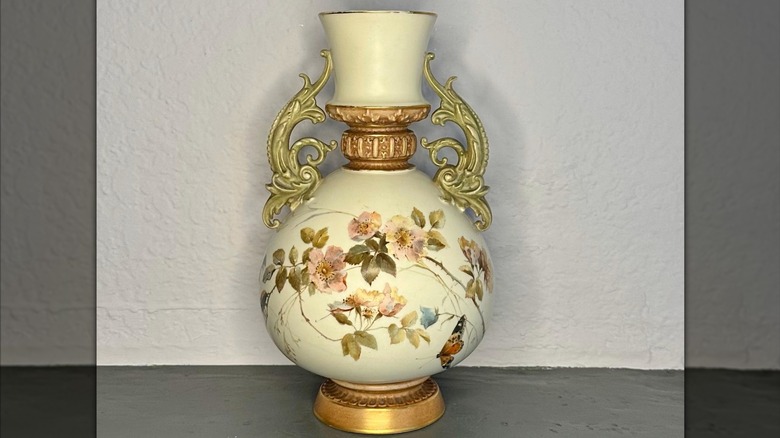
Coming, unsurprisingly, from the town of Worcester in England, Royal Worcester was established in 1751 and is still going to this day. Antique Royal Worcester vases are highly sought after and tend to be classical in form, often with pastoral illustrations. These can go for $150 up to five thousand or more, with particularly rare or historic pieces topping $100,000.
There are a number of signs to look for when identifying the genuine article. Authentic Worcester soapstone has a greenish hue when held up to the light. Be on the lookout for signs of damage, of course, and thick layers of paint may indicate a forgery. You'll want to get searching for Royal Worcester right away, as this brand is quickly becoming a hot collectible.
McCoy ceramic vases can be valuable as well as decorative
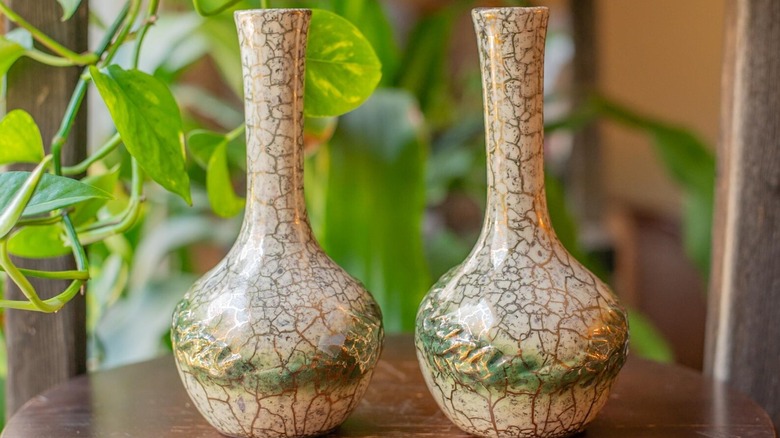
McCoy pieces are colorful and valuable flower vases you should look out for at thrift stores. The history of the McCoy Pottery Company stretches back to the mid-1800s. William Nelson McCoy first set up the business in Zanesville, Ohio, to produce plain, functional pieces which were used by farmers. In 1933, with William's son, Nelson, at the helm, the business switched direction. Due to the popularity of decorative pieces, it began producing colorful vases and ceramics.
The factory closed in 1990, but these are still sought-after pieces. Every McCoy piece contains its distinctive hallmark: 'McCoy' with the 'M' and small 'c' overlapping and the big 'C' and 'o' doing so as well. If you're lucky enough to come across one of these delightful and yet practical pieces, you'll be the owner of a vase worth anything from $30 up to over $100.
Own a true piece of art by spotting a Japanese Cloisonné vase
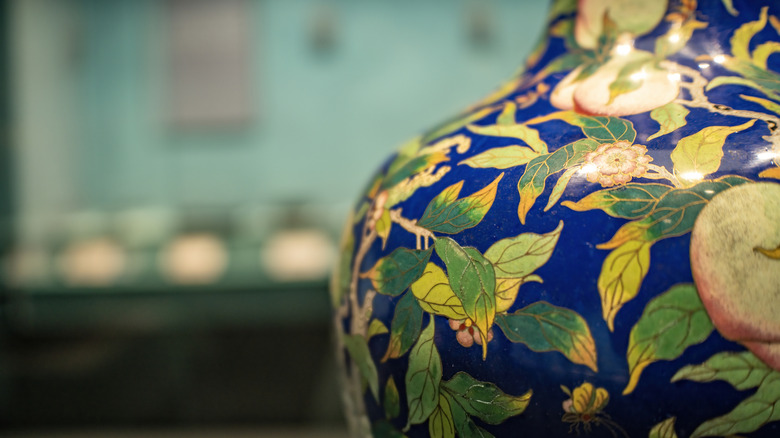
Cloisonné (shippo in Japanese) refers to an ancient technique that uses thin, raised metal lines to create decorative patterns. These wells are then filled with vividly colored enamel pastes. The results are quite beautiful, with delicate and intricate patterns over which floral motifs flourish. Though its origins date back many centuries, the golden period for Cloisonné is typically dated as between 1868 and 1912, known as the Meiji period.
Japanese Cloisonné vases are truly stunning pieces of art with lots of character. Look for great emphasis on naturalistic representations of birds and flowers, or pastoral scenes, and soft tones. Many finer examples have silver rims and nearly invisible wire. Value-wise, they can go anywhere from $150 up to $10,000 or more.
Murano glass is a thing to treasure
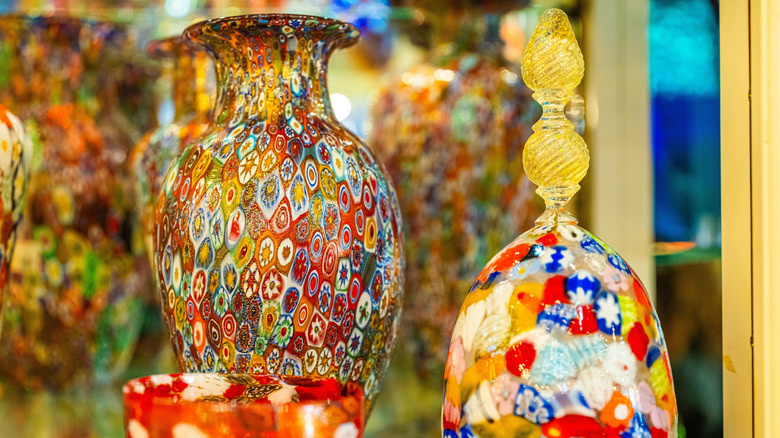
Angelo Barovier came from a renowned family of Italian glassmakers, but his innovations elevated the art to another level. Through painstaking research and practice, he succeeded in becoming the first European to develop a method of producing glass with great purity. He called this glass cristallo, and the Barovier name has become synonymous with the term Murano glass.
Original Cristallo glass attributed to the Barovier family can sell for anywhere between several hundred and several thousand dollars, but all Murano glass vases are valuable. The term covers several factories based on the island, and you should look out for signatures etched or engraved into the glass itself, or on paper stickers. These often contain the company name and location. The value of Murano vases ranges from $300 up to $2000 and more.
For some neo-classical elegance, look for Haeger
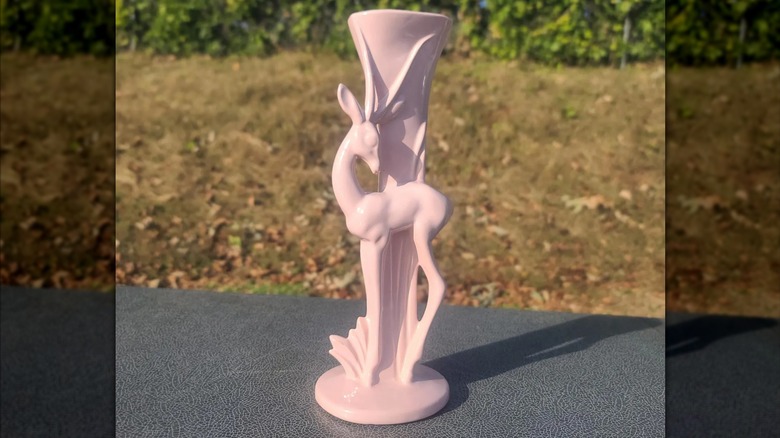
Initially founded in 1871, Haeger Potteries grew to become one of America's leading potteries over its lifetime, with a reputation for manufacturing artistic pieces. By the very early twentieth century, they were known to create unique decorative pieces. These, including handled vases in the Arts and Crafts style, can be thrifted to this day.
As the decades passed, the company hired new designers, and the overall style evolved. Haeger vases varied in color and shape over time, featuring classic urn shapes as well as nature-inspired ones like animals and flowers. The first thing you should look for is a clear signature on the underside of any vase, which will contain the Haeger name, a model number, and possibly the initials, U.S.A. Whilst Haeger's figurines tend to reel in the big bucks, the vases are usually worth under $100, still a lucrative deal if you can thrift one for a few bucks.
Nothing else looks quite like a Niloak vase
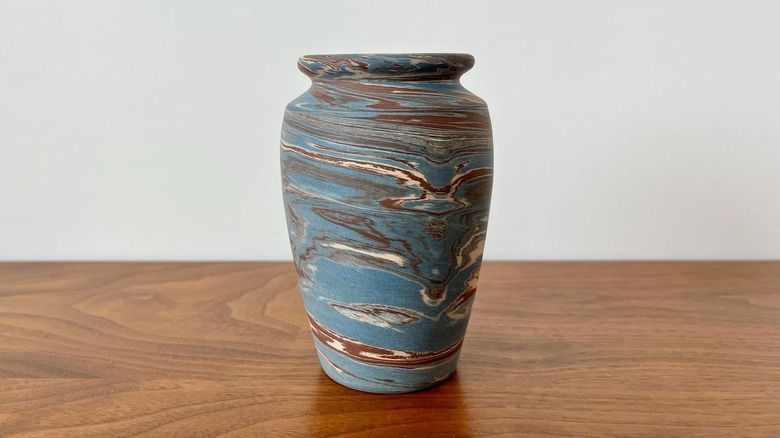
Niloak pottery was created by the Eagle Pottery Company in Arkansas, beginning in 1909. The name Niloak comes from reversing the spelling of the material used to create the vases. Kaolin is a soft clay found in the area and is popular for ceramics due to its lack of alkalinity. Niloak was a partnership between businessman Charles Dean Hyten and potter Arthur Dovey. Hyten's other family businesses had been centered around functional pieces like jugs and crocks. However, when he joined forces with Hovey, the two ventured into the decorative vase industry.
The outsides of Niloak pieces were left unglazed and featured various colors of clay swirled together. However, the interior is glazed to make it waterproof. This process results in a striking marble-like swirling texture in browns, blues, and creams. Values for these beautiful vases start at around $150 and rise to $1,000 or more.
Steuben represents the pinnacle of brilliant glassware
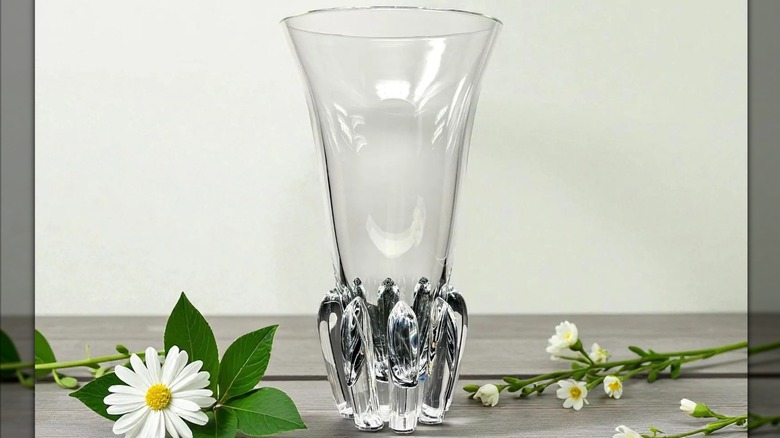
Founded in 1903 by master English glassmaker Frederick Carder, Steuben vases were crafted with luxury in mind. The company's unique prismatic crystal formula created a surface that could brilliantly reflect light. Many of Steuben's designs were innovative, featuring striking, flowing lines. The rarity of pieces varies as Steuben was renowned for discontinuing and restarting lines frequently.
To authenticate a suspected Steuben vase, search for a fleur-de-lis mark with the company's name printed in block letters. Some pieces may be engraved instead with 'Aurene' or 'Steuben Aurene'. You might also come across 'F. Carder' as a signature on some of the rarer Steuben items. Resale prices for these vases range from $100 up to an astonishing $40,000 and higher for rarer pieces, meaning they are certainly one of the glass items you should be looking for at thrift stores.