

Is Your Outdoor Teak Furniture Turning Gray? Don't Worry — Here's How To Restore Its Color
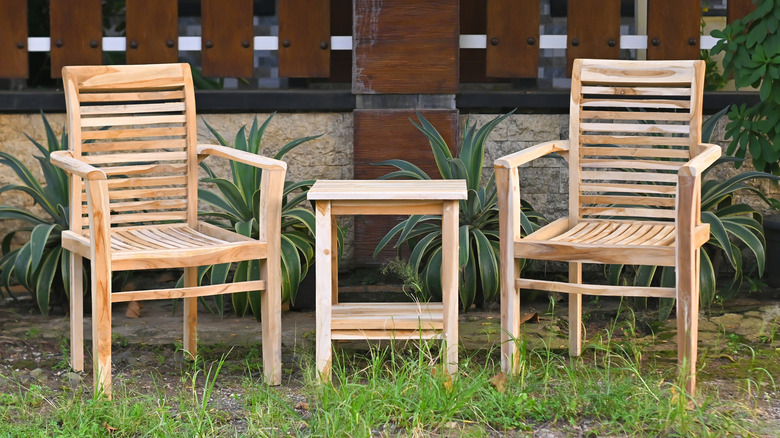
Investing in quality teak furniture is a great way to transform your patio into a cozy outdoor living room, and for good reason. Its honey-gold glow is gorgeous and inviting. But after a season or two of exposure to the elements, that lovely color can fade into a flat, silvery gray. While this change might look like a sign of rot or damage, there's actually no need to panic; this transformation is completely natural for teak and is simply oxidation. Teak is packed with natural oils, so the wood remains structurally sound, even when the surface color shifts. To restore its beautiful color, however, all you need to do is clean, sand, and seal the furniture. Easy peasy.
The gray patina is really just a thin layer of oxidized wood cells caused by sun exposure and rain. This silvering is the wood's way of protecting itself, acting as a built-in shield against the harsh environment of your backyard or deck. Some folks do actually like this weathered look on teak, as it offers a very coastal vibe and requires no effort from you to maintain.
However, you aren't stuck with that silver if it's not your vibe. Before you start scrubbing, though, make sure you've cleared off any leaves, spiderwebs, dirt, or other debris. The restoration process is super easy, but making sure each piece is cleared off first ensures the teak can be properly cleaned. Restoring teak is a satisfying DIY task that anyone can handle as a weekend project. This simple transition from gray back to gold is one of many reasons teak stays among the best types of wood for outdoor furniture.
How to get your teak outdoor furniture looking gold again
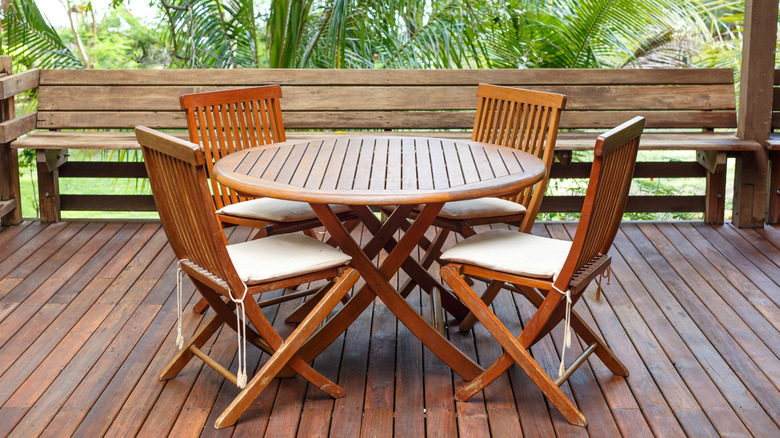
The first step to getting your teak restored is a good cleaning. Skip the power washer, though, as that intense pressure can shred the delicate wood and strip its oils. Instead, use either a specialized teak cleaner or a mixture of dish soap and water. Apply whichever you choose with a soft-bristle brush and gently scrub with the grain to banish dirt and gray oxidation. This should revive lightly grayed teak.
However, if it needs more work, grab a scrubber that's just slightly more powerful (like a rougher sponge, but nothing too scratchy). Once the wood dries, you should notice a big improvement in the color. If there's any remaining gray, or if the wood feels somewhat rough, use a fine-grit sandpaper (like 220 grit) to gently sand the surface. This will smooth everything out and scuff out lingering gray cells to reveal the gorgeous, oil-rich wood hiding just beneath the surface.
To keep that honey color locked in, apply a protector to your teak. While many people reach for teak oil, professionals often suggest a teak sealer instead. Why? Because sealers contain UV inhibitors that are basically like sunscreen for your teak furniture — they block the rays that cause graying in the first place. Once the sealer's on, let it soak in; then, wipe away any excess. This creates a barrier that locks the natural oils in and keeps the moisture out, and only requires a little bit of elbow grease from you. And now that your teak patio furniture is clean and glowing again, you can get back to the real work: pouring a cold drink and enjoying your beautiful backyard.