

Oversized Succulents That Act Like Natural Sculptures In Your Garden

We may receive a commission on purchases made from links.
There's no doubt about it: beautiful succulent garden design ideas have the ability to boost your home's curb appeal. However, when it comes to conjuring up ideas, you've got more options than simply displaying your carefully curated succulents in your home's borders and landscaping. Instead, if you really want to create a statement piece in your yard, you can choose an oversized variety of succulent to act like a natural sculpture — and there are dozens of plants to choose from.
There are thousands of types of succulents, many of which have made their way into the hearts of gardeners all over the world. And, while many people first think of houseplants — those small varieties that top the charts as the best succulents to grow indoors — those aren't your only options. Instead, when given adequate space outside, succulents can easily outgrow their indoor counterparts, with some species, like the century plant or giant yucca, reaching 20 feet or higher in height. This allows them to go beyond just adding unique texture and coloration to your garden to serving as natural, living sculptures with such a prominent wow factor that they may just steal the show.
If you've only worked with succulents indoors before, learning how to care for succulents outside can be a vastly different experience. While you'll still need to pay attention to soil parameters and hydration, you'll also want to familiarize yourself with each succulent's hardiness zones and preferred temperatures for eye-catching plants that thrive in your garden.
African milk tree
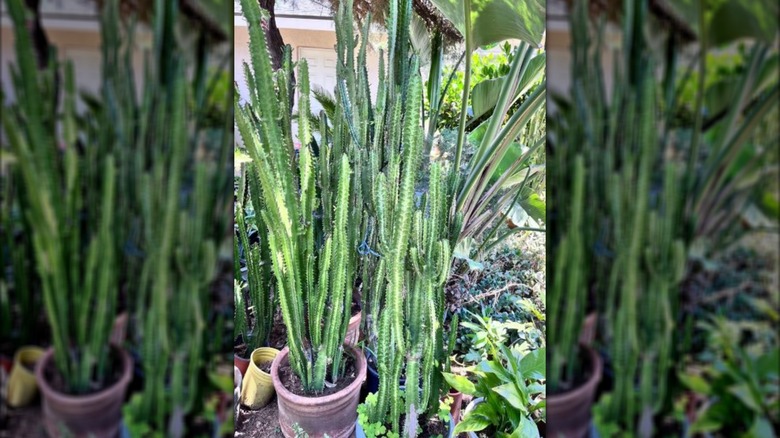
African milk trees (Euphorbia trigona) are classic succulents to grow indoors. However, if you want to take advantage of their ability to grow to 9 feet tall, you can also try adding them to your outdoor garden for a stunning natural sculpture. They offer spike-tipped wavy leaves and white flowers during the blooming season, allowing them to foster effortless visual appeal, thanks to how easy they are to grow. African milk trees are hardy in zones 9 through 11, and they do best in daytime temperatures ranging from 60 to 95 degrees Fahrenheit.
Century plant
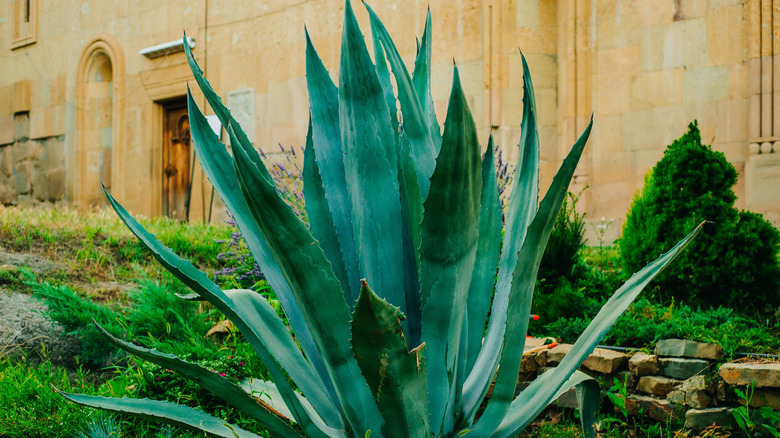
When you think of outdoor succulents, your mind may drift to century plants (Agave americana), those show-stopping succulents that gained their name for once taking an entire century to bloom. Although their 20-foot flower stalk often signifies the end of your plant's lifespan, they offer plenty of visual appeal to enjoy while they're still alive and thriving, especially given their height — they grow up to 6 feet tall. Century plants are hardy in zones 8 through 11, and their spiny leaves are perfect if you're looking to upgrade your home security with many stunning landscape plants.
Giant yucca
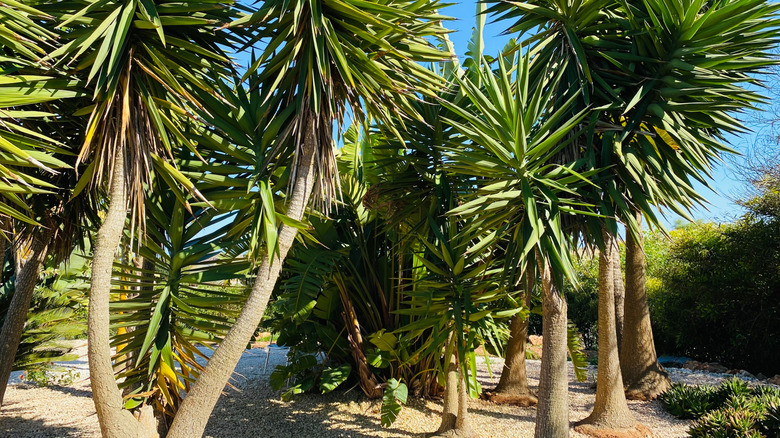
At first glance, the giant yucca (Yucca gigantea) may seem more like a tree than a succulent. When planted outdoors rather than confined to a pot indoors, these succulents can reach up to 30 feet tall and 25 feet wide. However, even when growing giant yucca outside as a natural sculpture, you may choose to add it as a highlight to your container garden, with the flexibility to bring it indoors (especially when temperatures drop below 50 degrees Fahrenheit). Giant yucca is hardy in zones 10 to 12. Consider surrounding it with drought-tolerant flowers for extra color.
Candelabra cactus
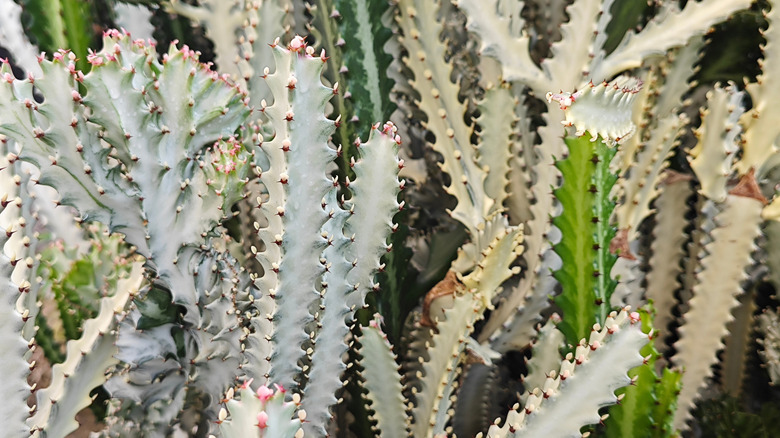
Sometimes, you may wish for more minimalist succulents for your garden — subtle but appealing additions that act as highlights. However, if you still want your succulents to look like stunning sculptures in your garden, look no further than the candelabra cactus (Euphorbia lactea). Hardy in zones 10 and 11, this 15-foot succulent is sure to steal the show with its rare flowers and branching spiny stems resembling the candlestick it's named for. While many succulents grown outdoors thrive in full sun, the candelabra cactus grows in full or partial sun for more flexibility in the planting location.
Eve's needle cactus
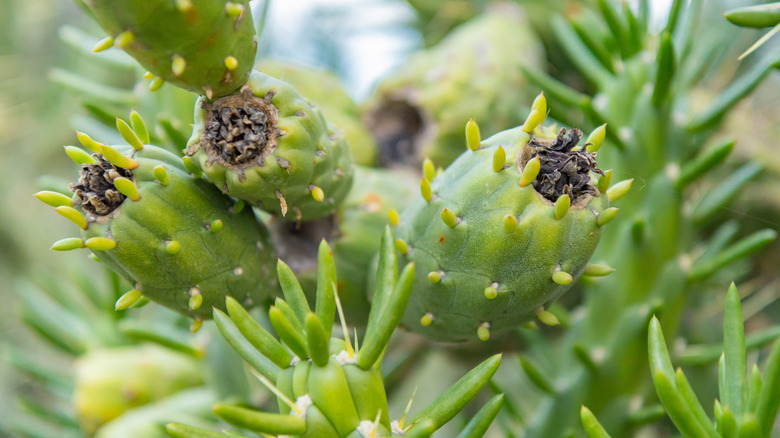
The Eve's needle cactus (Austrocylindropuntia subulata) pairs fleshy paddles with various long spikes, creating a plant that appears almost otherworldly. While it may not be as large as other oversized succulents on this list, its 13-foot maximum makes it sure to stand out in your garden. The care for Eve's needle cactus walks a fine line: it can't handle low temperatures or high humidity. However, it is hardy in zones 9 through 11, with a notable tolerance for drought and poor soil that makes it perfect for adding a dramatic flair to sparser areas of gardens.
Elephant bush
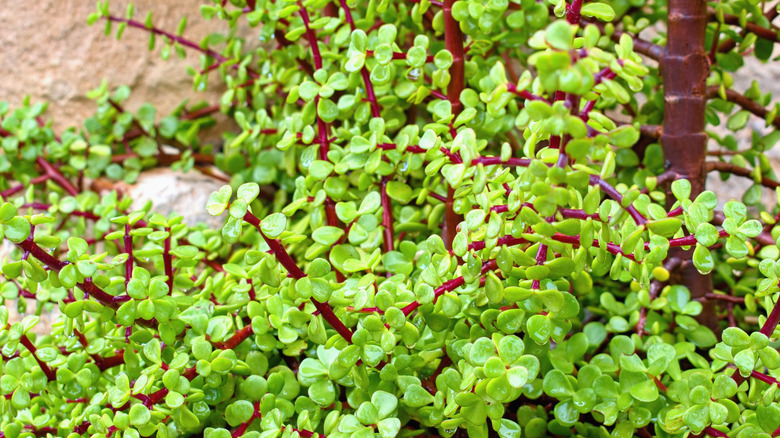
Growing oversized succulents as natural sculptures isn't just about taking up square footage in your garden. Instead, it's about commanding attention — an act that the elephant bush (Portulacaria afra) excels at, thanks to the small but charming pink flowers it produces in ideal environments. Although these flowers can be rare, the elephant bush has other visual features to offer, such as its 15-foot height and vibrant green leaves on bright red stems. Like the Eve's needle cactus, the elephant bush is hardy in zones 9 through 11, and it's also tolerant of heat but not frost.
Barrel cactus
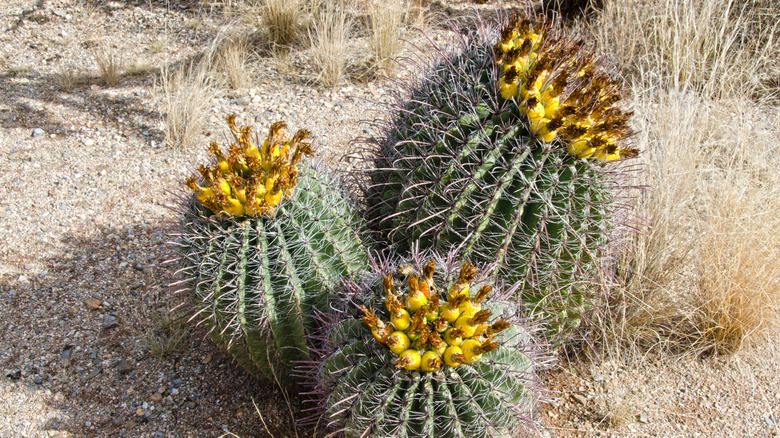
Few types of cacti are as memorable as the barrel cactus (Ferocactus spp.). This genus sports those plump, round cacti crowned with an array of both spikes and vivid florals. While you certainly won't want to touch this spiky cactus (which can grow up to 10 feet tall and 3 feet wide, depending on the species), the wreath of yellow or pink flowers it's crowned in is quite the sight, helping this otherwise shorter genus stand out as a natural sculpture. Overall, though species-specification details can vary, barrel cactus are hardy in zones 9 to 11.
Ghost plant
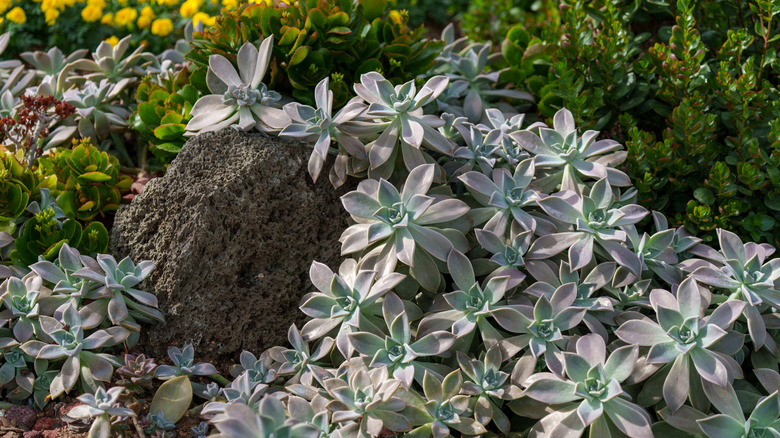
Not all oversized succulents sport impressive heights. If your goal is to maximize horizontal space in your garden while cultivating stunning succulents, you may instead opt for a plant such as the ghost plant (Graptopetalum paraguayense). Ghost plants can grow up to 3 feet wide, and they're as hardy as they are eye-catching with pink-tipped pale leaves. Although their USDA range is similar to that of other succulents discussed so far, 9 to 11, they can handle temperatures as low as 15 degrees Fahrenheit with the right preparation. This makes them perfect for gardens in cooler climates.
Mexican Giant echeveria
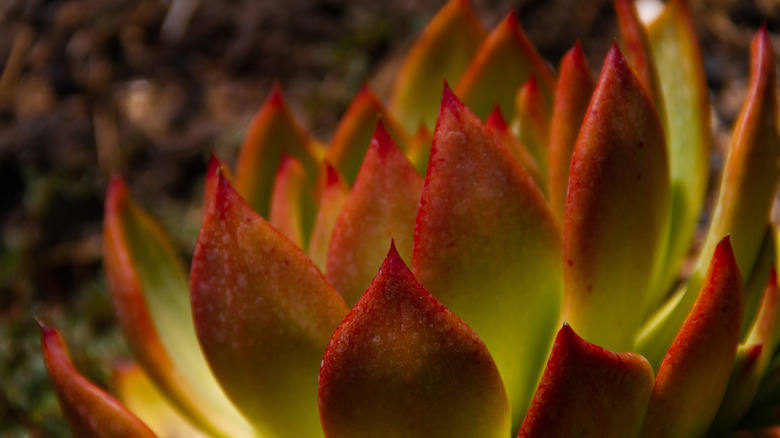
If you're looking for an oversized variety of echeveria, look no further than the Mexican Giant echeveria (Echeveria colorata 'Mexican Giant'). Hardy in temperatures as low as 25 degrees, this plant can grow to be around a foot tall, with a width of approximately 16 inches. That's not all, though: the Mexican Giant echeveria also produces flower stems as long as 20 inches. While still oversized, it's more compact than other plants on this list, allowing you to cultivate that natural sculpture appearance you love while making the most of a small backyard.
Felt bush
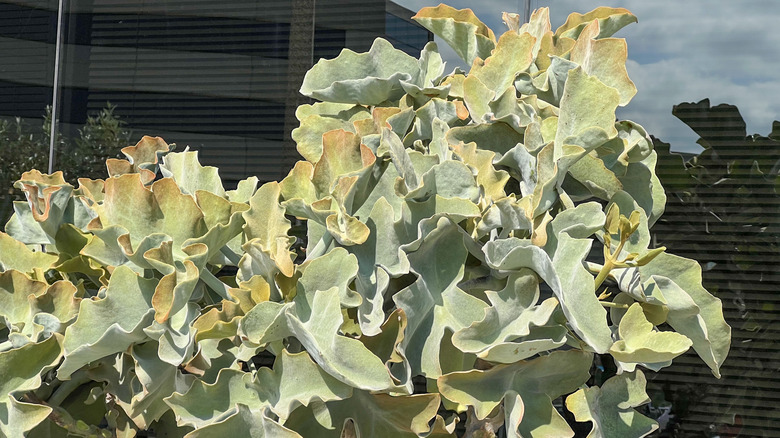
Another top contender if you're looking for a larger succulent to elevate your garden space, the felt bush (Kalanchoe beharensis) can grow up to 5 feet tall. What helps this plant stand out is its peculiar leaves, which are covered in a layer of hair similar to felt. Each leaf can grow up to 14 inches in length and width, adding to the bulk of this plant. While some succulents, like the candelabra cactus, rarely bloom, the felt bush produces chartreuse-colored flowers during spring and summer, though it has year-round visual appeal, thanks to its distinctive leaves.
Fox tail agave
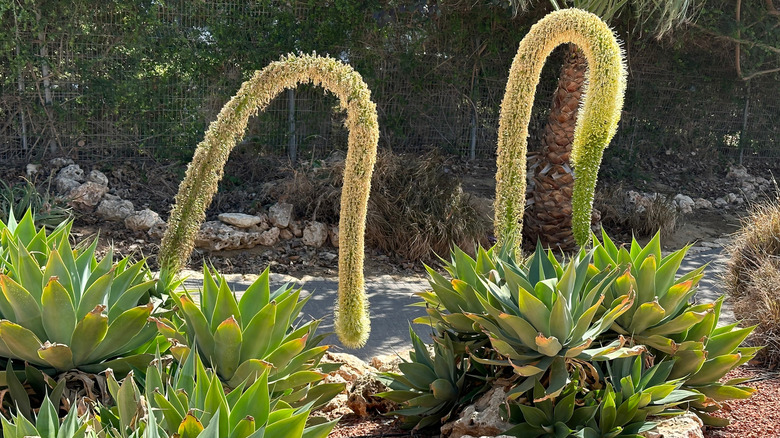
Like echeveria, agave is a classic when planning a succulent garden, and the fox tail agave (Agave attenuata) maintains the genus' eye-catching proportions while lacking any spines or spikes. As a result, you can incorporate it as a natural sculpture in your garden, even if you're creating a more pet- and child-friendly outdoor space. Fox tail agaves can reach heights of 5 feet while sporting larger widths up to 8 feet. It can be grown as a perennial in zones 9 through 11, and it's commonly incorporated in both container gardens and landscaping.
Cabbage head agave
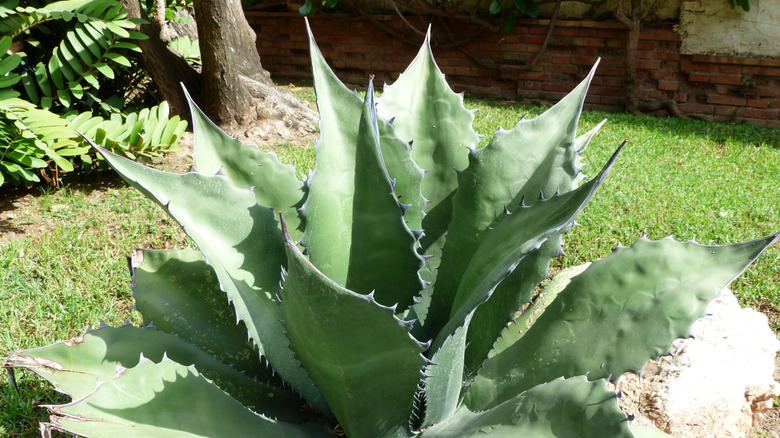
Rather than the smooth fox tail agave, you could grow cabbage head agave (Agave parrasana). While they can make handling a challenge, those iconic agave spikes lend to the plant's dramatic appearance. This plant is compact, maxing out at 2 feet in both width and height, but it blooms with an impressive flower stalk growing up to 20 feet tall. This plant is hardy in zones 7 through 11, and it can also be added when creating a pollinator-friendly garden, since it attracts hummingbirds.
Saguaro
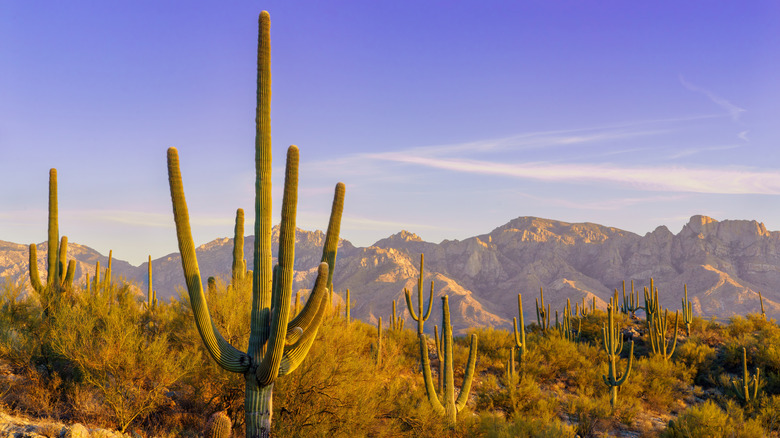
Remember when we said that barrel cacti were one of the most iconic species? If there's any plant that can match its memorability, it's the saguaro cactus (Carnegiea gigantea). In the wild, these cacti only grow in the Sonoran Desert. However, if you're able to replicate their natural habitat, you can also enjoy these gentle giants (which can grow up to 60 feet tall) in your own garden. Saguaro cacti are hardy in zones 8 through 11 and require full sun. Just keep in mind that it can take over a century for them to reach their full height.
Jade plant
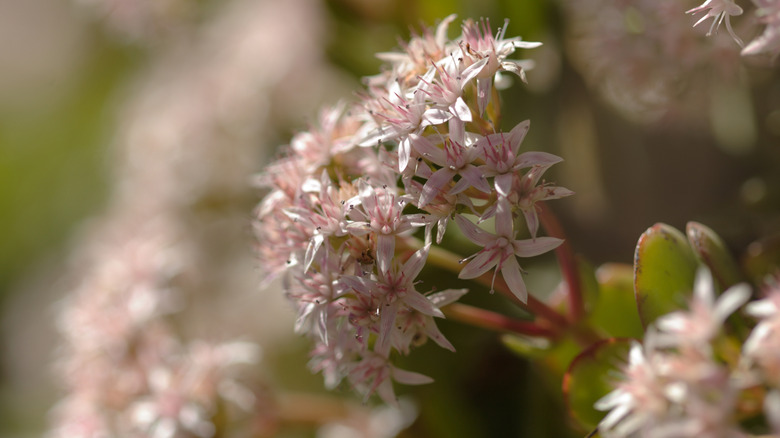
The jade plant (Crassula ovata) showcases its massive size both indoors and out. However, whereas it only grows up to 6 feet indoors, it can easily reach 10 feet in height outdoors with the right environment. At first glance, this succulent closely resembles a tree. It features gradient leaves, transitioning from red tips to vibrant green centers, and dainty white flowers. Because they don't tolerate frost, jade plants may not be able to survive outside year-round in cooler climates. However, it is hardy in zones 10 through 11.
Tree houseleek
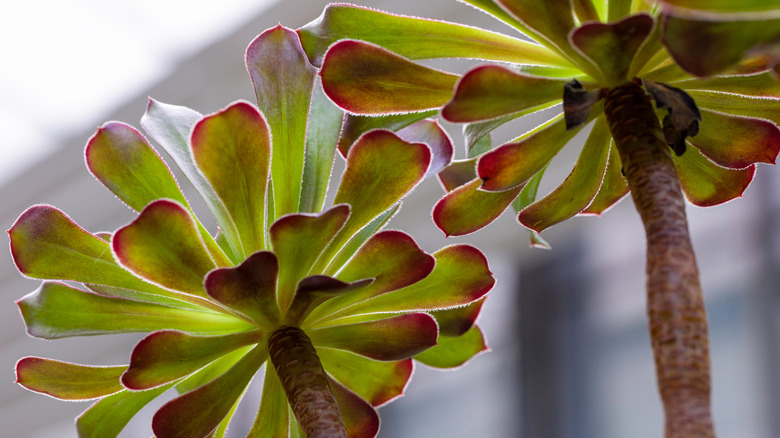
Tree houseleeks (Aeonium spp.) feature many species, like the Aeonium canariense, growing up to 20 inches in diameter, and others growing as tall as 5 feet. With eye-catching rosettes in a range of colors, tree houseleeks can make the perfect alternative to flowers if you're trying to create a succulent garden. Just make sure you live in the right area to support their year-round growth to enjoy their evergreen foliage — these plants are hardy in zones 9 to 11. Tree houseleeks grow well in pots, adding flexibility in their positioning, depending on your decorating needs and climate.
Roadside prickly pear
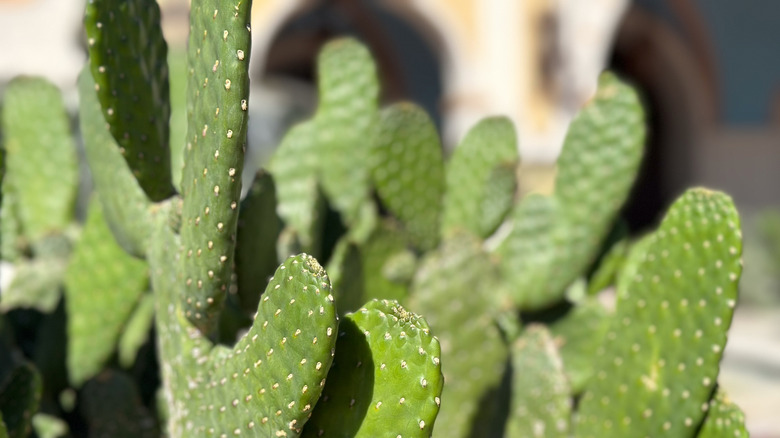
Also known as the cactus tree, the roadside prickly pear (Consolea rubescens) has certainly earned its name. The mature plant closely resembles a tree and can grow to be as large as 20 feet tall. It can also be as wide as 5 feet, making this an impressive oversized succulent but also one in need of plenty of room to accommodate its adult size. The roadside prickly pear is only hardy in zones 10 and 11. Unlike other succulents that can be grown indoors and out, it's not recommended to bring this plant inside.
Bilberry cactus
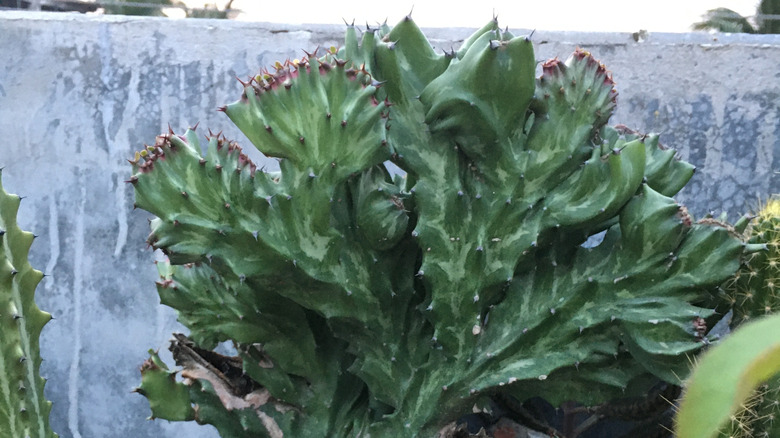
The bilberry cactus (Myrtillocactus geometrizans) is similar in appearance to the candelabra cactus, thanks to its branching arms and 15-foot maximum height. However, you can expect the bilberry cactus to produce pale flowers that eventually give way to fruit. As a result, the bilberry cactus offers year-round visual appeal to your garden, whether as a statement piece due to its size and spread or stunning florals. However, it is only hardy in zones 9 through 11. You can incorporate the bilberry cactus both in garden beds and directly in your garden.
Peruvian apple cactus
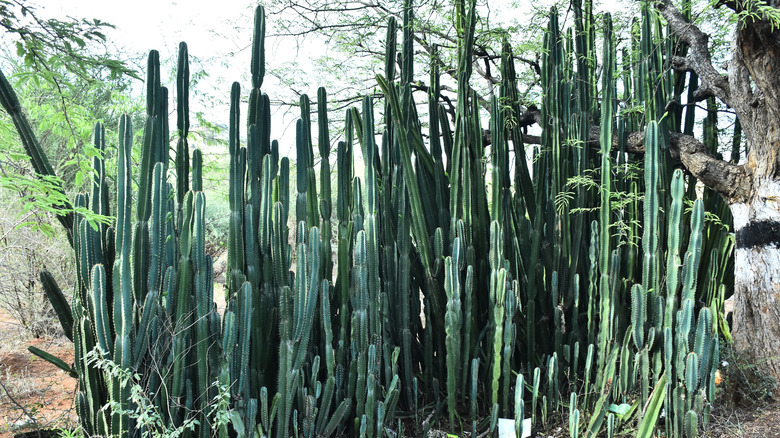
A height up to 30 feet, show-stopping flowers, and edible fruit — the Peruvian apple cactus (Cereus repandus) has it all, making it the perfect choice for a plant worthy of replacing the visual appeal sculptures can offer. The Peruvian apple cactus grows with multiple tall stems, each one ribbed and spiny for a dramatic appearance. The flowers, which bloom at night, are as large as they are fragrant, activating all your senses when touring your garden. Like many other oversized succulents, this plant is winter hardy in zone 9 to 11.