

11 Companion Plants That Will Help Your Carrots Flourish In The Garden
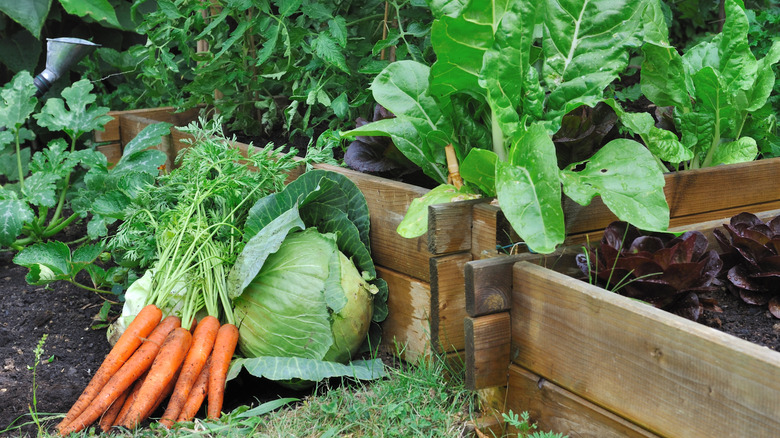
While carrots are a garden staple, loved for their sweet flavor that always tastes better than store-bought, they can be harder to grow than you might think. Unlike other beginner-friendly plants like beans and tomatoes, carrots require a little extra care. Who hasn't planted carrots and looked forward to an amazing harvest only to discover they were all stunted, misshapen, and flavorless? It can happen to the best of us. Thankfully, there is a way to prevent this from occurring with companion planting. You can ensure your carrots flourish by planting onions (Allium cepa), radishes (Raphanus sativus), tomatoes (Solanum lycopersicum), and a few other favorites nearby.
You might be wondering about what companion planting is and how it benefits your garden. Simply put, companion planting is the act of planting a variety of plants near one another that benefit one another. It is a sustainable gardening method often used in organic gardens to reduce the use of pesticides and chemical fertilizers. You might be wondering whether science supports companion planting. It does. Companion planting creates biodiversity in the garden, which helps prevent naturally occurring imbalances that cause soil issues, disease, and critter infestation. Planting veggies, flowers, and herbs that benefit carrots alongside them can help prevent many of these issues and yield healthier plants and better harvests.
Daffodils
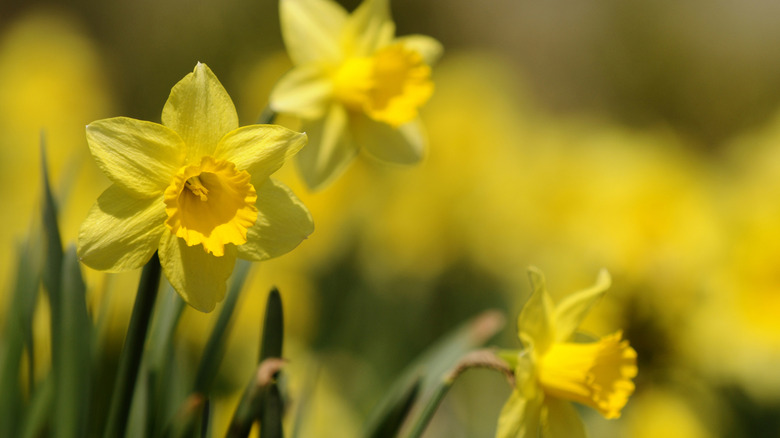
Daffodils (Narcissus) are not only lovely spring flowers that can fill a garden with much-needed cheer after a long winter, but they can also be beneficial as a companion plant for carrots. The popular flower helps prevent critters from digging up your carrots before they've had a chance to get established. Garden threats like voles, squirrels, mice, and deer avoid daffodils because of their bitter taste and strong scent. If you live in USDA Hardiness Zones 3 through 9, you can successfully use daffodils for companion planting near carrots.
Tomatoes
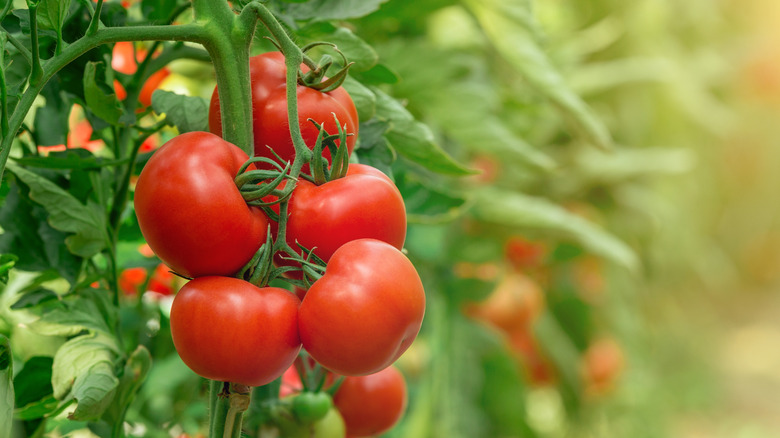
Tomato plants are another garden staple that not only make great additions for beginner gardeners but also make wonderful companion plants for your carrots. Tomatoes can benefit your carrots by providing a little extra shade during the hottest part of the season. Carrots attract a parasitic wasp that reduces the chances of your tomatoes getting infested with the dreaded hornworm. You can grow tomatoes with your carrots if you live in zones 5 through 11. It's important to keep these two plants well-watered.
Onions
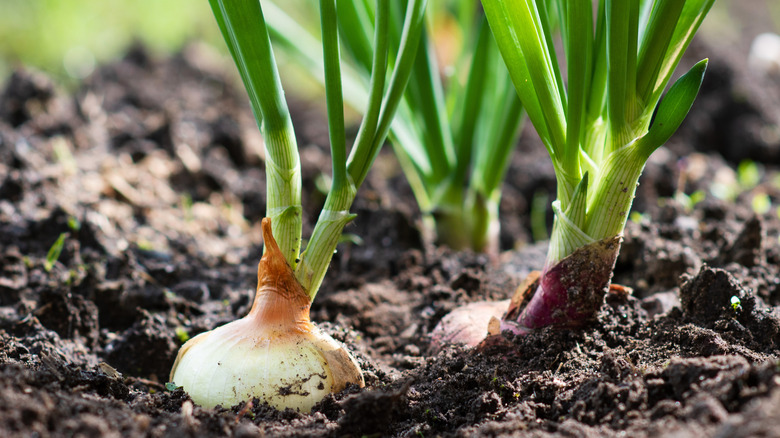
There are a lot of benefits of planting onions next to carrots in your garden bed. The biggest benefit is something onions are well known for, their strong odor, which can help drive away many pesky insects. One insect in particular that onions can help deter is the carrot rust fly, which is extremely damaging to the developing vegetable. Onions do not interfere with your carrots' soil needs because they grow rather shallowly. You can successfully companion-plant onions with your carrots across much of the U.S. The hardiness zones depend on the type of onion you choose.
Bush beans
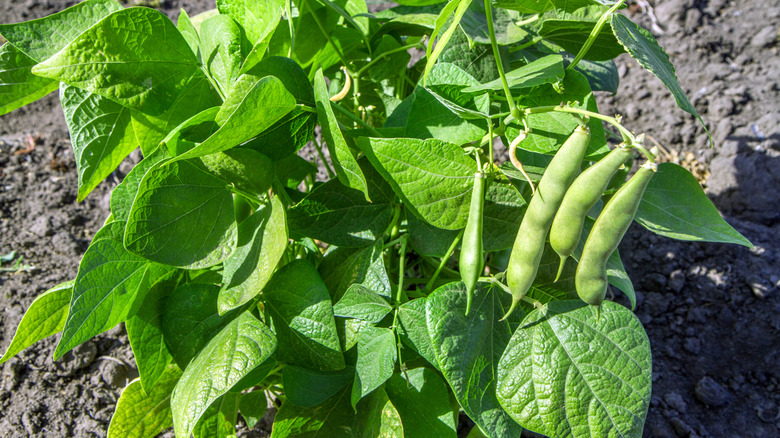
Bush beans (Phaseolus vulgaris) provide much-needed nitrogen for carrots without damaging their roots (through slow release). If you want to provide extra nutrients for bigger harvests, companion plant your favorite bush beans along your rows of carrots. You can grow many varieties of bush beans successfully with your carrots if you live in zones 2 through 11.
Cilantro
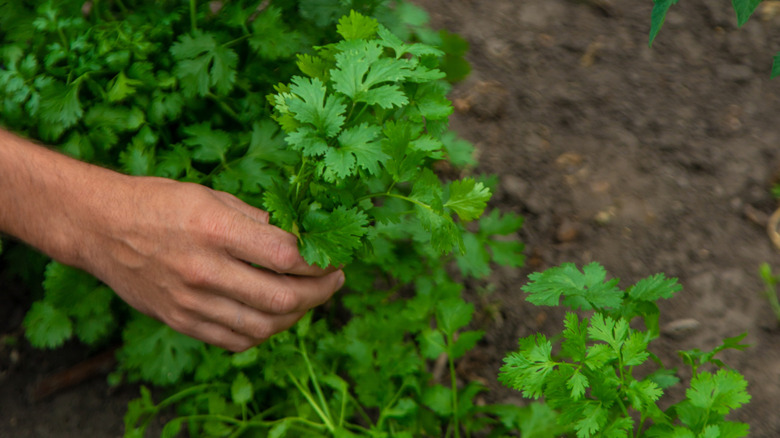
Whether you love or hate cilantro (Coriandrum sativum), this herb makes a wonderful companion plant for your carrots. Cilantro is the exception to the rule when it comes to companion planting: things from the same family should not be planted near each other. The real benefit of using cilantro to help your carrots happens when you let them flower. The cilantro flowers attract beneficial insects that are the natural enemies of common carrot pests. You can effectively grow cilantro if you live in zones 2 through 11.
Marigolds
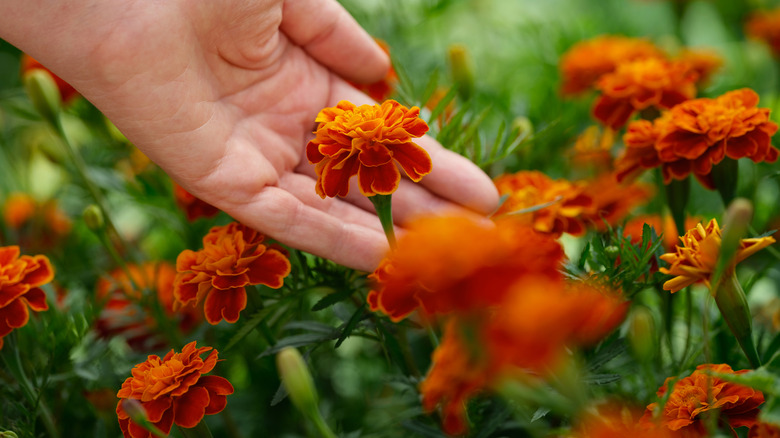
Is there anything negative about growing marigolds (Tagetes) in the garden? They are beneficial for nearly all your garden plants. Not only do these adorable flowers add a lovely pop of color to your garden, but they are also great at deterring harmful insects with their strong odor. As another plus, they attract beneficial insects. The key to planting marigolds in your garden is to make sure you know the variety you have and its spacing needs. Some marigold plants grow larger than others. You can use marigolds as carrot companion plants in zones 2 through 11.
Beets
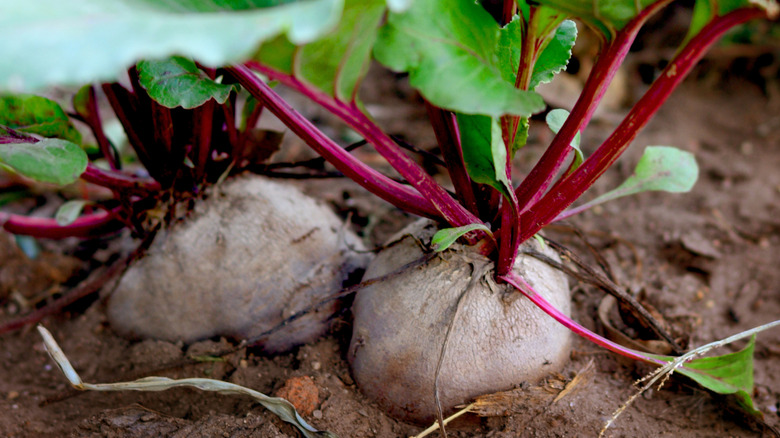
Beets (Beta vulgaris) can be planted at the same time as carrots and make wonderful companion plants. These purple root veggies don't take up much space, and they loosen the soil, which is great for carrot growth. Carrots often become stunted due to compacted soil. Loose soil also helps with water drainage, which is always beneficial for preventing rot in root veggies. You can grow beets with your carrots if you live in zones 2 through 11.
Oregano
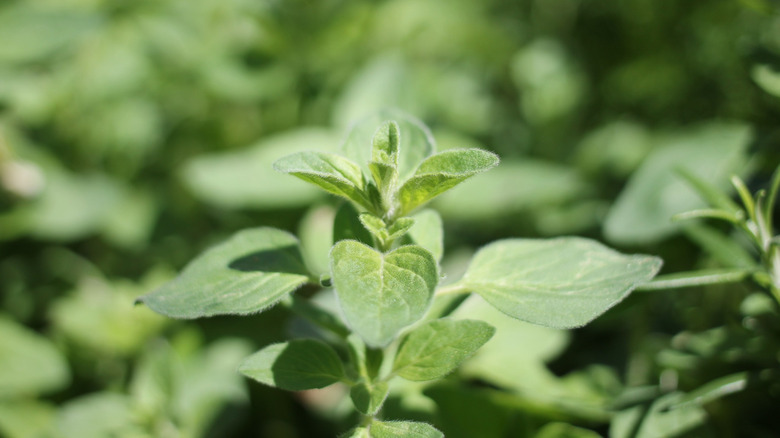
Oregano (Origanum vulgare) acts in a similar way to some of the other scented plants on our list, by driving away harmful insects. The essential oils in oregano act as a natural insect repellent. By reducing the carrot's natural insect enemies (rust flies and nematodes), this herb helps carrots thrive. You can successfully grow oregano as a carrot companion plant if you live in zones 4 through 8.
Radishes
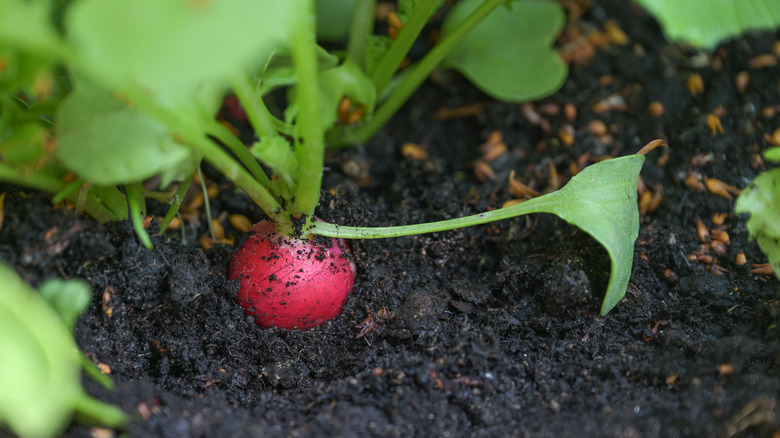
There are a couple of benefits of planting radishes next to carrots in the garden. They loosen the soil naturally and can prevent it from drying out while carrots are getting established. Make sure to plant them at least 6 inches from your carrots for the best results. It's also important to choose a fast-growing variety of radish to get the most benefit from this carrot companion, as you do not want them to overshadow your young carrots for too long. Radishes do best if grown in zones 2 through 10.
Chives
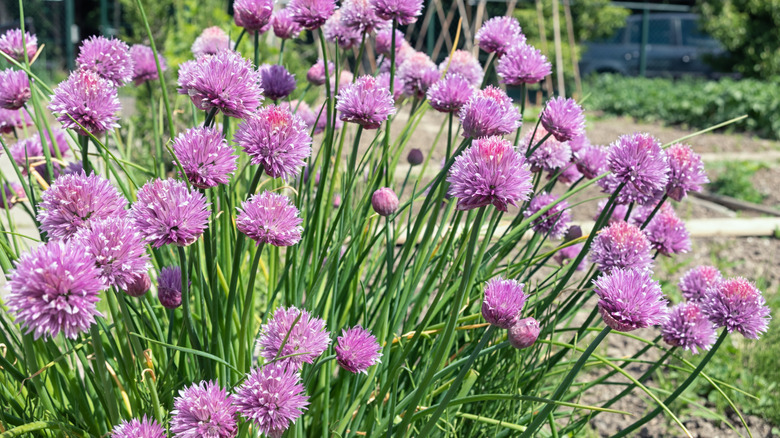
Because chives (Allium schoenoprasum) are part of the same family as traditional onions, they have the same benefits. Their strong smell helps drive away harmful insects. The smell confuses other critters and throws them off the scent of the carrots. Chives are also a great option for those who don't want to grow traditional onions, as they tend to have a milder flavor. They also have lovely purple globe-shaped flowers that add a touch of color to your garden. If you would like to use chives for companion planting with carrots, you can grow them in zones 4 through 8.
Nasturtiums
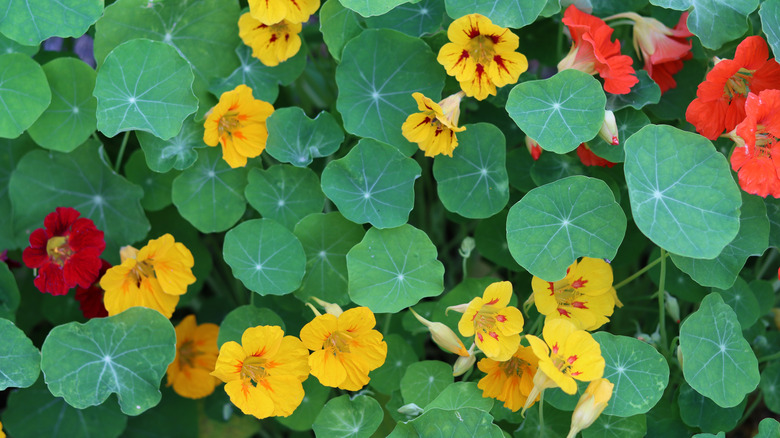
Many seasoned gardeners know the benefits of adding nasturtiums (Tropaeolum majus) to their veggie gardens. They make wonderful companion plants for carrots because, like marigolds, nasturtiums have a knack for deterring harmful insects while attracting beneficial ones. Their scent is also a great deterrent, helping protect carrots from being eaten by other critters. Plus, they thrive in a variety of soil types and are extremely low-maintenance. Nasturtiums can be grown in gardens in zones 2 through 11.