

The Sweet Fruit Tree That Nectar-Drinking Birds Will Love In The Spring
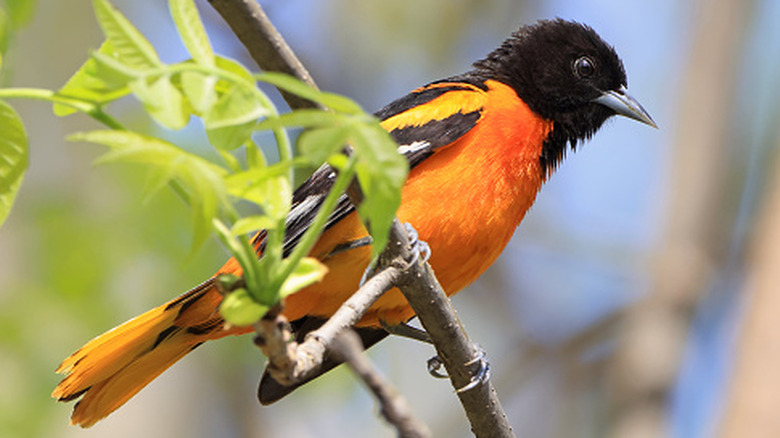
When planning a pollinator-friendly garden, gardeners often think of flowers that attract bees, butterflies, and other insects. Protecting our insect pollinators is certainly vital for our very survival: According to the National Park Service, 80% of our crop plants rely on pollination. But we shouldn't forget about the birds, as they are excellent pollinators as well, and just like bees, birds face serious challenges. Since the 1970s, nearly 30% of North America's birds have disappeared — some three billion birds — due to habitat loss and pesticide use, according to research published in the journal Science. Bird-loving gardeners can do their part in protecting bird species by planting cherry trees, whose nectar-rich blossoms open at exactly the right time in spring for many hungry birds, whether they live in your area year-round or are just passing through on their annual migration.
Depending on weather conditions and your climate zone, cherry trees can bloom for two to three weeks, anywhere from early spring to late spring. The bloom time in your area may also be peak migration time for songbirds like orioles and Cape May warblers. And the abundance of flowers on a cherry tree is an excellent food source for local birds with high metabolisms, like hummingbirds, which use their long beaks and tongues to sip the nectar out of a blossom.
Other birds, like northern cardinals and blue jays, eat the entire blossom and get pollen on their beaks, spreading it around to other cherry blossoms. An additional benefit is that birds attracted to your cherry trees will eat insects found on the trees and keep disease in check by trimming excess blossoms.
Grow cherry trees in your yard
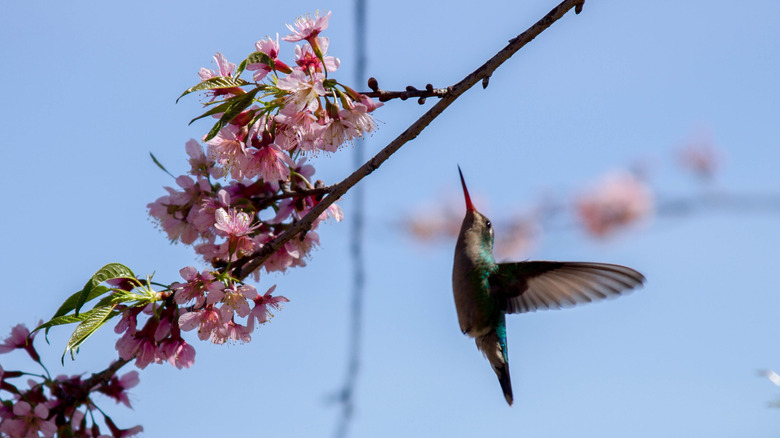
Cherries are fruit trees that even a beginner gardener can grow. Sour cherries (Prunus cerasus) are self-fertile, meaning you need only one tree in your garden to produce fruit. However, most sweet cherries (Prunus avium, literally "bird cherry") require a second tree for pollination. If you're pressed for space, you can also find compact cherry tree varieties, which cast a shorter shadow.
Most common cherry varieties, including sour and sweet ones, are best grown in USDA Hardiness Zones 3 to 8, though some varieties may be better suited in warmer or cooler climates. Nearly all parts of cherry trees contain cyanide compounds that can be toxic to humans and animals in large amounts, so keep your pets and small children away from the tree.
To produce their abundant flowers and fruit, cherry trees need lots of sun — six to eight hours a day at a minimum. They prefer porous soil that can retain moisture but is also well-draining, as soggy soil promotes root rot. Cherries prefer soil with a pH of between 5.5 and 8.0, preferably around 6.5. If your soil isn't already organically rich when you're planting your tree, dig a hole a few feet wide and deep, place your sapling in the hole, and then backfill the hole with a mix of soil and compost.
Give the tree a deep watering, and continue watering your young tree with about an inch of water per week until the end of the first growing season. To prevent weed growth and promote water retention, mulch around the base of the tree, keeping the mulch away from the trunk itself. Once your tree is well established, prune your cherry tree regularly, especially if it's a sour cherry.