

Absorbent Natural Materials That Will Prevent Your Wet Yard From Turning Muddy
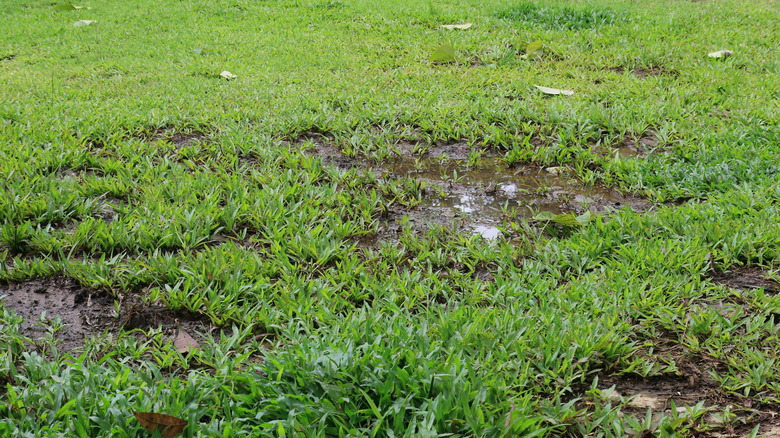
Winter and spring often bring lots of rain and snow, which can quickly turn your yard into a muddy mess. A muddy yard is annoying, but over time it can also lead to issues with mosquitoes and erosion. Understanding the reasons why your yard is getting muddy can help you prevent it. The main causes of mud issues are poor drainage, lack of plants, compacted soil, and low spots where water can pool. And while there are simple tricks for restoring your muddy lawn when it gets too wet, it's even better to prevent the issue altogether if you can. One way to prevent a wet yard from turning muddy is to add natural materials that can absorb water and help you avoid pooling and mud buildup. Gravel, stone, mulch, wood chips, and water-tolerant plants are all great choices.
Before you choose which types of natural materials to add to your yard, consider where you're having issues with mud. If the mud is occurring in a high-traffic area, gravel or crushed stone can be an easy way to improve drainage. Gravel protects the surface of the soil, so it won't become as compacted when you walk on it. Water can also easily pass through gravel or crushed stone, which improves drainage and prevents water from pooling. If you have a larger area of your yard that gets muddy, consider a stunning gravel patio design to give the space a complete makeover.
The best natural materials to prevent a muddy yard
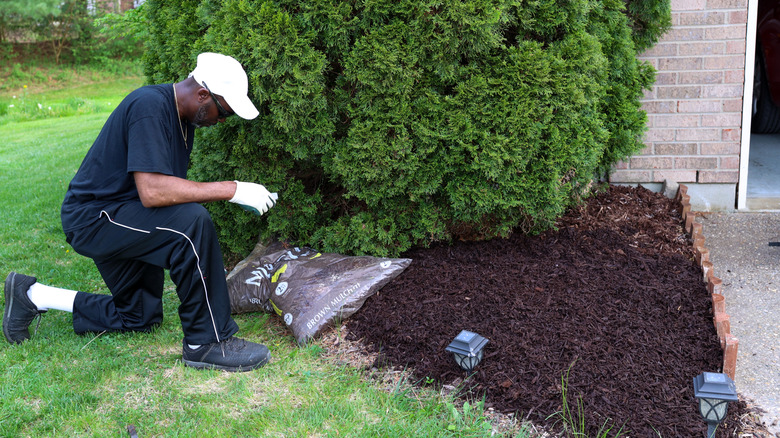
Mulch and wood chips are also helpful materials because they are naturally absorbent and aid in preventing soil erosion. These materials are best for lower-traffic areas, like in garden beds and bordering trees and shrubs. Mulch and wood chips also help to suppress weed growth, so they can benefit your yard in more ways than one.
Finally, planting water-loving shrubs, trees, and flowers is another way to avoid mud issues. If you're up for a landscaping project, you can create a rain garden using the best plants that help with flooding. Consider your yard's moisture level and the climate before choosing plants for your rain garden. Plants that are native to your area will do the best because they'll require less maintenance and can withstand temperatures in every season. Choosing plants with deep roots can break up compacted soil, which will also help your yard's drainage over time as the roots spread.