

The Hardy Perennial Shrub To Prune In Spring For More Flowers In Summer & Fall
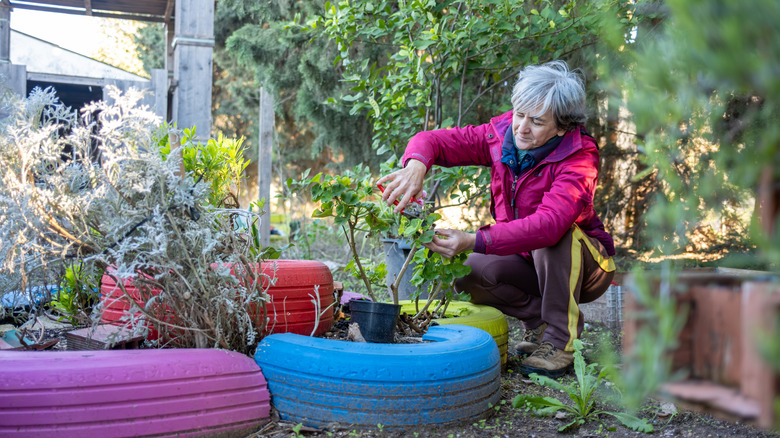
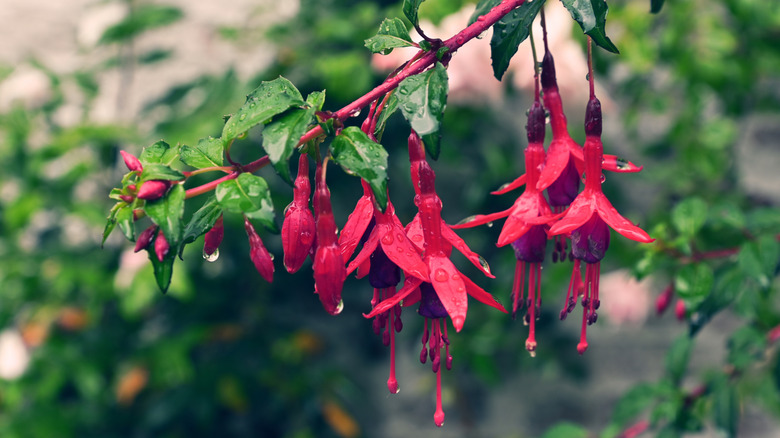
With the frost slowly retreating and the first hints of green peeking through garden soil, it's time to grab your pruning shears and start one of the most rewarding tasks of the early spring gardening season. The hardy fuchsia (Fuchsia magellanica) is a perennial shrub that thrives in USDA zones 5 to 10 and brings an exotic look to any landscape thanks to its unique, dangling flowers. Many gardeners don't remember the three Cs rule for pruning plants, and mistakenly prune this one too early in the winter, exposing its delicate crown to deadly freezing temperatures. But pruning it in early spring, once the last hard freeze passes, ensures a big floral bloom during summer and fall.
The main reason to prune your hardy fuchsia at this time is that it blooms almost exclusively on new wood; that means the flowers you see in July and August grow on the fresh stems produced during the current season. By cutting back last year's old, woody growth, you're essentially giving the plant an adrenaline shot. Pruning tells the plant to stop using its energy to maintain old branches and start using it to push out new shoots. These fresh stems are the foundation for the flowers that'll eventually grow in a weeping canopy of color.
Once you see tiny green buds or leaf nodes appearing near the base of the plant, that's the green light to begin. Leaving the old wood intact through the winter gives the roots necessary insulation, but removing it once safe clears the way for sunlight and air to reach the center of the plant. This helps prevent mold and helps prevent common fuchsia plant diseases.
How to properly prune a hardy fuchsia for non-stop blooms
Don't worry: you don't need to be a seasoned botanist to get the absolute most out of your hardy fuchsia, you just need to be brave with your cuts. Start by identifying any damaged, diseased, or dead wood. Anything in those categories should be completely removed to keep the plant healthy. For the rest of the shrub, a hard prune is the best approach to maximize flowering. Cut last year's stems back significantly, leaving only about 3 to 4 inches of growth above the ground, and make your cuts just above a pair of healthy-looking leaf buds. This might feel drastic, but fuchsias are resilient and will bounce back with more density than before.
If you want to double your flower count for the summer and fall, use the pinching technique once your new growth starts up. Once a new stem develops two or three sets of leaves, simply pinch off the very tip with your fingers. This tells the plant to stop growing in a single line and instead sprout two new side branches from that point. By repeating this a few times in late spring, you'll create a bushier shrub with more flower-forming tips.
By successfully caring for your fuchsia plants, they'll stay productive well into the autumn months. And as long as you keep your plant hydrated, and make sure plenty of light and air circulation hits those fresh branches, you'll enjoy a continuous waterfall of blossoms until the first hard frost hits later in the year. With just a few minutes of work this spring, your garden will be the envy of the neighborhood all the way through October.