

The Heat-Tolerant Rose Alternative (Without The Thorns) That's Great For Cut Arrangements

Tending to a flower garden is an exercise in patience. Each flower seems to have its own very specific needs, and if not met, they can fail. Much like the youngest child of the garden, roses can feel the neediest at times, prone to rust and wilting at the slightest bit of heat. And how do they thank you for your efforts? With a thorny poke. By midsummer, the flower garden begins to feel like a debutante ball that has gone on far too long, and all the blooms wilting and tired looking. But one corner of the garden didn't seem to get the memo. Unruffled and still blooming strong, the lisianthuses (Eustoma grandiflorum) stand proud. These beautiful flowers are a popular choice in flower gardens for cut flower arrangements as an alternative to the problematic rose.
While we can all agree roses are one the most popular flowers that are perfect for a cut flower garden, they come with a few negatives. That is why gardeners often search for alternative flowers to plant. This is where lisianthuses are the perfect alternative to a standard rose; they have blooms similar to a rose, but no thorns, and are significantly more heat tolerant. Lisianthuses also have the added benefit of being a little more cold-tolerant when they are first planted. Many gardeners avoid planting roses because of their thorny nature and the fact that the majority of rose varieties are not able to tolerate the heat of a hot summer, but lisianthuses don't carry these same drawbacks. They also happen to make a perfect choice for cut flower arrangements and come in a variety of colors similar to roses.
Growing lisianthus for your cut flower arrangements
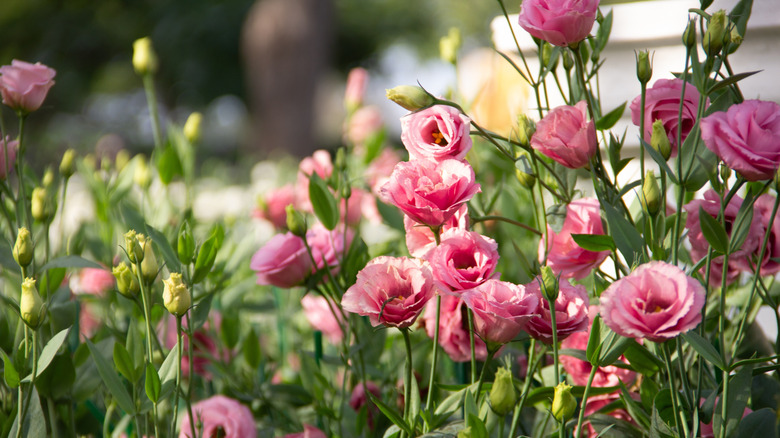
Lisianthus plants are notoriously difficult to grow from seed, so most find it easier to start with seedlings. Although they are mostly known as an herbaceous perennial that can make it through the winter in USDA Hardiness Zones 8 through 10, they are grown throughout much of the U.S. as an annual. The key is starting lisianthuses early, as they can take a long time to grow to maturity. Lisianthuses prefer to start their life as seedlings in cooler soil, so it's best to get them in the ground a couple of weeks before the last frost of the season. Be sure to plant your seedlings in a location with full sun and late in the day shade. Lisianthuses thrive in moist, well-draining soil. Not only do they do better during hot summers, but they are also drought-resistant making them more resilient than their rose cousins.
Lisianthuses are a popular flower for bouquets and flower arrangements because they have beautiful, romantic blooms. Like other flowers grown for floral arrangements and bouquets, the best time to cut them from your garden is earlier in the day. This will ensure you get the most life from your blooms. Another advantage these gorgeous flowers have is that, once cut, they last an exceptionally long time in a vase — up to two weeks. Because they produce blooms from summer through late fall, you can be sure they will provide you with many lovely bouquets.