

Red Flowering Shrubs That Attract Hummingbirds All Spring Or Summer Long

Every color out there is someone's favorite. Hummingbirds are attracted to a range of warm colors, with red often being one of the most prominent color magnets for these little pollinators. As a result, if your goal is to attract more hummingbirds to your yard, adding a little splash of red goes a long way — and with some many options to choose from, red flowering shrubs can be the perfect place to start.
Before diving into red flowering shrubs that attract hummingbirds, you may be wondering what exactly a shrub is. After all, this term is commonly used interchangeably with "bush", making it difficult to tell what's what. A shrub is simply a perennial plant with multiple woody stems. With such a broad definition, you're not limited to choices when it comes to picking the perfect shrub for your yard — even with specifications like bloom color and timing. For example, you can choose spiny but colorful ocotillo or opt for a classic hummingbird-friendly plant like lantana "Bloomify."
As with all plants, it's important to be aware of potentially invasive species when planning how to start a pollinator-friendly garden for hummingbirds. Always double check that a plant doesn't have aggressive or invasive growing behaviors in your region before adding it to your garden — your local ecosystem will thank you.
Ocotillo
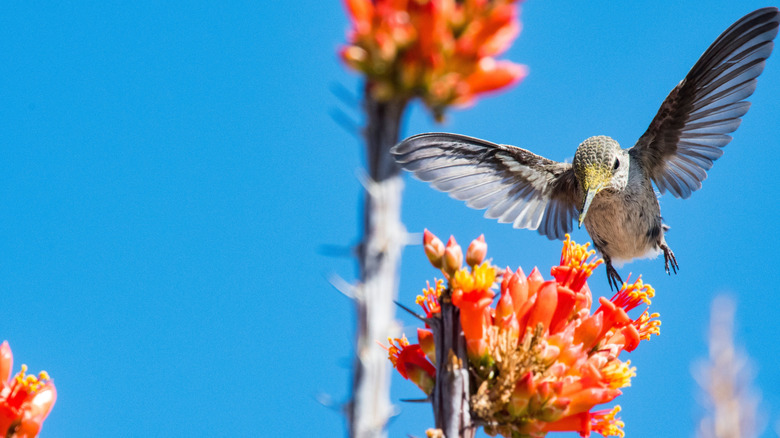
Ocotillo (Fouquieria splendens) is a rather unique shrub native to the southwestern United States and Mexico. First, it sports an eye-catching height, growing up to 20 feet with tubular red flowers that hummingbirds love. It lacks leaves for most of the year (except for a short period following rain), instead showing off this plant's spiny stems. Ocotillo produces red and orange flowers from March to July, and it's hardy in zones 8 through 11 where it's tolerant to drought and sandy soils. If your goal is to attract hummingbirds without a feeder, ocotillo is a top contender for warmer regions.
Coralbean
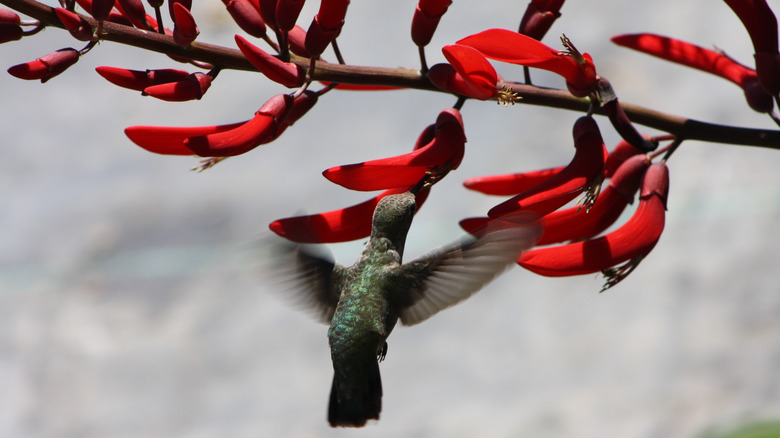
Coralbean (Erythrina herbacea) is also known as red cardinal, but it's not to be mistaken with similar-looking Lobelia cardinalis. Instead, coralbean is a flowering shrub that has show-stopping red tubular blooms from March all the way to November. Although it's a tropical plant with bright green leaves, the coralbean plant also sports small spines on its stems, similar to ocotillo. It grows as a native flower throughout the southeastern United States, and it's hardy from zone 6 to 9. For the best results, provide this hummingbird-attracting native plant with acidic soil in an area with at least partial sun exposure.
Red buckeye
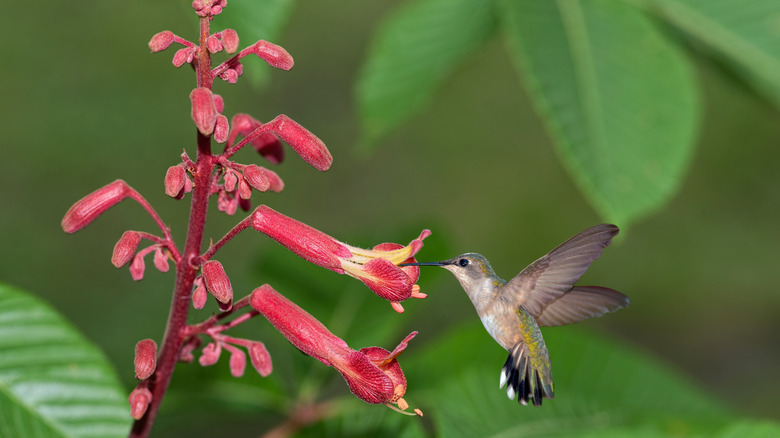
Red buckeye (Aesculus pavia) can be grown as both a shrub and a tree. It's native to the eastern United States, where a variety of pollinators (including hummingbirds) rely on the nectar in its bright red flowers. It also acts as a food source for other backyard critters, including squirrels that eat the seeds. Although it's a hardy plant, resistant to common problems like wet soil, it does sport a high level of toxicity. As a result, you may wish to choose a different shrub to attract hummingbirds if you have curious pets or children in your garden.
Fuschia-flowered gooseberry
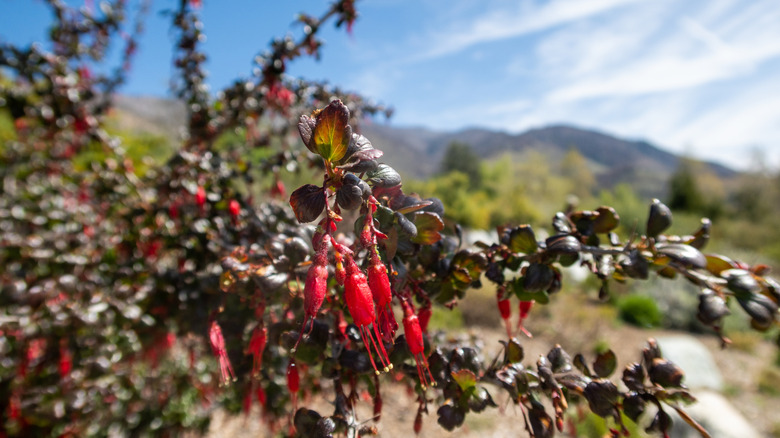
If you're looking for a vibrant spring flowering shrub, look no further than the fuschia-flowered gooseberry (Ribes speciosum). This shrub begins showcasing its stunning red blooms beginning in January, but they last all the way into May, ensuring that you have hummingbird-friendly flowers all spring long. Fuschia-flowered gooseberry is native to the western United States, specifically California, and is hardy in zones 7 through 10.
Scarlet bouvardia
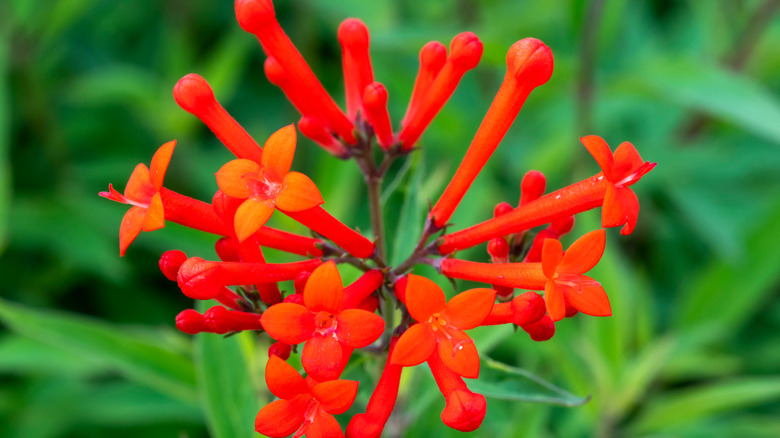
Do you love the star-tipped tubular flowers of honeysuckles but wish you could grow them as a shrub rather than a vine? Scarlet bouvardia (Bouvardia ternifolia) sports large clusters of red, tubular flowers with an opening consisting of four flared extensions for an eye-catching, star-like appearance. You can see these flowers, which hummingbirds visit for nectar, from May to November. The shrub itself is small, only growing up to 5 feet, making it perfect for maximizing the hummingbird appeal of small garden spaces. Aim to grow scarlet bouvardia as a perennial in hardiness zones 7 through 10.
Lantana 'Bloomify Red'
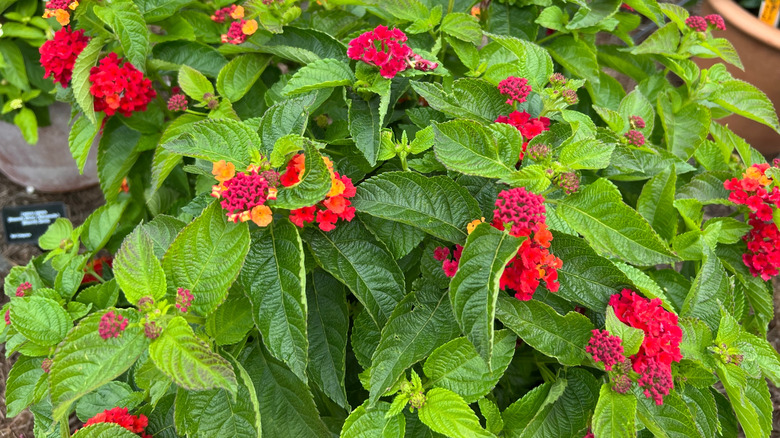
Lantana ' Bloomify Red' (Lantana camara 'Bloomify Red') is a trademarked cultivar certified to be sterile, meaning you don't need to worry about it growing aggressively in your garden. It's hardy in zones 9 through 11, and it offers vibrant clusters of warm-colored flowers, including red. Although its winter hardiness may be limited, it does grow well in a container. As a result, you can grow this plant outdoors during prime hummingbird-attracting times and move it indoors during the winter in colder regions. It blooms from June to October, providing a long blooming season for hummingbirds to enjoy.
Red fairy duster
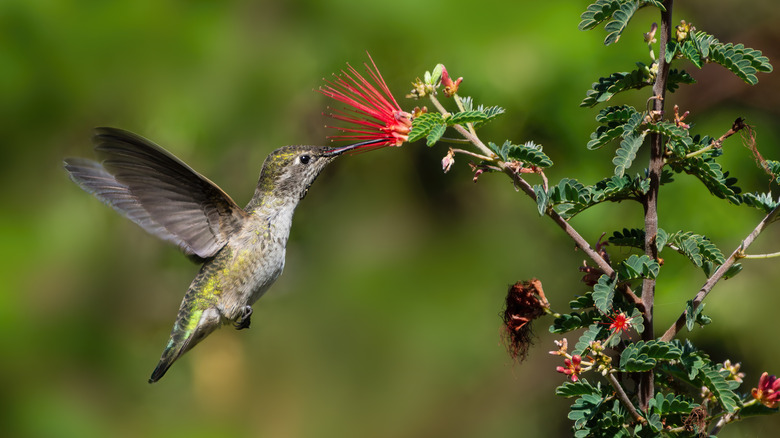
Also known as the Baja fairy duster or the flame bush, the red fairy duster (Calliandra californica) is a unique shrub, with small leaves accented by bursting red flowers. The flowers themselves grow to be up to 1½ inches long, with a splayed appearance that give them their feather-duster-related common name. When grown as a perennial in zones 9 through 12, you can enjoy these flowers year-round, giving you vibrant color in your garden all spring and summer long. Maintenance is also a breeze, with a strong resistance to pest and disease and no pruning requirements.
Red-flowering currant
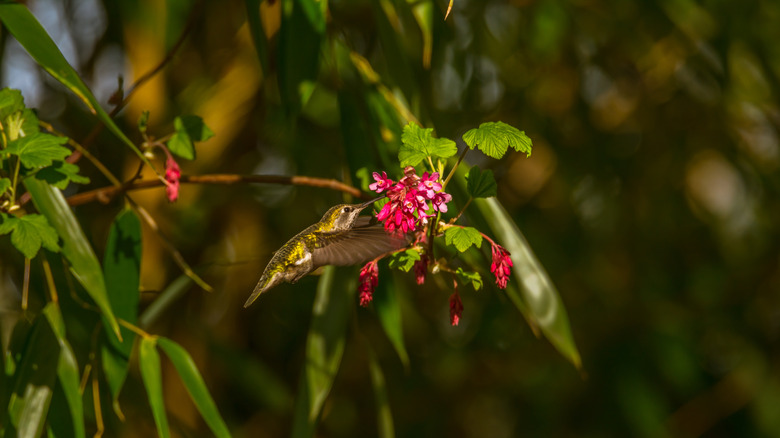
Another red flowering shrub that attracts hummingbirds, the red-flowering currant (Ribes sanguineum) is related to the fuschia-flowered gooseberry. However, its stunning red clusters of flowers are far more short-lived, only providing that splash of hummingbird-magnet red to your garden during the spring. Similarly to fuschia-flowered gooseberries, this shrub is native to the western United States. As far as hardiness goes, aim to plant red-flowering currant in zones 6 through 8. This shrub sports flowers in other colors as well, so for an all-red variety, make sure to pick a cultivar like Rives sanguineum 'Elk River Red'.
Azaleas
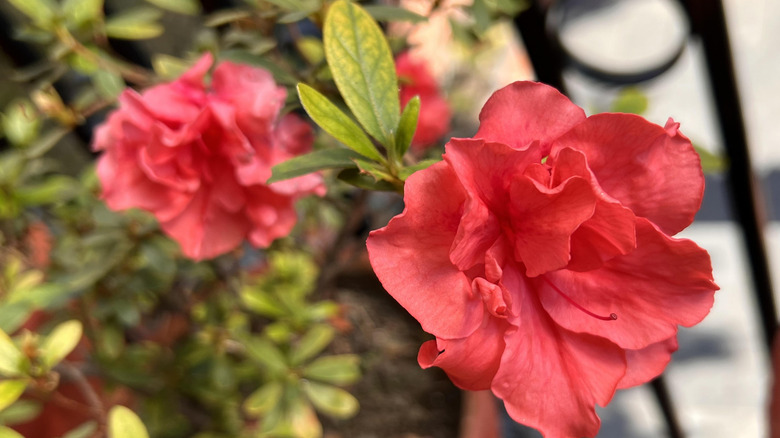
Rhododendron is actually a genus of hundreds of flowers, including those popular azalea species. However, with so many species available, it offers a wide range of red flowering shrubs to choose from, such as the piedmont azalea (R. flammeum), torch azalea (R. kaempferi), and the flame azalea (R. calendulaceum). Although closely related, these are all different species; as a result, you may find variations in country of origin and general care requirements. Overall, however, many rhododendron species are hardy in zones 4 through 8 and grow best in acidic soil with some level of shade (even deep shade).
Chinese hibiscus
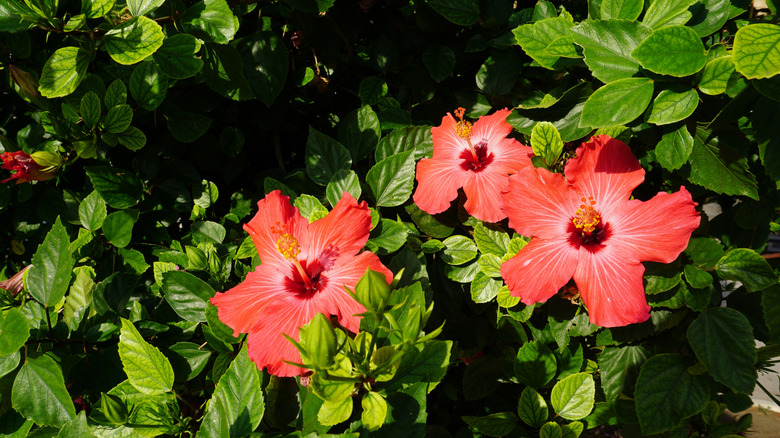
A tropical plant native to Asia, Chinese hibiscus (Hibiscus rosa-sinensis) is a showy shrub that can be grown outside in USDA hardiness zones 9 through 11. However, it also does well as a houseplant. This allows you to overwinter it indoors outside of this range and letting you reap the benefits of its striking red flowers in the spring to fall without the threat of cold weather. Alongside hummingbirds, butterflies and certain species of bees are also drawn to the Chinese hibiscus, making it a top pick for pollinator gardens.
Red powder puff
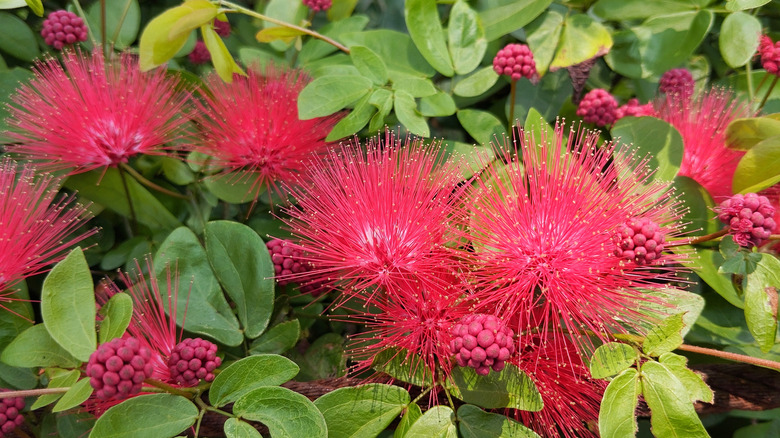
While typically added to the garden as a fast-growing tree to attract hummingbirds, red powder puff (Calliandra haematocephala) can also be grown as a shrub. This Bolivan native plant is in the same family as the mimosa tree, and it grows up to 15 feet tall in its native habitat. Its species name, haematocephala, is a reference to its bright red flowers that hummingbirds adore. They bloom sporadically throughout the year, including during the spring months.
Firebush
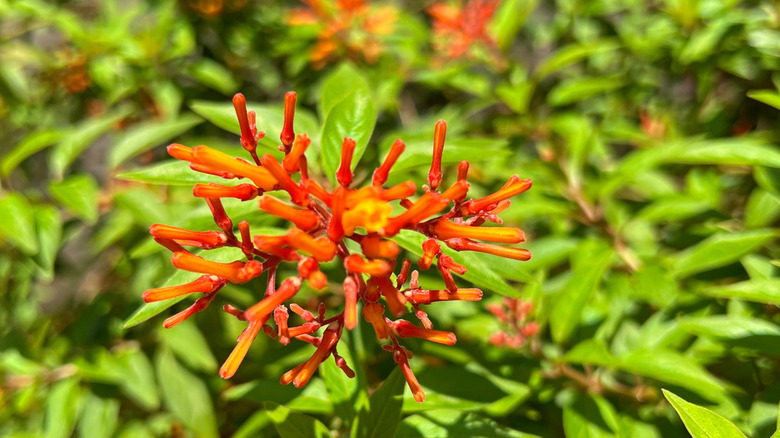
At first glance, the firebush (Hamelia patens) looks like a botanical firecracker. Its warm red tubular flowers grow in circular clusters with sparse centers, giving the appearance of a bursting firework in the sky. And, just like how fireworks can steal the show, so can these red flowering shrubs with how well they attract pollinators, including both hummingbirds and butterflies. It can be grown as either a perennial or an annual, with hardiness in zones 9 and 10. However, one of the best features of the firebush is that it thrives when grown in containers, giving you more flexibility.