

How Long Does An Open Bag Of Potting Soil Last? Here's What To Know
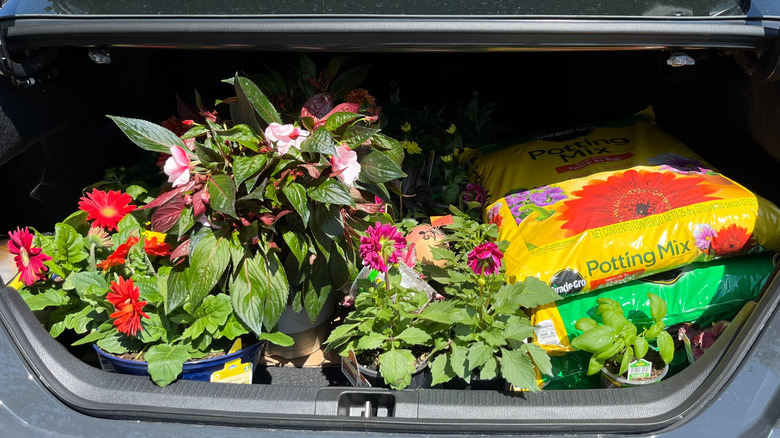
Are you wondering whether the potting soil you use has a lifespan? The answer to this question depends on whether you're talking about a closed or open bag — either condition is significantly different where longevity is concerned. An unopened bag of soil will last up to two years, but once a bag has been opened, you can expect it to last about six to 12 months, as long as it's kept in relatively dry conditions. When the soil inside an open bag is exposed to the environment, it starts to break down. Given enough time, this will affect its nutrient density.
Potting soil (versus garden soil — there's a difference) is a growing medium that is specifically designed for container gardening, hence the explanatory moniker. It's usually made from lightweight organic materials such as peat moss, coir, vermiculite, bark, perlite, and compost or other nutrient-rich matter, which are used for aeration, water retention, and nutrition. Because the materials are organic, they naturally decompose, a process that speeds up significantly once the sealed bag of potting soil is opened and exposed to air and moisture.
You probably want to keep an open bag of potting soil viable for as long as possible — you likely paid for it, after all. Keep it tightly sealed and store it somewhere dry, cool, and dark (or at least out of direct sunlight). Nothing will deplete the quality of a bagged growing medium faster than half-heartedly twisting the sack closed and dumping it in a damp garage.
Signs potting soil has gone bad and what to do about it
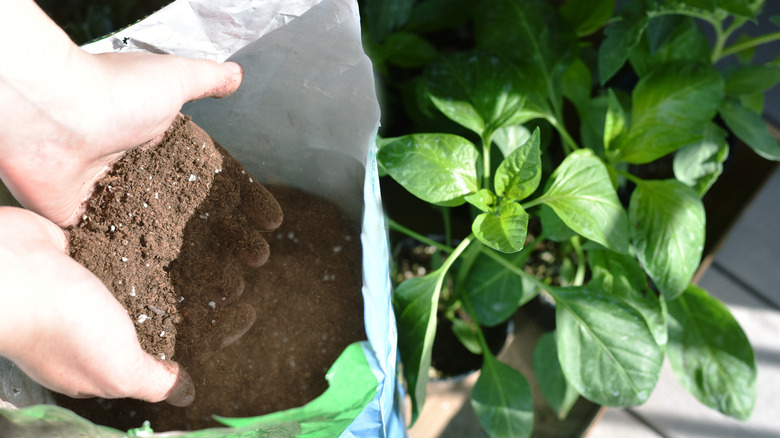
Whether your goal is to grow a thriving container garden or cultivate a few pretty porch pots, being able to recognize degraded potting soil in an open bag is a vital skill. On reopening a bag, give the soil a gentle sniff. If it smells sour or of sulfur — a smell similar to rotten eggs — then it's almost certainly due to an overgrowth of bacteria. If soil has a normal, earthy odor, move on to checking its appearance and texture.
A healthy soilless medium should be dark in hue, be lightweight, and feel crumbly between your fingers. If it looks pale or gray or has signs of mold, then it has already lost the qualities that matter most when selecting potting soil: fluffiness and a good balance of materials. It may no longer be able to provide your plants with nutrients without amendment. Similarly, if the growing medium is compacted or dusty, water will run straight through it instead of absorbing into it — and your plant's roots. Finally, if you notice any pests, like fungus gnats or soil mites, in the potting mix, it's time to throw the bag away.
At the end of the day, it is always better to replace spoiled potting soil (even if only suspected) over using it with your plants. You don't want to risk hindering their growth. However, if you think your potting soil looks healthy but it's been opened for so long that you know its nutrients have diminished, you can revive it. To improve the drainage, reduce compaction, and replenish the macro and micronutrients, mix the old potting mix, compost, and perlite at a 4:1:1 ratio.