

22 Beautiful Companion Plants To Grow With Astilbes For A Stunning Landscape
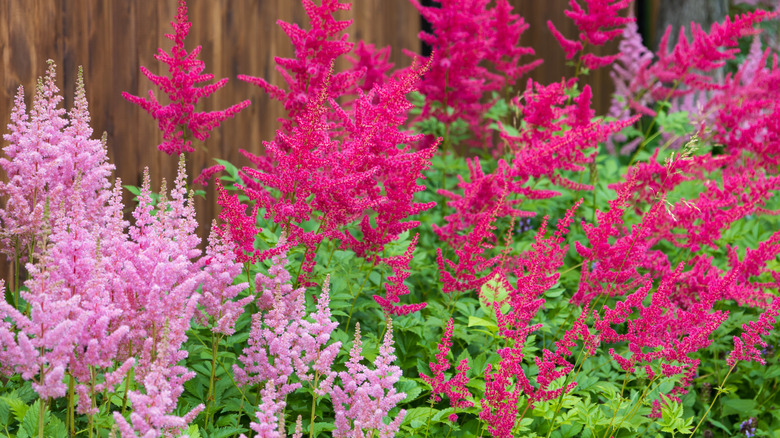
In the horticultural trade, where most bold and beautiful flowers are sun-lovers, astilbes (Astilbe spp.) provide a refreshing contrast. They are among the few flowers that can bloom with less than two hours of direct sunlight a day (in other words, deep shade). Whether you have a north-facing bed, a patch overcast in shadows by your neighbor's trees, or a dim side yard, they effusively brighten the area with their feathery plumes and foliage.
However, you don't just have to stick with them, no matter how captivating you find these flowers. Instead, consider teaming them with lovely companion plants that'll complement their structure, add a textural contrast, or carry on the display after their blooms fade. Hostas, heucheras, leopard plants, black cohosh, and impatiens are some examples, though you'll discover several others below. Keep in mind that this list isn't exhaustive, and you can choose your own companions by ensuring they thrive in similar conditions, namely partial to deep shade and organically rich, moist (not damp) soils with pH levels of 6. Also, make sure they're comfortable in your USDA Hardiness Zone and space them according to their mature size to prevent overcrowding in the beds.
Hostas
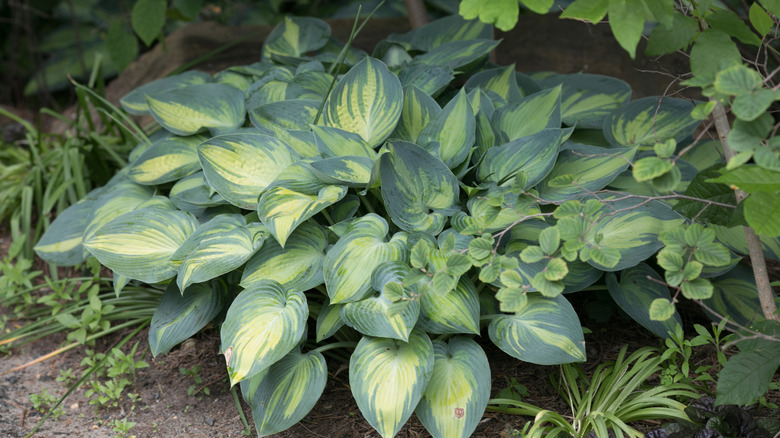
Like astilbes, hostas (Hosta spp.) are just as pervasive in shade gardens. Their large, fleshy leaves are the main draw, which provide a beautiful foil for the flowery plumes of astilbes. Look for green-leaved varieties if you're planting in partial shade, and blue-leaved ones for deeper areas to bring out their best color. They're hardy in Zones 3 through 9, and enjoy rich soils. Unfortunately, slugs, snails, and deer have a thing for their foliage, so you must stay on a constant lookout, lest they prune your plants with their mandibles. Also, keep your furry pets away from hostas.
Bigroot geranium
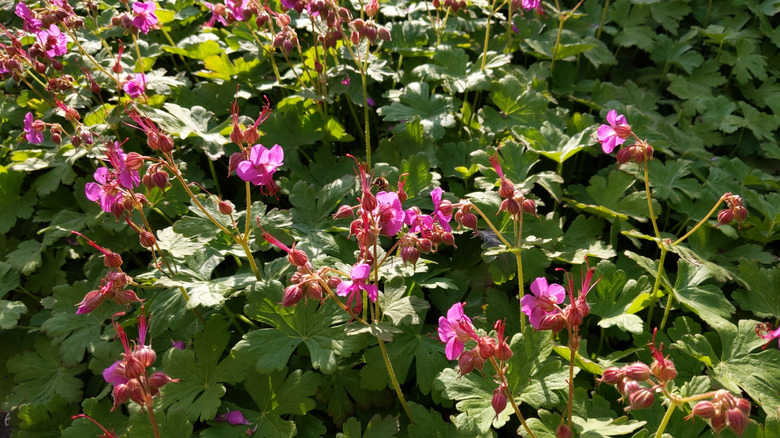
In a partially shaded location, bigroot geraniums (Geranium macrorrhizum) serve as beautiful companions for astilbes. They bloom around late spring and summer, with clusters of pink or white flowers covering their highly fragrant foliage. Moreover, their leaves turn a vivid mix of bronze, red, and orange in autumn, further drumming up visual interest. Use them in weedy beds or to fill out gaps, as their dense growth can outcompete undesirable vegetation. They aren't known to be invasive, however. Their roots can survive the winters in Zones 4 through 8, though the leaves may not always.
Heuchera
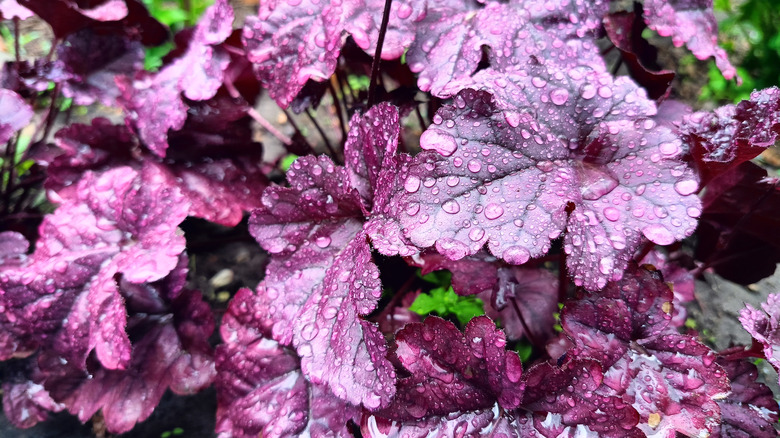
Coral bells or heuchera (Heuchera spp.) is a dainty plant that can attract beautiful hummingbirds and butterflies to your yard through its red or pink flowers. Paired with astilbe, it continues the parade of color through its blooms, which appear all summer. Its colorful foliage, growing in shades of purple, yellow, or orange, greatly complements astilbe's ferny foliage. Coral bells come in a range of varieties and cold hardiness levels, so be sure to pick ones that thrive in shade and adapt well to your location. Heuchera doesn't live for many years, but you can propagate more of it by regularly separating the clumps.
Bleeding hearts
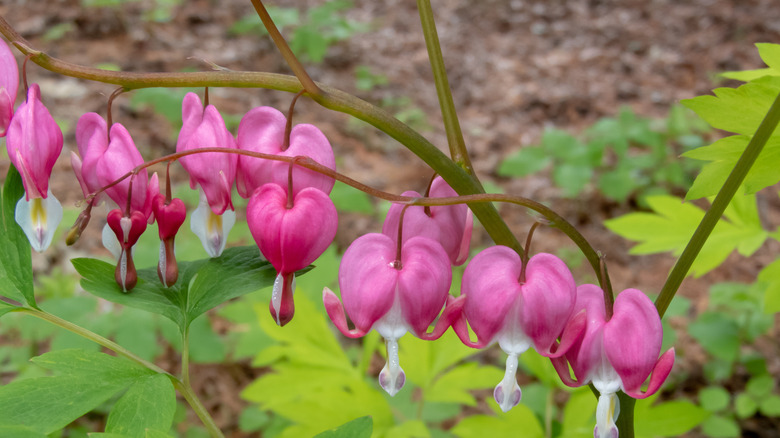
Bleeding hearts (Dicentra spp.) are quite alike in their demands to astilbe, meaning they require organically rich, slightly acidic, fertile soils in a shaded area. They also bloom around the same time in late spring or early summer. Gardeners enjoy their pink, heart-shaped flowers, which give off the impression that they're bleeding. Sadly, their foliage dies back in late summer or fall, depending on the climate, though they are hardy in Zones 3 through 9. You may want to throw in a couple of coral bells or hostas so they may fill out the beds later in the season.
Leopard plant
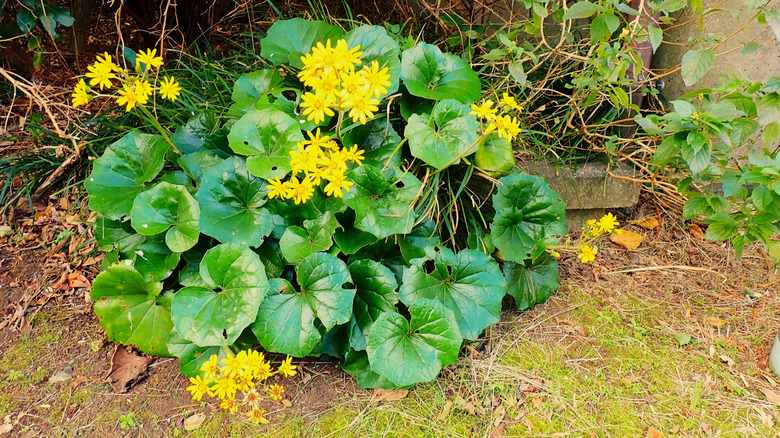
When you've got a shaded spot where you love to relax after a busy day, grow leopard plant (Farfugium japonicum). This evergreen, shade-loving perennial has stunning, dark green leaves that seem like lily pads. Planted en masse, they're sure to draw the eye while adding more depth to astilbe beds. They burst out yellow, lacey flowers from their clumps in autumn or early winter, which may encourage butterflies and bees to continue visiting your yard during these lean months. They're also unpopular with pests, including deer. However, they're only appropriate in mild regions spanning Zones 7 to 10.
Japanese forest grass
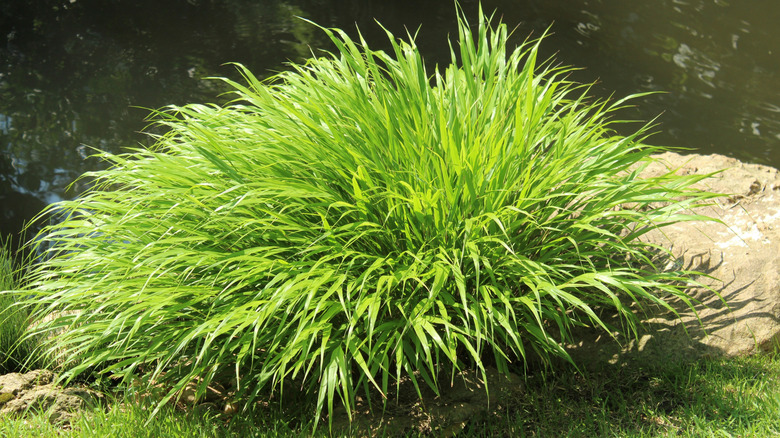
You may underplant tall astilbe flowers with Japanese forest grass (Hakonechloa macra) for textural variance. It has a billowy mound that looks beautiful lined up in masses, especially along pathways or in borders. Bonus advantage? Deer tend to leave it alone. Opt for gold striped or variegated varieties, as they offer a better contrast. Japanese forest grass is right at home in shaded, woodland lots and prefers cool summers, which limits its range to Zones 5 through 7. Do note that it grows slowly, so you may have to regularly weed until the ornamental grass bushes out.
Black cohosh
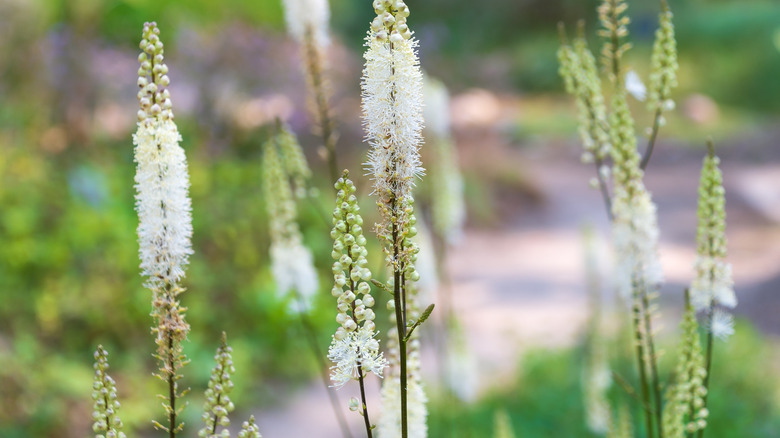
Native to the moist woodlands of the eastern U.S. region, black cohosh (Actaea racemosa) is a herbaceous perennial you can pair with astilbe in Zones 3 through 8. Use it as a backdrop, as it can grow nearly 7 feet tall. Many butterflies lay their eggs on their white flowers (and not the leaves), so don't be fearful if you spot writhing caterpillars. Black cohosh can survive for at least a decade when regularly pruned, divided, and given two hours of morning sun exposure. However, it emits a medicinal aroma, so pick its location wisely.
Siberian bugloss
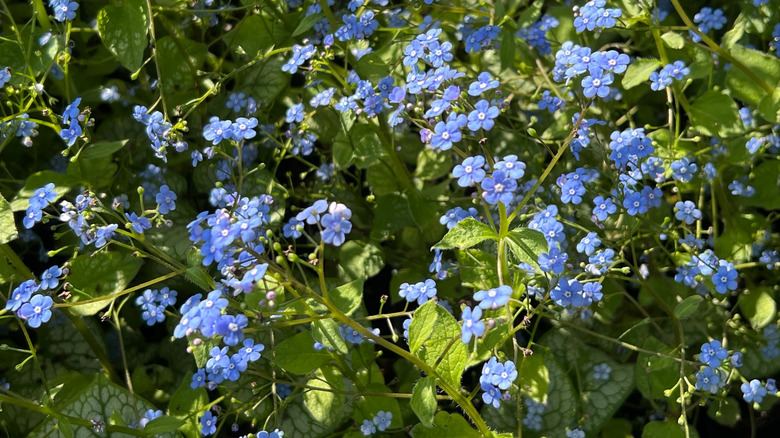
You're most likely to enjoy Siberian bugloss (Brunnera macrophylla) for the heart-shaped foliage, which beautifully offsets astilbe's ferny leaves. Plus, it produces dainty, blue flowers, which front-run astilbe's blooms but help the bees out early in the spring. Consider planting variegated forms featuring a silverish lining, such as 'Alexander's Great' or 'Jack Frost,' as they can brighten shaded areas. Siberian bugloss is easy to grow and maintain, as it garners little attention from pests. Although perennial in Zones 3 to 8, it doesn't handle the heat and humidity in the Southeast U.S.
Red barrenwort
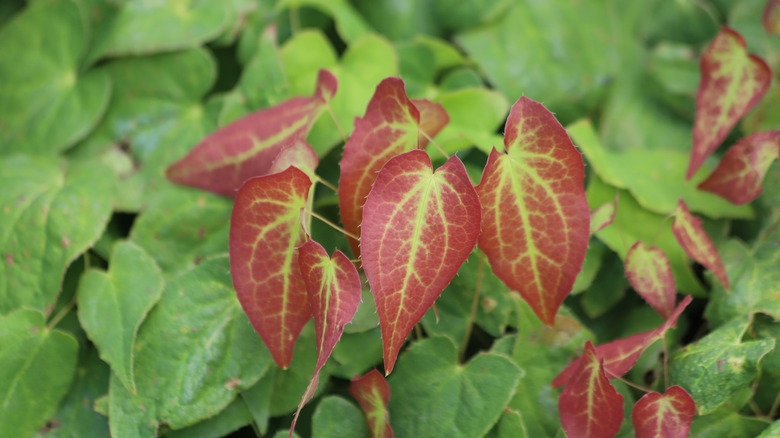
If you're looking to define borders or beds housing astilbe, consider planting red barrenwort (Epimedium x rubrum). This low-maintenance ground cover grows only about 1 foot tall but over twice as wide. Use it to create a color contrast, as the new leaves are red-tinged and are covered in sprays of rosy-pink petals. Leaves turn fully green in summer, and are a vibrant red in fall. Although perennials in Zones 5 through 9, their foliage dies back in winter, and should accordingly be trimmed or mowed to make space for new growth.
Ferns
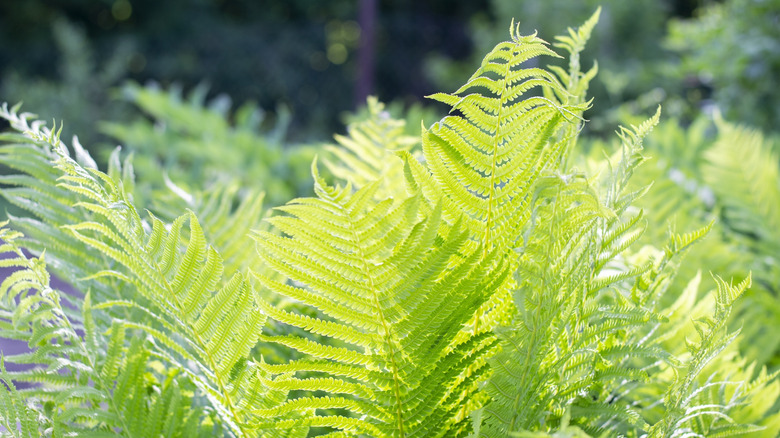
Many gardeners describe the foliage of astilbe plants as fern-like, so pairing them with true blue ferns just makes sense. They both thrive in organically rich, slightly acidic (pH level between 6 and 7) soils, which makes them great for woodland lots, around the pond, or a dappled patch. Moreover, they're available in a wide variety, like the massive-sized ostrich fern or the highly delicate lady fern, which helps create some textural contrast. To get you started, here are 28 shade-loving ferns that make dark gardens come alive and would look pretty with astilbes. However, they each have different hardiness levels.
Blue lungwort
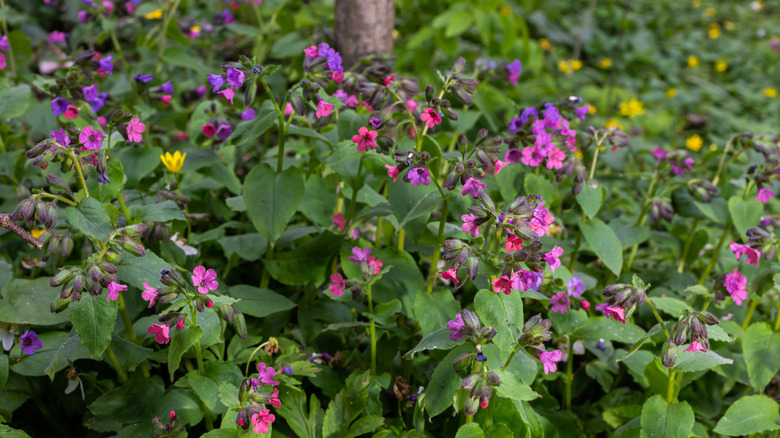
Blue lungwort (Pulmonaria officinalis) is a silver-speckled ground cover that will add stunning flowers to a shady yard. Their flowers have an interesting property in that they can change their internal pH levels. Due to that, they start pink, but gradually transform into rosy-violets before ultimately turning blue over the spring season. You can simultaneously have a multi-colored plant that serves amazing looks in front of astilbe drifts. If you strictly keep a chemical-free yard, you can even harvest the leaves to garnish your salads, as they're edible. Blue lungwort grows well in Zones 3 through 8.
Lenten rose
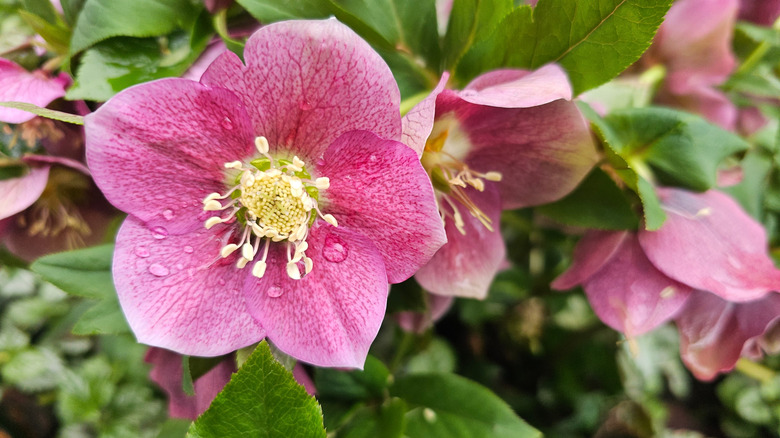
Lenten roses, or hellebores (Helleborus × hybridus), can accompany astilbe plantings located underneath trees, offering a leafy contrast with their dissected foliage. They're one of the earliest spring bloomers and are actively sought by bees. It also isn't unusual for their pink heads to peep out of the snow in late winter. Use them to kickstart a parade of colors in your garden and to maintain winter interest since their leaves can survive the cold temperatures. Be sure to keep the beds mulched, and the plants protected from dry winds. Lenten roses grow successfully in Zones 5 through 9.
Azaleas and rhododendrons
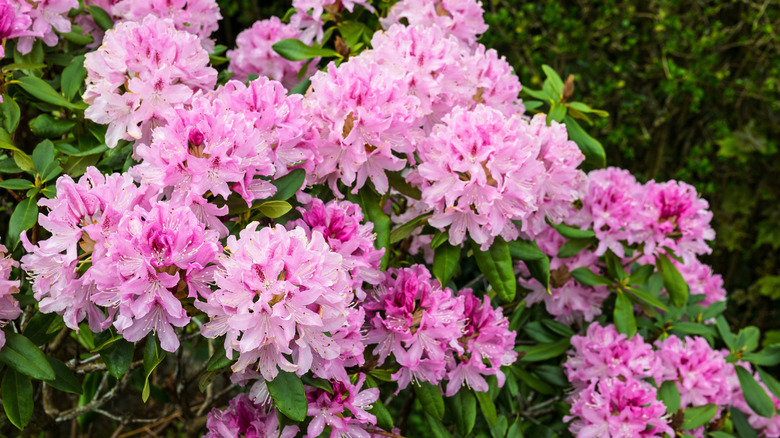
Hardy in Zones 4 through 8 (though there are variations across individual cultivars), azaleas and rhododendrons also partner well with astilbes. They prefer dappled to deep shade and organically rich, well-draining soils. To heighten the color palette, pick varieties with pink, lavender, or red flowers. Remember, azaleas bloom in April, which generally coincides with the start of astilbe's blooming season, while rhododendrons kick in later towards the end. So, choose your options accordingly, or plant them together for a successive flowery display. As these shrubs can grow over 6 feet tall, use them in the background.
Heartleaf bergenia
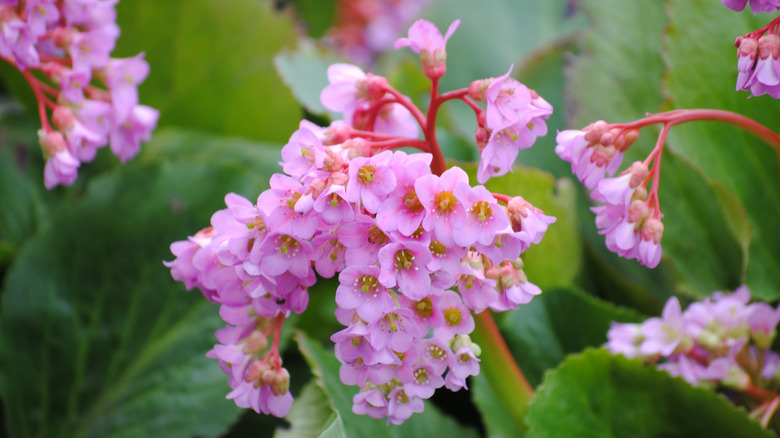
Heartleaf bergenia (Bergenia cordifolia) is a short, deer-resistant, evergreen groundcover that's cold hardy in Zones 3 through 8. If planted, you'll enjoy it for the pink flowers arising from the sea of heart-shaped foliage atop red stems. Since it blooms early in spring, when little else has emerged, it truly becomes the garden's spotlight. By the time astilbe kicks in, it offers a nice contrast with its deep green rosettes, which eventually fade into a golden-purple tone as the temperatures cool. It can handle heavy shade in cold regions, but prefers partial shading in milder climes.
Common Solomon's seal
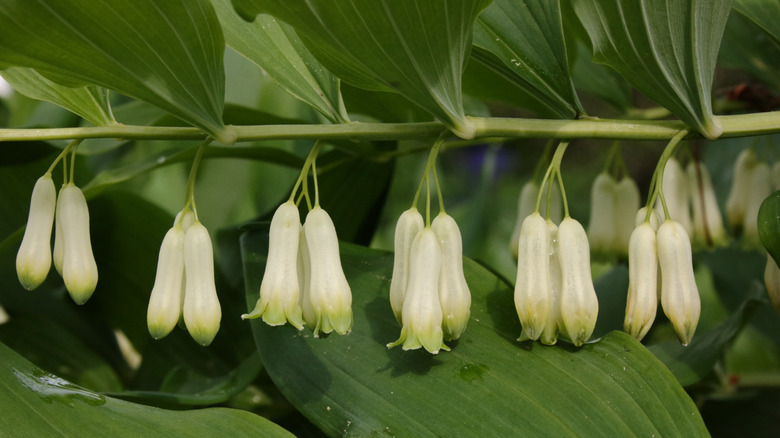
Common Solomon's seal (Polygonatum multiflorum) is a low-maintenance perennial, with a penchant for dark, shady areas that are highly fertile and well-draining. Nodding down, the tubular white blooms contrast beautifully with astilbe's colorful petals in late spring. After flowering, Solomon's seal continues to render interest through its lance-like leaves that glow golden during autumn in Zones 4 through 8. It can grow about 3 feet tall, though the cultivar 'Variegatum' is relatively shorter at 2 feet and injects another pop of color through red stems. Monitor for slugs, and plant it away from pets.
Sweet woodruff
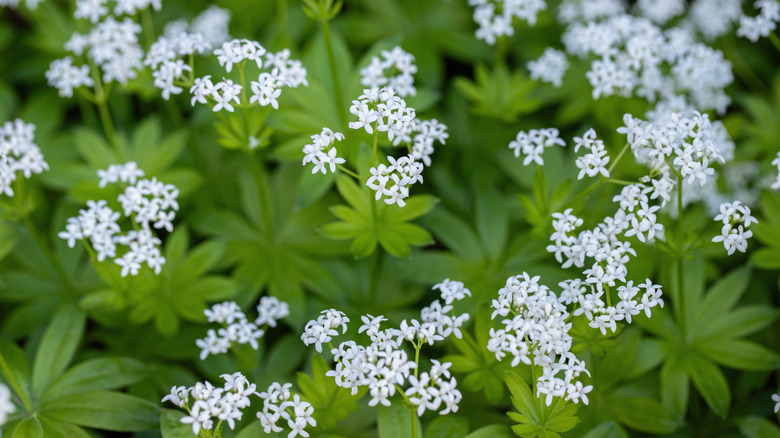
You may underplant astilbe with sweet woodruff (Galium odoratum) for glowing woodland borders. Its emerald-green leaves, which coil as they age, provide a striking contrast, which their white flowers enhance further as they bloom non-stop through early summer, overlapping with astilbe's season. In dark, cool, and humus-rich soils, they spread via their rhizomes, carpeting the ground in highly fragrant, lush leaves — though not to the point of becoming invasive. Some foliage may overwinter in the upper ranges of Zones 4 through 8, but it's known to die back during fall elsewhere. Small, beneficial insects harbor in its foliage.
Toad lily
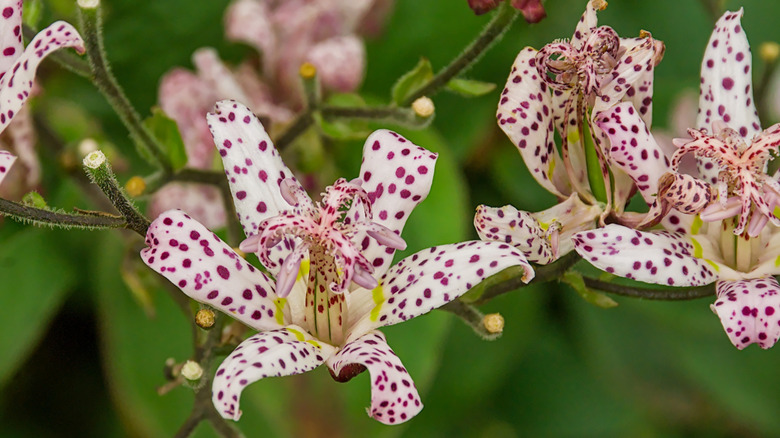
If you're looking to add a splash of color to woodland gardens after astilbe blooms have died down, consider planting toad lily (Tricyrtis spp.). Reminiscent of orchids, their pink-speckled white blooms appear in late summer, extending the flowery display as well as the presence of butterflies and bees through fall. Though deer do not seek their buds, rabbits do. So, skip them if your garden is overrun by bunnies. Toad lilies can be toxic to cats. Although perennials in Zones 4 through 9, their leaves die in winter, with new growth replacing them in spring.
Mountain hydrangea
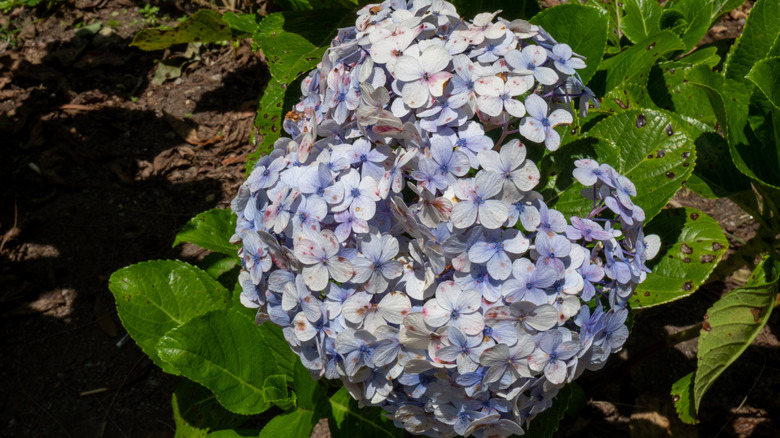
Also known as tea of heaven, mountain hydrangea (Hydrangea serrata) is a small shrub (it tops out at 4 feet), which can add a unique flair to the astilbes growing in your garden. At the start of the summer, it bursts into colorful blooms, which can be purple, pink, or blue based on your soil's pH levels. You can further jazz things up with cultivars like 'Preziosa' or 'Beni-Gaku' that change the color of their flowers throughout the season. After turning bronze in the autumn, the leaves fall off in winter, re-emerging in spring in Zones 6 to 9.
Hardy begonia
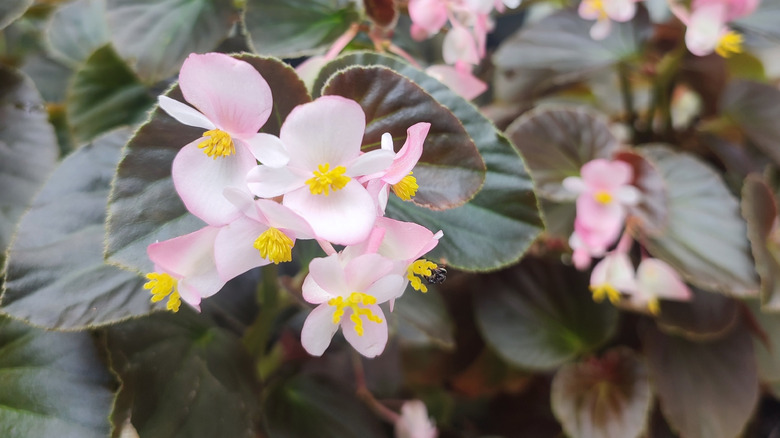
In small spaces or to fill the in-between gaps, you may couple astilbe with hardy begonias (Begonia grandis). They will carry on the baton of color, mid-summer onward, through their pinkish-white flowers, while the leaves will become the focal point when they turn a vibrant red in fall. Hardy begonias can survive outdoors in Zones 6 through 9 in moist, shady sites. They tend to form bulblets, which detach and fall to the ground during winter and sprout new flowers come spring. Direct contact may irritate the skin, and cats may become sick after chewing on this plant.
Goatsbeard
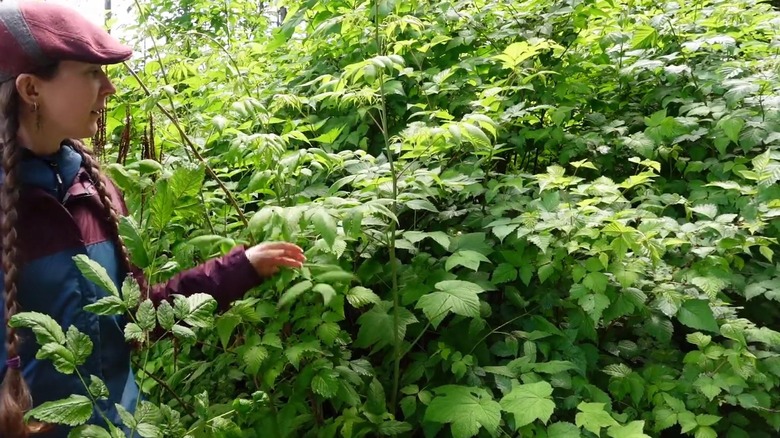
Goatsbeard (Aruncus dioicus) echoes astilbe with its feathery plumes. Initially white, they grow tan as the summer rolls in, contrasting against green foliage. Goatsbeard, also called bride's feathers, comprises several varieties, many of which are native to central or eastern U.S. regions. So check in with the local nursery if you're up for some native plants. Give it partial shade in warm climates and enrich the soil with organic matter before planting. Goatsbeard can grow quite large, so you must space them 2 to 4 feet apart to avoid overcrowding the beds. Zones 3 to 8 cover its adaptive range.
Impatiens
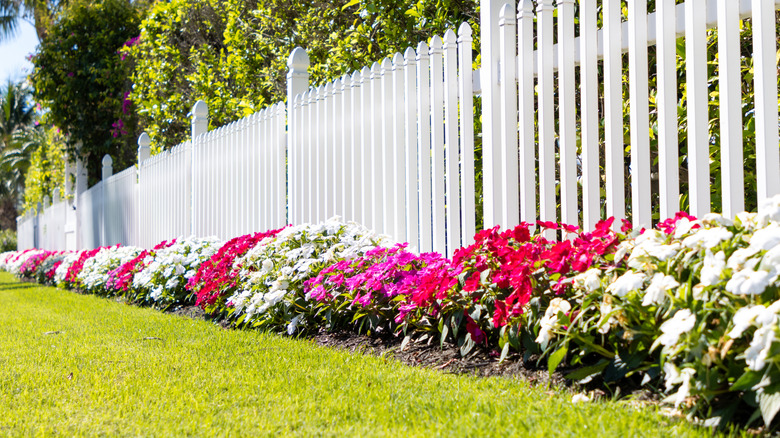
You can make mixed beds pop by planting impatiens (Impatiens spp.) together with astilbe. Varieties are available in a string of colors, including salmon, lavender, red, and white, with those with New Guinea (I. hawkeri) pedigree even offering variegated leafy designs to further play up the contrast. Consistently moist, humus-rich soils exposed to partial or dappled shade comprise ideal growth conditions. Since they're annuals, they'll die back after fall. Impatiens are highly susceptible to downy mildew, so be sure to grab the more disease-resistant hybrids, such as those from the Bounce or SunPatiens series.
Bigleaf hydrangeas
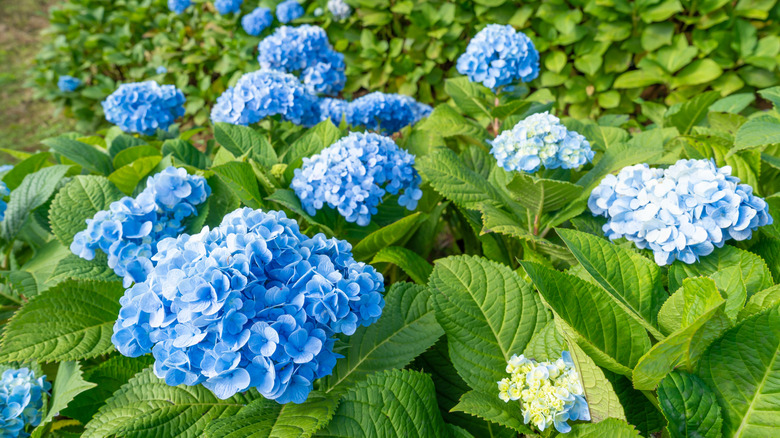
By maturity, bigleaf hydrangeas (Hydrangea macrophylla) are over 6 feet tall, making them a beautiful overstory planting for astilbes. To make this pairing work, however, stick to slightly acidic to neutral soils. This may limit your summer show to pink hydrangea blooms. Also, make sure they're planted in a partially shaded area to enjoy the best display. Deer and rabbits can target bigleaf hydrangeas, especially when they're young, so you may want to skip this combination if these mammals visit your location. Also, locate them beyond your pet's reach. Bigleaf hydrangeas grow successfully in Zones 5 through 9.