

10 Popular Plants That Will Thrive In Your West-Facing Garden
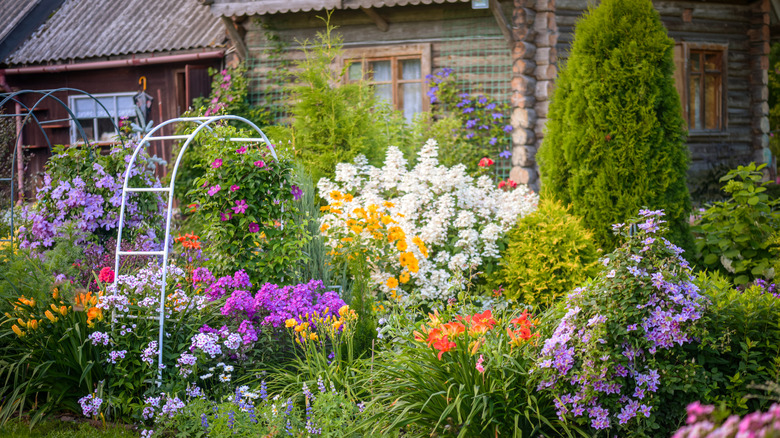
West-facing gardens are usually exposed to the sun when it is at its strongest and hottest. If there is a wall nearby, it can absorb all that sunlight during the day and then release the heat at night. Because of this, if you have a west-facing garden, you must choose plants that thrive in full sun and tolerate heat. Bonus points if they are also drought-tolerant. After all, we all forget to water our plants at times, and with the sun shining blazing hot, the soil dries up fast. Some popular plants that thrive in west-facing gardens include cosmos, zinnias, rosemary, pepper, and crape myrtle. However, keep in mind that picking the right plants is only part of the solution.
Creating a thriving west-facing garden also requires a few additional steps. Proper watering is especially important. If you have a west-facing garden, you should water deeply and ideally in the morning. This will ensure that the water reaches the plants' roots and doesn't evaporate from the surface when the sun shines. Also, using mulch helps retain soil moisture and suppresses weeds, which often become a problem in spring and summer. Finally, if you can, add pergolas, parasols, or just DIY a sun shade for your garden to keep your plants cool.
Cosmos
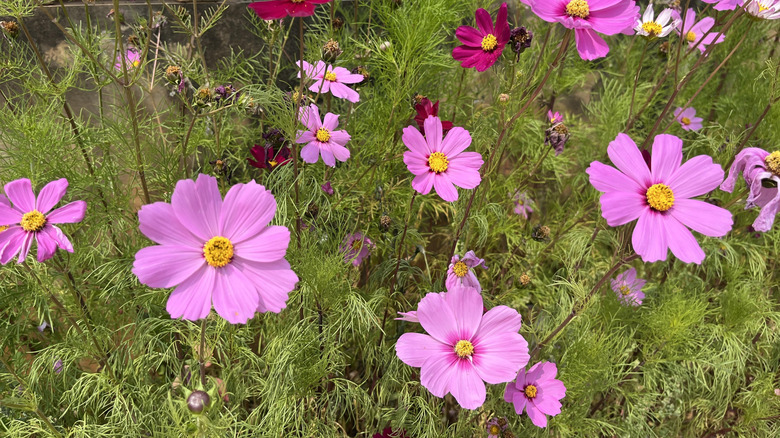
Cosmos (Cosmos bipinnatus) is a popular flowering plant with daisy-like, colorful blooms that last all summer long. And honestly, its popularity makes sense. It's easy to grow, tolerates poor soil, and grows fast. Plus, it does well in dry and hot conditions and is ideal for west-facing gardens. Once cosmos plants are established, you might not need to water them unless there is a prolonged drought situation going on. One drawback is that they do not perform well in overly fertile soil. It can reduce and delay their blooms and make their stems weak.
Zinnias
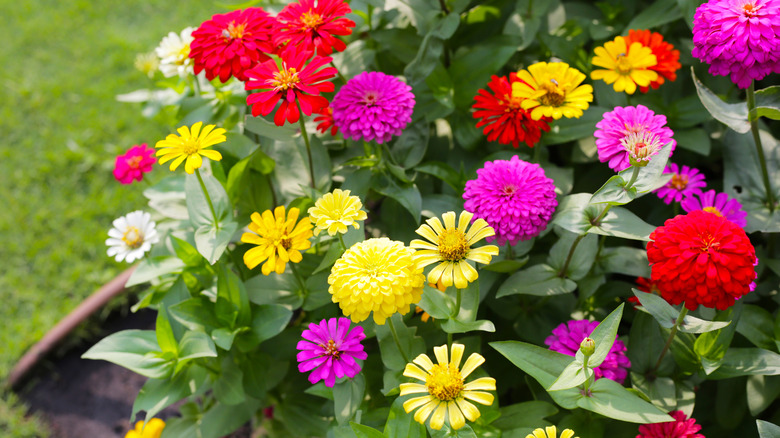
Zinnias (Zinnia elegans) owe their popularity to their prolific blooming and a range of growing habits, from short to tall and even bushy. They also come in many shapes, sizes, and colors. No matter your garden's vibe, you will find a zinnia that fits. Zinnias perform well in warm locations with lots of sun. As for watering, just like cosmos, zinnias are drought-tolerant once established. However, dry conditions might reduce the number of their blooms. So, try to keep them well-watered.
Rosemary

Aromatic, flowering, edible, evergreen, sun-loving, drought and heat-tolerant, rosemary (Salvia rosmarinus) has a lot going for it. It is easy to see why it's so popular in gardens. If you have a west-facing garden, your rosemary plants are going to thank you. It thrives in warm locations with full sun from USDA Hardiness Zones 8 to 10. You can even grow it in pots if there is no space in your garden. However, you should not try growing this popular herb from seed. The seeds are difficult to handle, germinate poorly, and grow slowly.
Lavender
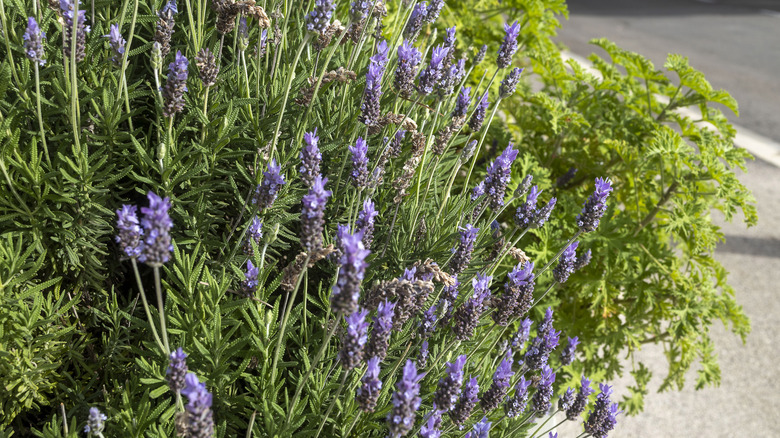
Lavender (Lavandula angustifolia) is another popular herb that grows well in USDA Zones 5 to 9, especially in gardens facing west. It thrives in dry, hot, and sunny conditions and grows to about 2 feet tall and 18 inches wide. With regular pruning to maintain its shape, it can also be used as an informal hedge or border plant. The plant also produces attractive blooms. Flowers appear from early summer to late fall, have a beautiful white and lavender color, and attract a bunch of pollinators to the garden as well.
Peppers
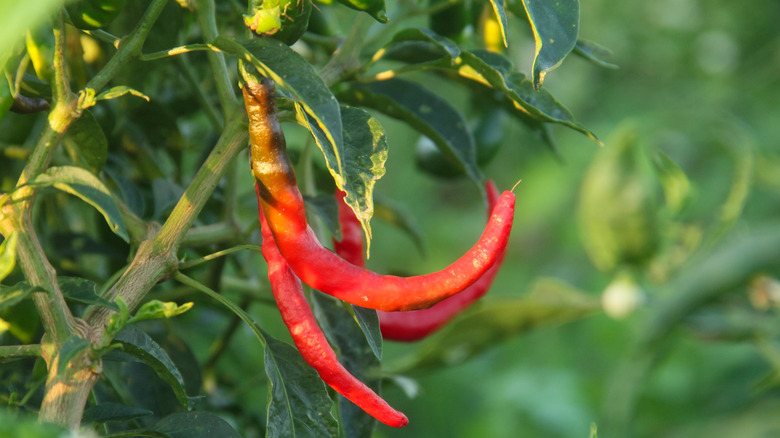
It is not just flowers that thrive in west-facing gardens. Some popular vegetables, like peppers (Capsicum annuum), do too. Peppers are hardy to Zone 4 and prefer full sun and heat. They often perform especially well in beds near walls that reflect or radiate heat. However, peppers may struggle in overly rich soils, particularly those high in nitrogen. Excess nitrogen can cause buds and blossoms to drop, resulting in a poor yield. Pepper plants are also quite vulnerable to some pests. So, keep an eye out for cutworms, whiteflies, and aphids.
Cucumber
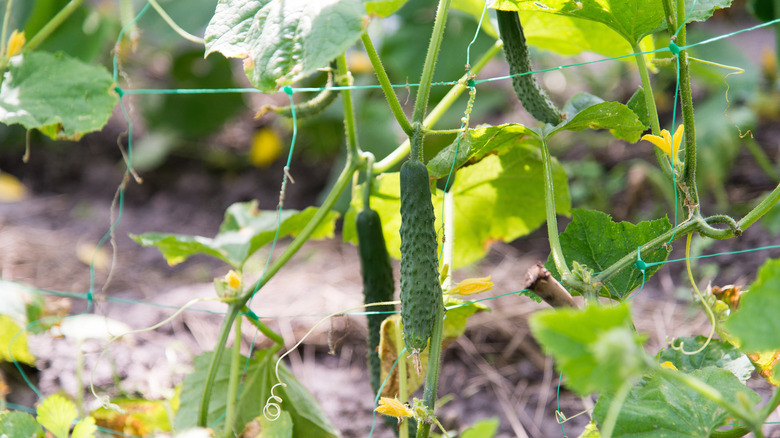
If hot and spicy is not your thing, cucumber (Cucumis sativus) is another popular vegetable that you can grow in a garden that faces west. It also tolerates heat and prefers full sun. However, it is not drought-tolerant and needs moist, well-drained soils. If you grow your cucumbers under drought stress, they will get bitter and deformed. Also, drought stress is one of the reasons why some fresh cucumbers need to be burped before you eat them. Aside from that, cucumbers are generally easy to grow. With proper care, they can produce abundant harvests.
Butterfly Bush
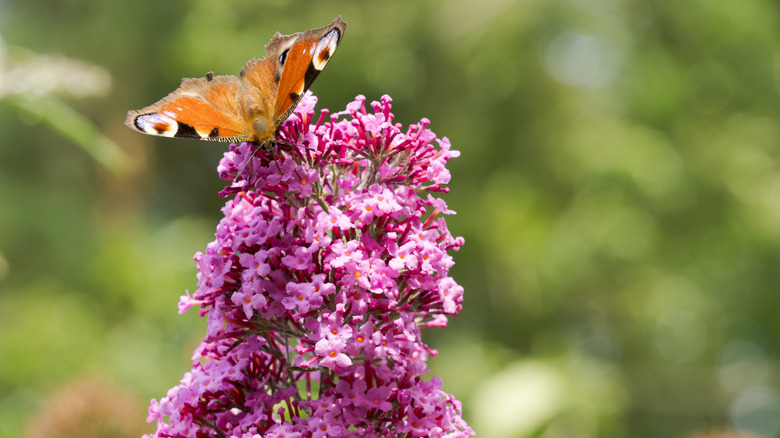
Several shrubs also thrive in the hot and sunny conditions of west-facing gardens. Take, for instance, butterfly bush (Buddleja davidii). Thanks to its plentiful summer flowers, the butterfly bush is popular in many home landscapes from Zone 5 to 9. It tolerates drought, salty soils, and feeding by rabbits and deer as well. However, despite all of its appeal, the butterfly bush does have one big problem. It can get weedy and is considered invasive in some parts of the U.S.
Crape Myrtle

Crape myrtle (Lagerstroemia indica) is another commonly used shrub that you can grow on the west side of your home in USDA Zones 6 to 9. It grows to about 12 to 15 feet tall and 8 to 10 feet wide, making it a good option for a natural privacy screen or informal hedge. It is also heat and drought-tolerant. Crape myrtle is also available in dwarf cultivars. These work well for small gardens with limited space. They will also save you from the trouble of pruning every year.
Olive Tree
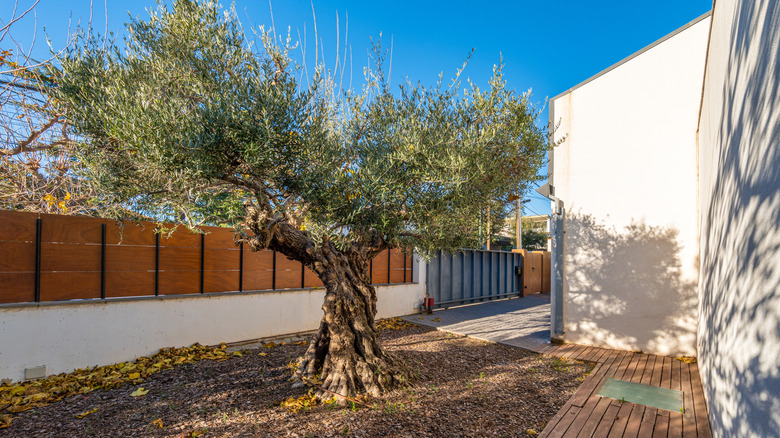
The olive tree (Olea europaea) is a popular tree that can be grown in USDA Hardiness Zones 8 to 10. It grows well in hot, sunny places such as west-facing gardens. Just keep in mind that it grows slowly. As a result, it is not the best option if you are looking for fast-growing shade trees to cool off a hot backyard. However, it lives long, almost 300 to 600 years, and can serve as both a fruit-bearing and an ornamental tree in the garden. Once established, it is fairly drought-tolerant as well.
Common Hackberry

The common hackberry (Celtis occidentalis) is another tree suited to west-facing gardens. It is a popular tree often used in urban settings and grows well in USDA Zones 3 to 9. It thrives in full sun and heat and tolerates drought, pollution, and even wet or salty soils. Despite tolerating hot, sunny conditions, common hackberry also performs well in icy weather. It is a hardy tree that provides benefits year-round and is popular among birds and other wildlife due to its fruit.