

Don't Ignore The Sound Of Buzzing Outlets — It Can Indicate A Major Hazard
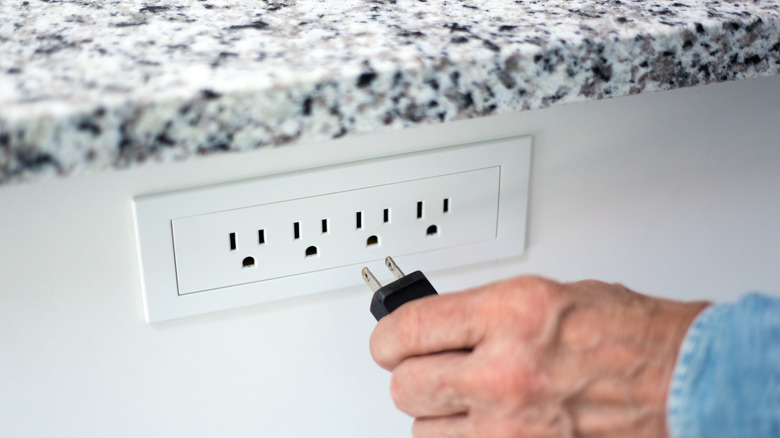
Homes can make a lot of sounds, but some common house noises definitely shouldn't be ignored. These sounds need investigation, or else you risk major hazards. A buzzing outlet is definitely a cause for alarm. It's a signal that there's an issue within your home's electrical system. The sound may come from loose wiring connections, an incorrect outlet installation, overloaded outlets, or a power imbalance. Some issues are more serious than others, but all may present a fire hazard in your home.
Older wiring can sometimes disconnect, and when the wires loosen, it can create a buzzing sound as the electrical current flows. Looser connections result in more electrical resistance for the flow, which the electricity has to move through, a process called arcing. The buzzing you hear is the result of the arcing, and if you ignore it, the current may build up with heat, sparking or starting a fire. A poorly-mounted outlet, such as one you did yourself, can also be the cause, as can an overloaded circuit with too many things plugged in at once. You may also have a power imbalance from your breaker sending too little or too much electricity.
You can start by determining whether the buzz is really coming from your outlet, as buzzing can also be a warning sign from your HVAC you shouldn't ignore. Listen carefully. Does it sound like there's a fly or bee buzzing in there, even when you're on the other side of the room? Some electricians have described the sound as like the "crackle and pop" of Rice Krispies. If you detect any of these sounds, here's what to do next.
What you should and shouldn't do with a buzzing outlet
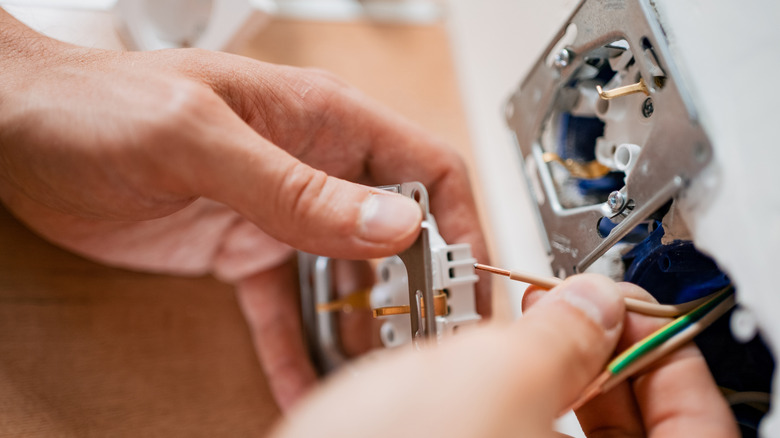
First, you should immediately stop using the buzzing outlet and unplug anything that's currently plugged in. Check out the other outlets around your home to see if you detect more buzzing. If only one outlet is buzzing, you can try plugging in your devices one at a time to determine if one plug was the cause or if the circuit was simply overloaded. You can also try touching the outlet to see if it's warm. If you see an outlet with brown or yellow marks around it, these are burn marks, and it should be inspected by a professional as soon as possible.
It's crucial you don't attempt these electrical projects at home because you may injure yourself, or worse, start a fire. Instead, go to your electrical panel and find the circuit for the outlet. Shut it off for safety, then call an electrician. A professional electrician will check for any loose wiring, overloaded circuits, or power imbalances. They may install a new outlet, fix your faulty wire connections, or, in extreme cases, replace your breaker box.