

10 Spring Flowers That Grow Beautifully In Containers For Porch Decor
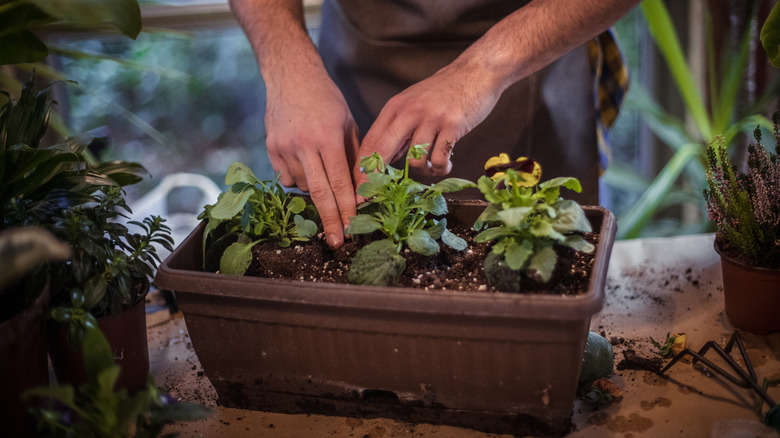
It depends on who you're asking, but in my work as a professional gardener, one of the best things about spring is flowers. From the earliest snowdrops and hellebores to daffodils and tulips, the colorful blooms of spring are a welcome sight after a long winter. If you don't have spring-blooming perennials, or even if you do, planting spring-blooming annuals, such as pansies, coral bells, and dianthus, in containers is a great way to add seasonal beauty to your yard and entryway.
Most plant nurseries start selling annuals for planting by late March, then choices increase by the beginning of April. Some Easter-season potted plants can be added to containers, including bulbs like hyacinths and small azaleas. But these don't tend to bloom as long as annuals, which can be deadheaded for additional blooms. When my clients ask for container plantings in spring, I add as many early-blooming annuals as I can find, and add others that will continue the show as spring turns to summer. I also choose long-blooming annuals that offer the best value.
I like to create a basic "thriller, filler, spiller" arrangement, and plenty of annuals provide creative design choices for this formula. Keep in mind that spring-blooming annuals often prefer cooler temperatures and may not hold up too well if the summer days get very hot. Locate your containers somewhere they get morning sunlight but are shaded from the late afternoon sun to keep the flowers from wilting in the heat. Water containers in the morning to keep them hydrated as the day gets warmer.
Pansies and violas
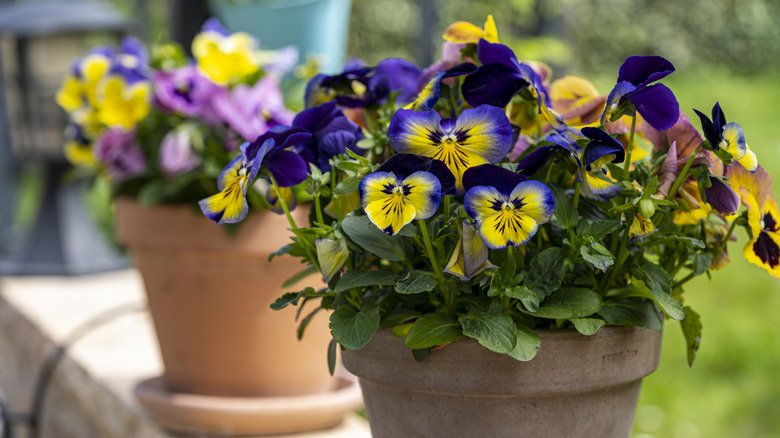
Pansies and violas are just about the earliest annuals available in nurseries in spring. They make lovely container plants and come in a huge range of multi-colored hues. Heavy rains can weigh down the petals and make them droopy, so if you can move or cover your containers during a rainstorm, your pansies will thank you. The smaller wild pansy, known as Johnny Jump-up (Viola tricolor), can be planted in your garden once the flowers fade and often reseed themselves in sunny spots.
Alyssum
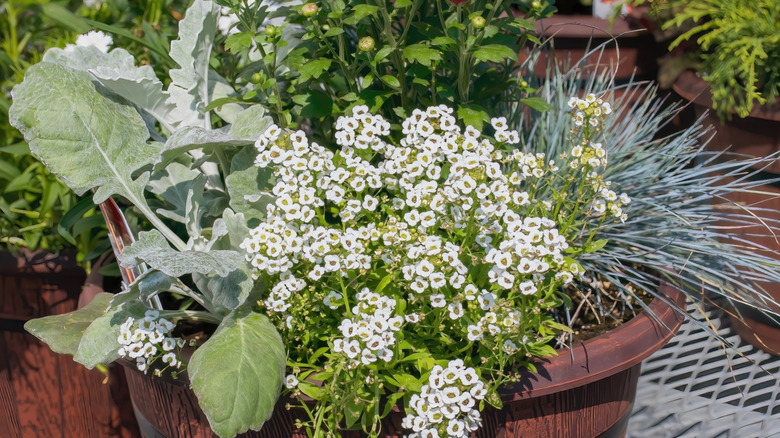
The tiny, sweetly-scented flowers of alyssum make great container annuals, as either fillers or spillers. The white variety is the most common, but they also come in shades of pink, lavender, and purple. Shear them back gently once the first round of blooms fades, and you just might get a second round of flowers. Alyssum has tiny seeds that will often reseed in cracks and crevices.
Lobelia
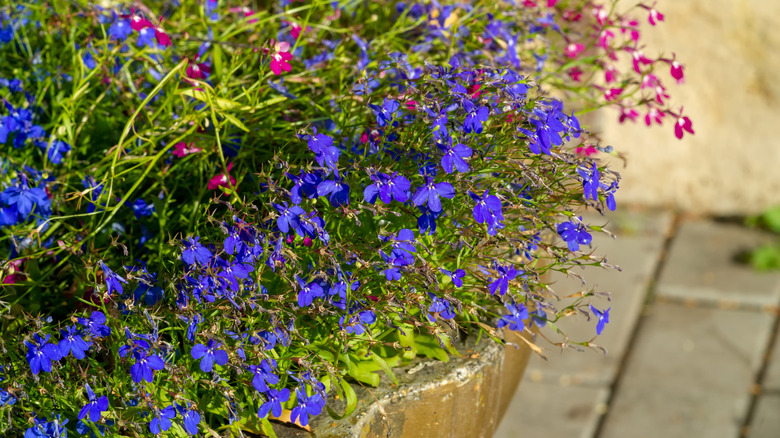
Lobelia refers to several different flowers, but the sought-after annual for containers is Lobelia erinus. They cascade gently over the edges of pots, adding a delicate cloud of color to arrangements. They come in a gorgeous range of hues, including cobalt blue, pale blue, lavender, pastel and rose pink, magenta, and white. Shear them back gently to encourage fresh blooms. Hot summer temperatures may cause them to wilt, so give them some shade and keep them well watered. I love pairing these with tall snapdragons for a nice texture contrast.
Snapdragons
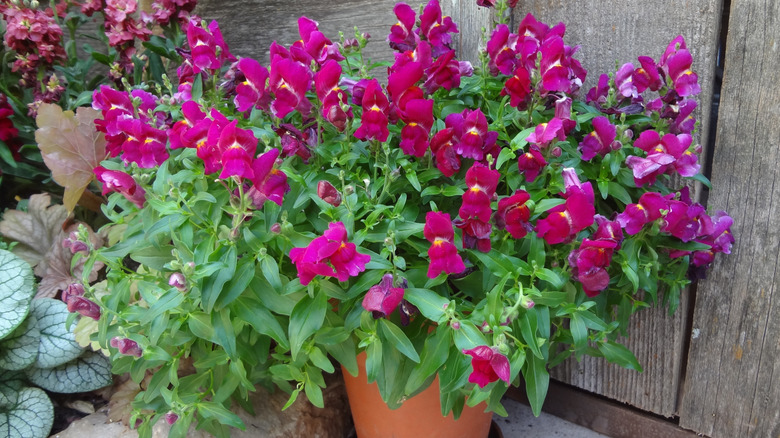
Snapdragons (Antirrhinum) are colorful annuals that will reseed nicely under the right conditions. In spring, the annual snapdragons available earliest in nurseries are usually on the smaller side and bloom through the summer months. Taller varieties like the 'Rocket' and 'Chantilly' cultivars are available in mid to late spring and produce vibrant blooms through autumn with proper deadheading. These delicate-looking but robust flowers are great for keeping your containers colorful all season long. Try burgundy snapdragons with pale blue lobelia and chartreuse and copper coleus for a stunning color combo.
Ranunculus

Ranunculus asiaticus are also called Persian buttercups (not to be confused with wild buttercups, Ranunculus repens), and grow from corms that can be planted indoors a few weeks before final frost. The corms can be dug up and stored over the winter for replanting if desired. They produce long-blooming, many-petalled flowers that resemble small begonias and come in a range of bright and pastel colors. Ranunculus like very well-drained soil and plentiful sun, and need good airflow to prevent powdery mildew on their leaves.
Dwarf delphiniums
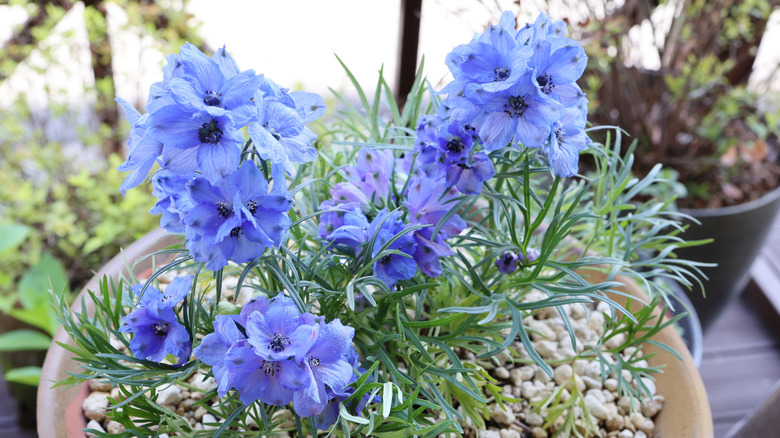
Many people think of delphiniums as very tall flowers with stalks covered in velvety blooms — like the Giant Pacific Hybrids, a popular cultivar that grows between 4 and 6 feet tall — but there are smaller varieties that are better suited for containers, and can be easily grown from seed with a bit of cold stratification. Dwarf delphiniums (Delphinium consolida), also sometimes called larkspur, grow between 18 and 24 inches tall in a rainbow of delicate pastel shades that light up your spring containers.
Heuchera
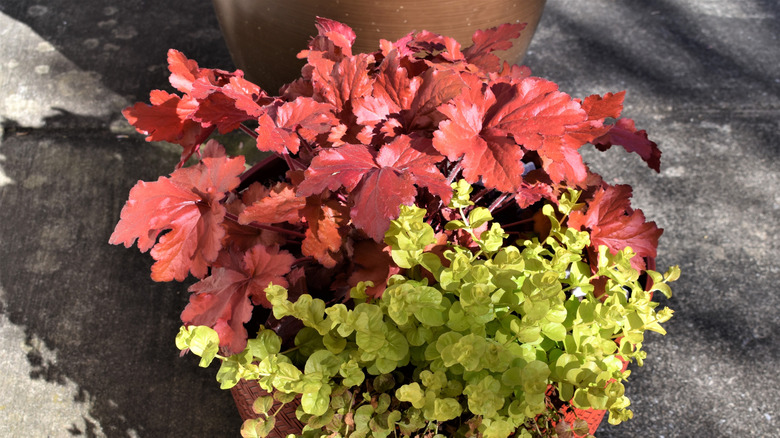
Also known as coral bells, heucheras are clumping plants with shapely leaves that produce tall, slender spikes of tiny flowers in shades of white, pink, or red, which give the plant its common name. In recent years, abundant hybridizing has produced plants whose colorful foliage takes center stage. The many hues include purple, silver, gold, copper, red, orange, and many shades of green (mint, olive, and chartreuse). The many, striking varieties of heuchera glow with vivid color through three seasons. They overwinter well in containers, too, and are hardy in USDA Hardiness Zones 4 to 9.
Annual salvia

There are many plants in the salvia family, but for container annuals, the most common one is Salvia farinacea, which is also known as mealy blue sage. These delicate flowers grow on sturdy stalks between 8 and 10 inches high, and are long-blooming spikes of color that make a nice thriller for your small containers. They mostly come in shades of medium to deep blue and violet, but are also available in white.
Dianthus
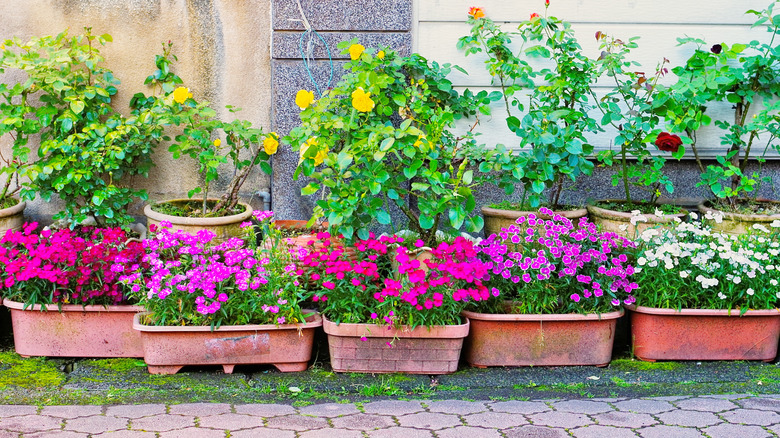
I love picking out dianthus for containers in spring. There are several types of dianthus, including carnations (Dianthus caryophyllus), wild sweet William (D. barbatus), and spreading perennial pinks (D. deltoides). The ones best for containers are Dianthus chinensis, or China pinks. These have a clumping growth habit and many color variations, including white, pastel pink, magenta, crimson, and bi-colors. Though sold as annuals, these will come back as short-lived perennials for several years; in the second and third years, they produce loads of flowers. Deadhead after the first round of blooms fade to encourage new flower buds.
Coleus
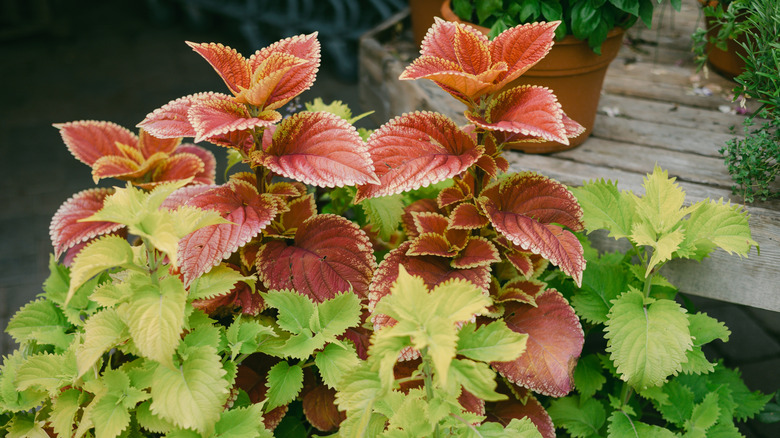
Coleus is available as a small plant in spring, usually sold in affordable six-packs. They're perfect to tuck into small containers for a spot of color and velvety texture. But if you give them some space, the plants will quadruple in size by the middle of summer. Snip off the spindly flower stalks so the plant can direct its energy to its colorful foliage, which can range from cool chartreuse to warm, bold shades of red, pink, burgundy, and copper, providing many exciting color palette possibilities.