

10 Types Of Cantaloupe You Can Grow In Your Garden For A Delicious Harvest
We may receive a commission on purchases made from links.
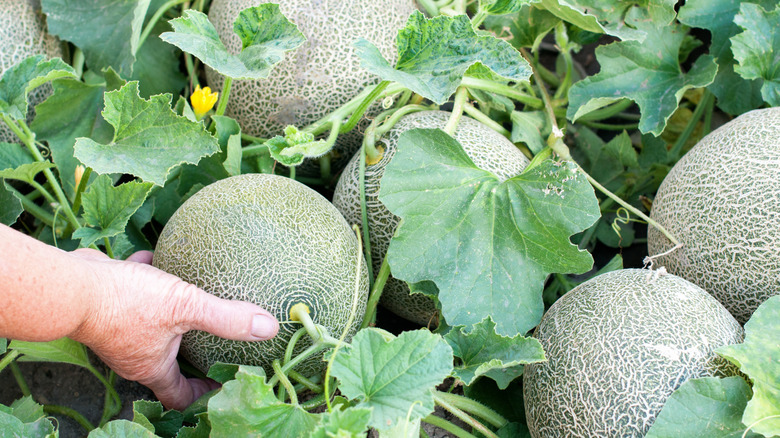
Growing an edible garden is an excellent way to enjoy the outdoors while also embellishing your dining table — and that of your neighbors — at the same time. So if you've ever meandered through the melon section of the grocery store and wondered if these fruits could feasibly be grown in your own garden, you don't have to wonder any longer! There are actually quite a few cantaloupe (Cucumis melo) varieties which can be grown at home and subsequently enjoyed in salads, savory entrees, and even fruity cocktails.
Before you begin picking out your chosen varieties, however, there are a few helpful tips and tricks for growing juicy cantaloupes from seeds in your garden that can set you up for success. The first important thing to know is that what Americans typically call "cantaloupes" are actually muskmelons. True cantaloupe is found in Europe and has a thicker, bumpier rind. The following melon species are, therefore, technically muskmelons but will be referred to as "cantaloupes" since that's what they're called in American gardening contexts and culinary settings.
While each variety listed below may have its own specific growing tips, in general you should plan to grow cantaloupe in sunny spots with varied, healthy soil. In addition, you will need to water it on a regular basis and, as a general rule, allow it a decent amount of space to spread out. Cantaloupe can typically be grown in USDA Hardiness Zones 2 to 11, though it prefers warm soil, so tools such as tunnels may be needed in colder climates to keep it happy. Got all that? Great! Let's take a look at these tasty cantaloupe varieties perfect for adding some sweetness to both your garden and your table.
'Sweet Granite'
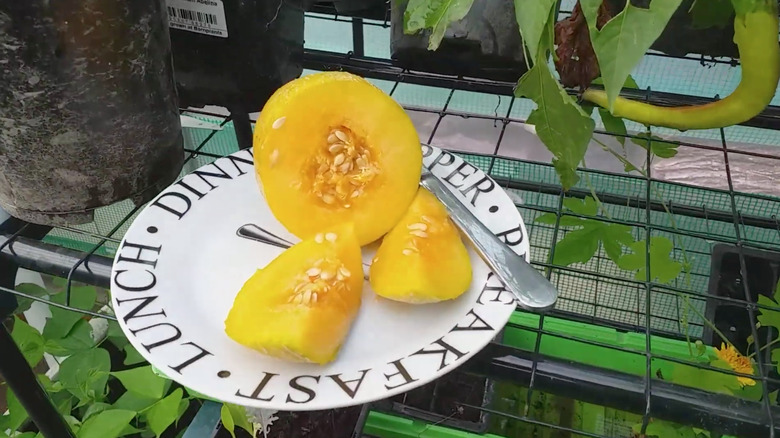
We'll start this list with early-season cantaloupe varieties. These are ones that are well-suited to colder, northern climates with shorter growing seasons. 'Sweet Granite' is an excellent example of an early-season, cold-tolerant variety. These melons grow to around 2 or 3 pounds and have a tasty orange flesh covered in thin netting on the outside. To give early-season cantaloupe varieties like 'Sweet Granite' the best chance in chillier climates, try using tunnels or black mulch to capture the available sunlight and keep the soil warmer.
'Athena'
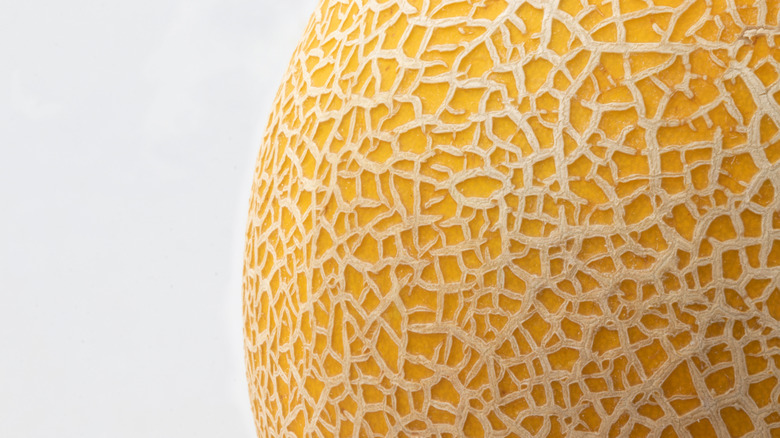
This hybrid cantaloupe is another early-season gem, with its delicious, nice-smelling flesh and hardy outer skin that helps stop it from splitting as it grows. It takes around 80 days to mature, producing 5- or 6-pound melons at the end of that period. The 'Athena' can be planted after the last frost for an earlier spring harvest, and if grown in warmer climates, there is even a chance of getting a second crop during the fall, too. This hybrid variety is highly disease resistant and, like most cantaloupes, should be harvested when the stem goes completely dry.
'Halona'
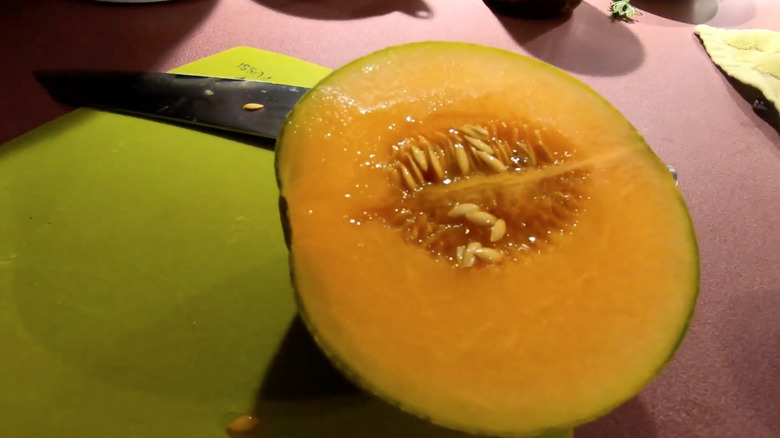
The final early-season cantaloupe variety on our list, 'Halona' has a small seed pocket, meaning you will find plenty of sweet, rich flesh inside when it is cracked open. This melon has a fascinating, geometric netting on its outer rind, and it has developed a medium resistance to powdery mildew and fusarium wilt, a fungal disease that can infect a variety of different crops. These cantaloupes are ready to harvest when they slide easily off the vine with only a slight pull. They will also begin to smell much sweeter as they get closer to fully ripening.
'Superstar'
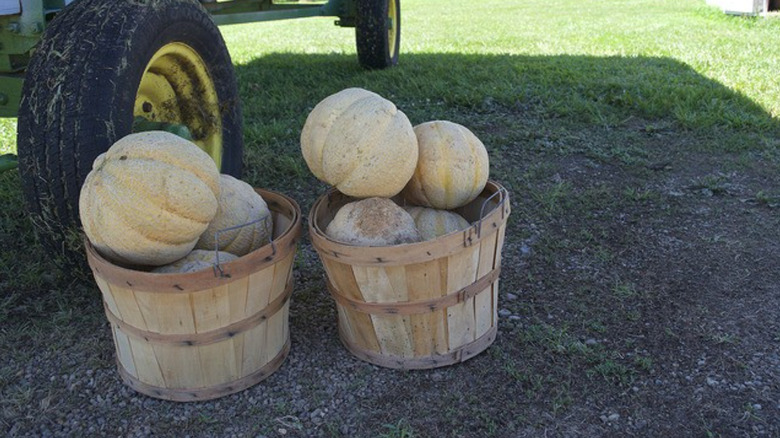
The 'Superstar' cantaloupe variety is a mid-season plant, which means it is a good choice for climates which have a medium-length growing season or longer. It takes around 85 days to mature and features a smooth, creamy texture with a sweet taste. The vines of this type of cantaloupe can reach around 8 feet long, so if you're limited on space, this could be a good opportunity to try growing cantaloupe vertically. Try not to pick 'Superstar' too early, as mid-season cantaloupes are known for ripening best while still on the vine.
'Ambrosia'
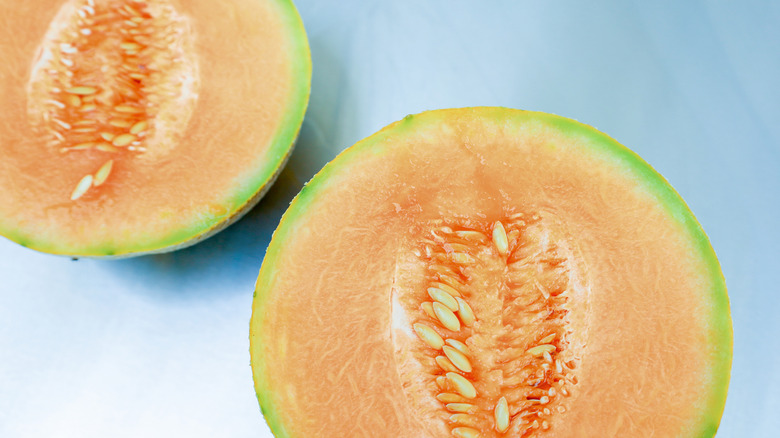
If you're short on space but don't want to use a trellis for growing cantaloupe vertically, you could always opt for a bush variety instead. Bush cantaloupes like 'Ambrosia' typically grow vines that are only about 3 feet long, making them ideal for smaller beds. While bush cantaloupe plants do produce less fruit, the cantaloupes they grow are of average size and not overly small. In addition to being a good space-saving option, 'Ambrosia' is also well-known for being exceptionally sweet, making it a delicious item to harvest when it ripens in around 85 days.
'Hale's Best Jumbo'
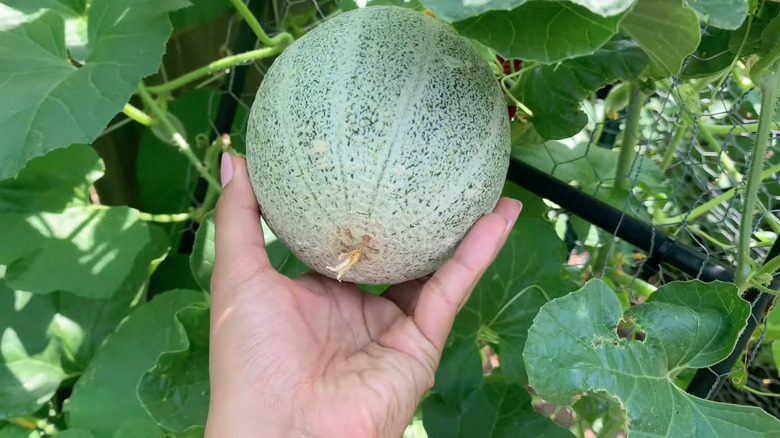
When you picture a cantaloupe in your mind, chances are good that what you're imagining is a 'Hale's Best' variety, sometimes called 'Hale's Best Jumbo.' Having been introduced in 1920, this cantaloupe bears the classic green stripes, netted rind, and bright-orange interior that is often associated with the fruit. It is known for producing a relatively large yield of 3-pound melons that have a rich, summery flavor. Like the 'Halona,' this variety has a smaller seed pocket, meaning you get plenty of tasty fruit in each cantaloupe.
'Hara Madhu'
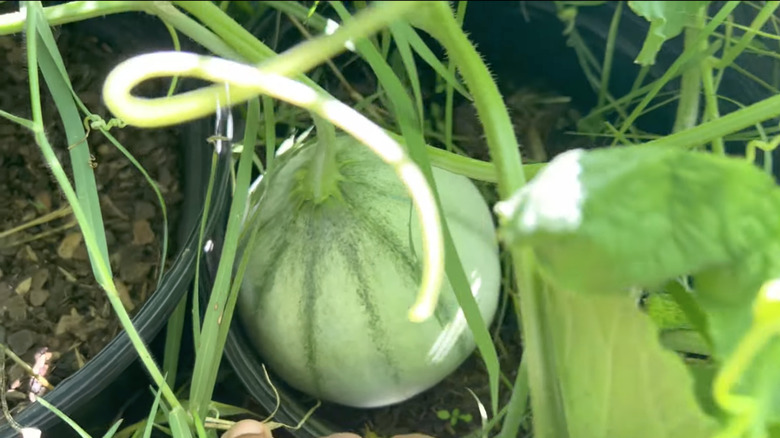
'Hara Madhu' is a late-season variety of cantaloupe, meaning it is best grown in warmer climates which have long growing seasons. This is because it takes around 90 days to mature completely, so a short or overly cold growing season will not allow the fruits to ripen sufficiently, due to the chillier soil temperatures. If you want to try growing this tasty cantaloupe — which is best enjoyed fresh — but your region has a shorter growing season, you could use some Mausgaav Plant Covers to help keep the soil warmer and extend the season.
'Saticoy'
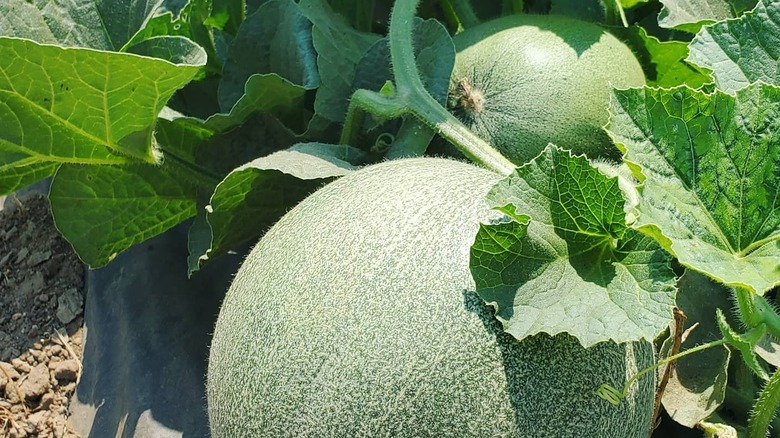
Another late-season variety is the 'Saticoy' cantaloupe. This sweet-tasting melon takes around 90 days to mature. However, once it is harvested, it has a decently long shelf life, meaning you don't have to eat it immediately after it has been picked. This variety has dark orange flesh and both a strong flavor and a pungent, sweet smell when it comes near to being ripe. The 'Saticoy,' like many cantaloupe varieties, has webbing on the outside, so it's important to remember to wash the melon thoroughly before eating it to get rid of any bacteria hidden on the exterior.
'Iroquois'
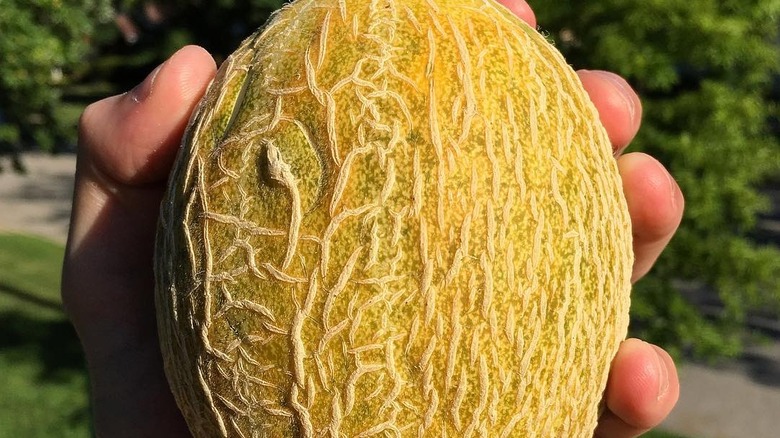
With a strong aroma that will make this melon an enticing addition to your garden's harvest, the 'Iroquois' is a late-season variety known for growing large and performing well. It also has a nice flavor in its juicy, orange flesh, which sits underneath its hard, thickly webbed exterior rind. Ripening in around 85 to 90 days, this variety is resistant to fusarium wilt, making it a good choice for beginners. Plant this cantaloupe in a sunny spot that features nutrient-rich soil.
'Hearts of Gold'
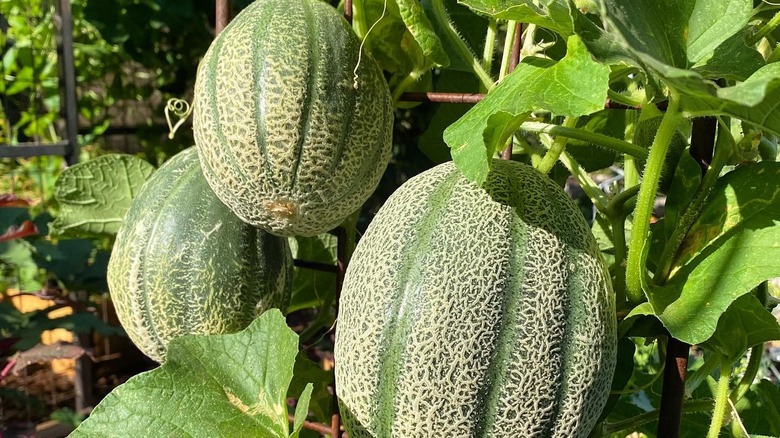
While this final late-season cantaloupe variety on our list can take up to 95 days to mature, it is certainly worth it for its juicy, delicious flesh that comes in that classic, bright-orange cantaloupe color. This variety has thick netted skin, has a small seed pocket, and is a good choice for home growing due to its adaptable nature. If you'd like to grow 'Hearts of Gold' in your own garden, try planting it near marigolds (Tagetes spp.) or oregano (Origanum vulgare), as these can help deter beetles and other pests from messing with your growing melons.