

Why Homebuilders Abandoned American Craftsman Style Homes After The 1920s
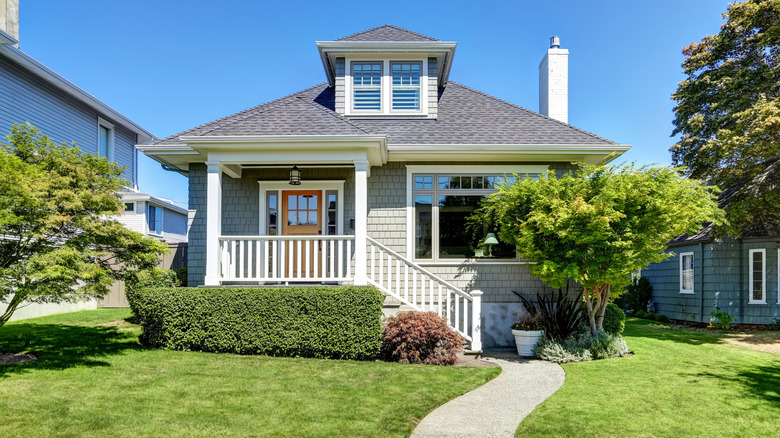
When I was a kid growing up in the Pacific Northwest, I had a strange fascination with old homes. My favorite was a home that was just down the street from my high school. I didn't know it at the time, but it was a craftsman. There was something about its tapered columns covered in large river rock, the exposed gables, and interesting window framing that just stood out to me. So, it's no wonder that my love of old homes would eventually lead me into a job at the Preservation Alliance of West Virginia advocating to the public that old buildings and homes should be preserved. It also had me questioning why certain building styles fade away. And that made me wonder, why did homebuilders abandon the craftsman? The short answer is — money and modernity.
While many of you may be familiar with craftsman homes, some may be wondering what exactly a craftsman-style house is. Craftsman homes first came into popularity around the turn of the 20th century in California and remained popular until about 1930. They were built as a direct response to the industrial revolution and the rise of mass production. Craftsman bungalow-style homes were an homage to handcrafted features and artisan workmanship as well as a simpler style than the extravagant Victorian-age home.
Usually, craftsman homes were single-story or one-and-a-half-story homes with a low-profile roof, exposed gables, an extended roofline, tapered porch columns, an open floor plan, and many built-ins. While they were more affordable than Gilded Age-style homes, after the market crash of 1929, they became too expensive to build for the average homeowner. By the time the market recovered, styles and homeowner needs were changing.
Market changes ended the craftsman home movement

There are a lot of outdated home styles that should be brought back simply for their charm, and I am a firm believer that the craftsman should be at the top of the list. Maybe it's because I grew up during the era of the rise of the McMansion and know a thing or two about suburban landscapes full of soulless home styles. Sadly, mass construction of the cookie-cutter homes of my young adulthood are just another example of why home trends happen. It's rarely just one thing that causes a shift in architecture, as with all trends, there are usually multiple factors. But much of the time, money is the primary driving force. And market changes often correlate with societal shifts and vice versa.
The Great Depression of the 1930s had many Americans just trying to survive; buying a home was the last thing anyone was considering. Homebuilders, if they were able, were just trying to get homes built and sold without taking a loss. That meant not only reducing the time it took to build a house but also reducing the cost of materials. It just wasn't cost-effective to have skilled artisans working on specialized features of a craftsman home. And the response was a shift to minimal traditional-style homes.
During and after the Second World War, the market corrected itself and home building en masse resumed. In fact, the housing market exploded after returning soldiers came home and started families. This new generation was part of the cultural shift to all things modern and the new ideal of suburban living, so the craftsman home was out, and the ranch-style home was in.