

How To Remove Grease In The Kitchen, From Walls & Floors To Counters & Appliances
We may receive a commission on purchases made from links.
Grease is a simple fact of life in the kitchen. It's prone to spreading to just about every surface in the heart of the home, from your counters and cabinet doors to the hood over your stove. It bakes itself into oven doors, and it has an annoying tendency to harden and become extremely hard to remove. It can even stage a slow takeover of your air fryer.
If any of this is ringing a bell, don't worry. Yes, grease is inevitable in most kitchens. And sure, from time to time, you may have to use some elbow grease to see that it's properly removed. But that doesn't mean that it has to be difficult. The key is to attack each greasy area of your kitchen with an appropriate solution.
That could mean using a degreaser that's strong enough to scare your stovetop silly, or soaking those blackened oven racks in a trash bag with a common household chemical. Whether you need to remove stubborn grease stains from your kitchen cabinets or remove a sticky sheen from your prized hardwood floors, this guide to cleaning grease in the kitchen can help.
Hot water is best for busting fresh grease
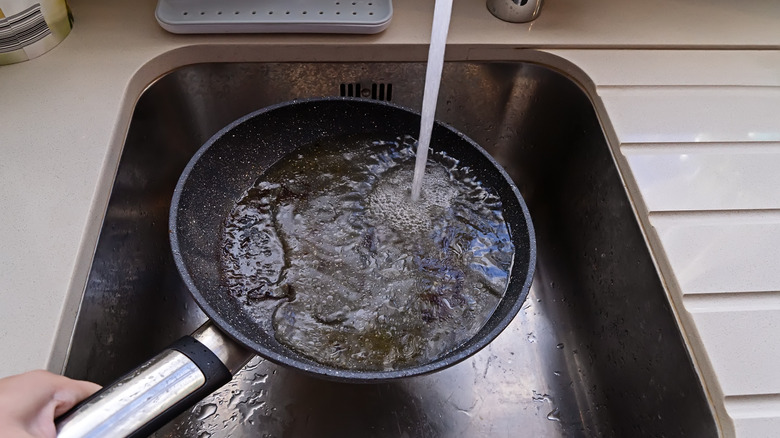
As a simple solution, hot water is great for cleaning your house and garden. It's been used by cooks and homemakers for a long time, and in the kitchen, it's often the first line of defense against grease. It's especially effective against fresh grease that's not yet cooled and set or hasn't hardened or been burnt on. This could be plates, oven trays, or roasting dishes, or even grease splatters over the top of your stove. The heat of the water helps to increase the molecular motion in the grease, which in turn makes it easier to soften and remove.
The trick to getting the most out of this simple trick is to act fast. If you allow the grease to cool and fully harden, hot water may not be able to melt and remove it from your cookware. Fresh grease is also much easier to wipe from the countertop, and if you do it with a hot water-soaked cloth, there's less risk of spreading it around your counters. Just make sure you wear a pair of gloves to protect your hands from the heat.
Dish soap and warm water is tough on greasy windows

Over the course of weeks and months, kitchen windows can take on a foggy, greasy residue. Regardless of how fastidiously you clean your windows on the outside, it can make it hard, or even impossible, to make them shine. Fortunately, this film is easily wiped clean with nothing more than a little warm water and some dish soap.
Given that this is grease we're talking about, it's best to use a specially-formulated grease-tackling dish soap, like Dawn Platinum. Working in conjunction with the warm water, this will help to emulsify the oils covering windows, making them easier to clean. Depending on how badly your windows are soiled, you may want to take a couple of passes at them with this solution. Once you're happy that it's all been wiped clear, whip yourself up a DIY glass cleaner to leave your windows streak-free, then make a point to wipe them down regularly.
A baking soda paste can help to tackle stubborn grease stains on tiled walls and oven doors
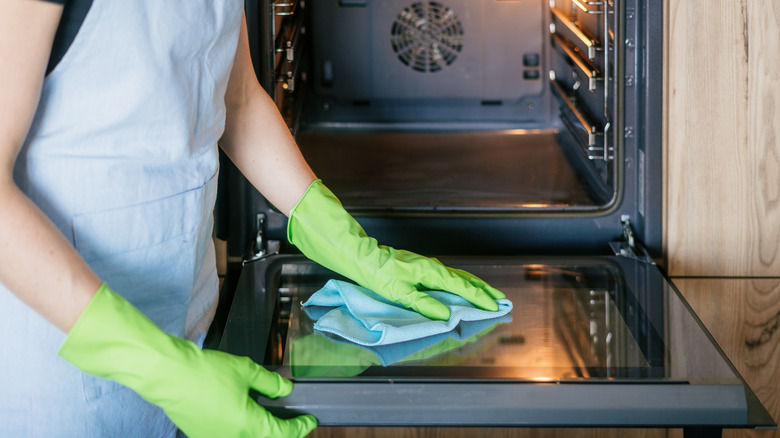
The tiles around your stove, as well as the oven doors, are some of the most grease-prone surfaces in the kitchen. Plus, oven doors are exposed to extreme temperatures, which can quickly cause grease to become baked on. And when that happens, cleaning can become a challenge. But if they're not too badly soiled, you might find that a baking soda and water paste helps lift the grease from your doors and tile.
In fact, baking soda can be used for lots of cleaning hacks around the home, and it's effective for two reasons. Firstly, its alkalinity helps to break down the acid in greasy build-ups (which can occur all around the house, not just in the kitchen). It's also mildly abrasive — not enough to scratch your tiles or glass door, but enough to help break up and lift burnt-on, greasy residue. Simply apply a baking soda paste to the surface and allow it to work for a few minutes. Lightly scrub any tough spots before using a clean, wet dishcloth to remove the paste.
White vinegar and baking soda will strip the grease from your range hood filters
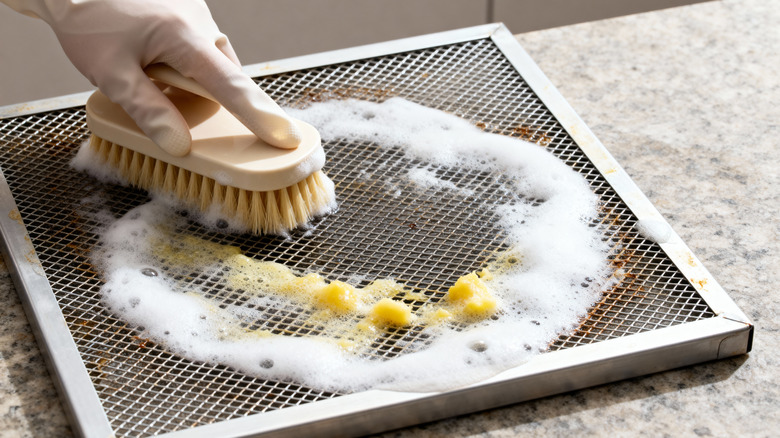
Another part of your kitchen that is guaranteed to get greasy is your range hood and the filters inside it. Over time, these filters can become seriously clogged with grease. And unfortunately, unless you soak them regularly, it will accumulate, cool, and harden over the course of weeks or months. So, a good cleaning is recommended from time to time. And while there are various ways to clean your range hood and filter, white vinegar and baking soda are a simple option.
Those who already use vinegar to keep their houses clean probably know how effective it can be. The reason it works so well in conjunction with baking soda is that, when mixed together, a chemical reaction takes place that causes the mixture to fizz. This helps to loosen the build-up of grease, making it much easier to lift and flush away. For best results, soak your filters for at least ten minutes. Once soaked, remove them from the water, scrub any excess grime away with a brush, then rinse them thoroughly with hot water.
Ammonia and a trash bag is all you need to bust your oven racks free of grease
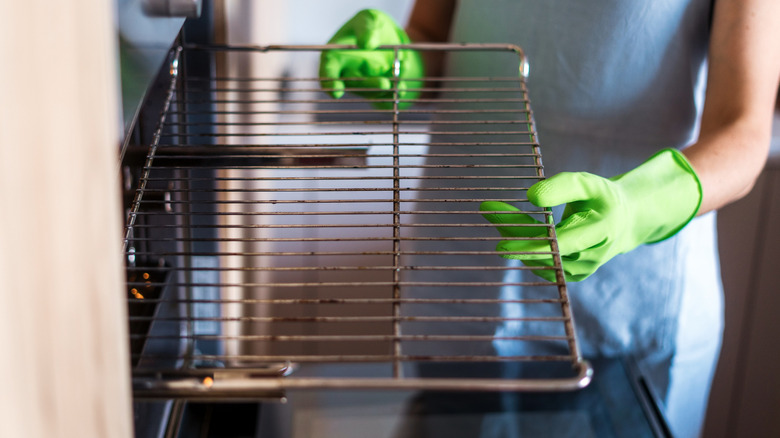
Hopefully, by now, you've given your oven doors a clean with baking soda and can actually see through them. If so, you may now be looking at the filthy racks inside. Like your oven doors, these can quickly become baked in grease. However, given that they feature lengths of metal wire (as opposed to a flat glass panel), they are much harder to clean. They don't have to be, though. You just need to grab yourself some household ammonia.
Thanks to its strong alkalinity, ammonia effectively melts the acidic bonds that make it so hard to remove grease from your racks. To use it, grab a heavy-duty trash bag (or two light- or medium-duty bags), place your racks inside, then add a couple of cups of ammonia. Ensuring that the open end of the bag is sealed, gently swish the liquid around so that it fully coats the racks. Lie them down and leave them to soak overnight. Then, wearing goggles and gloves, remove the racks and rinse them well. If needed, scrub them with a wire pad. Using copper pads can prevent scratching them (since copper is softer than steel). You should also try to perform this task outdoors, to ensure the fumes from the ammonia are safely vented away.
Citrus oil is great for cleaning cupboards without damaging the finish
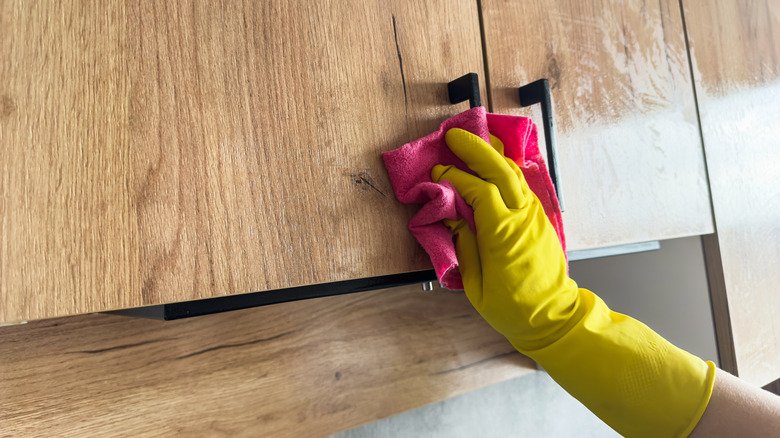
Kitchen cabinetry is bound to become greasy from time to time. This is especially true of those that are next to your stove. However, unlike your stove or your oven racks, which can put up with a little tough love from harsh chemicals from time to time, wood cabinets need more careful treatment. Bleach and ammonia will both cause more harm than good, and even gentler DIY cleaning products, like baking soda, could risk scratching your cabinets' paint.
Instead, it's best to start with something super gentle, like dish soap and water, to see if that takes care of the grease first. If that doesn't work, then another affordable way to degrease your kitchen cabinets is to use lemon or orange oil. Don't apply it undiluted, as this could also damage your cabinets. Instead, add two or three tablespoons of oil to a spray bottle and then top it up with warm water and a splash of lemon juice. The water should dilute the oil enough to prevent it from damaging your cabinets. But to be safe, spray it on an inconspicuous spot first before going ham on the rest of your cupboards.
Cornstarch can absorb oils from your fabric chairs and cushions
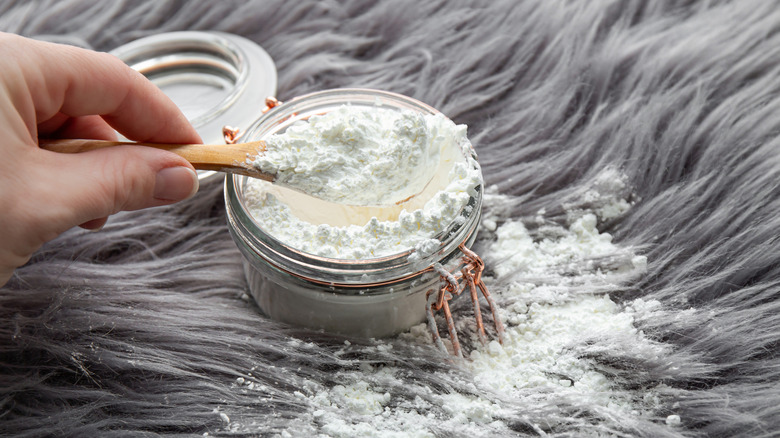
There are various types of stains that can be lifted with the aid of cornstarch, and grease is one of them. Just like you might use the powder to remove oily stains on clothes, you can use it to absorb grease stains from other textiles. This means you can remove any grease that happens to make its way onto cushioned kitchen seating like chairs or stools.
If you can, remove the affected covers from your chairs and cushions first to make cleaning them easier. If the stains are fresh, start by cleaning them with paper towels to soak up as much of the oil as possible. Make sure to "blot" or "dab" the stain rather than rub it, as that can actually push the stain deeper into the fabric. Once you've blotted up as much as you can, sprinkle the affected patch with cornstarch to absorb the grease. Give it up to an hour to work (the longer, the better), then run your vacuum cleaner over it.
A salt scrub can work wonders on cast iron with burnt-on grease
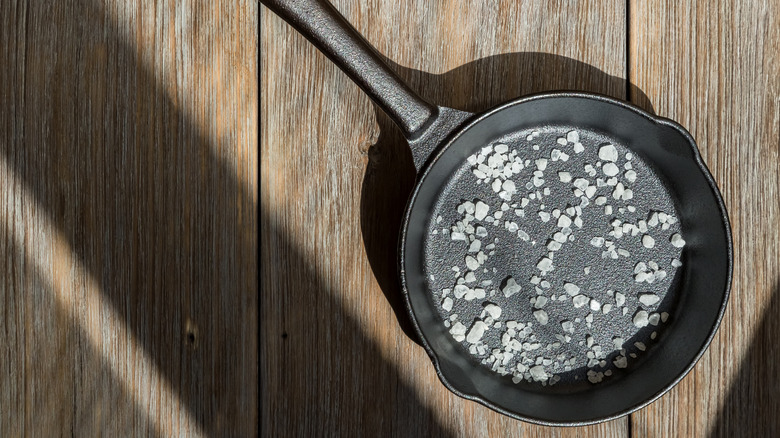
As cleaning solutions go, salt is about as environmentally friendly as they get. It's also readily available (you probably already have a container or two in your cupboard), and even if you don't, it's cheap. It's also one of the easiest ways to get grease off your pans, especially cast-iron skillets. The key is to use coarse, kosher salt, which is abrasive enough to tackle burnt-on stains, but not quite tough enough to damage the iron beneath.
To use it, first heat your skillet on low to soften any residue, and then sprinkle a few tablespoons of coarse salt over the surface. Add some oil (yes, add grease!) to form a paste with the salt, and then grab a clean cloth. Use the cloth to work the paste around the pan, moving it firmly in small circles, ensuring you work it into every part of the pan. When you're finished cleaning, wipe it clean with paper towels. Finally, to prevent your cast-iron pan from rusting, heat some vegetable oil until it shimmers, then wipe it around the surface of the skillet until it coats the whole surface. This will ensure it's properly seasoned and unlikely to start corroding.
Flour is great for absorbing large, accidental grease spills
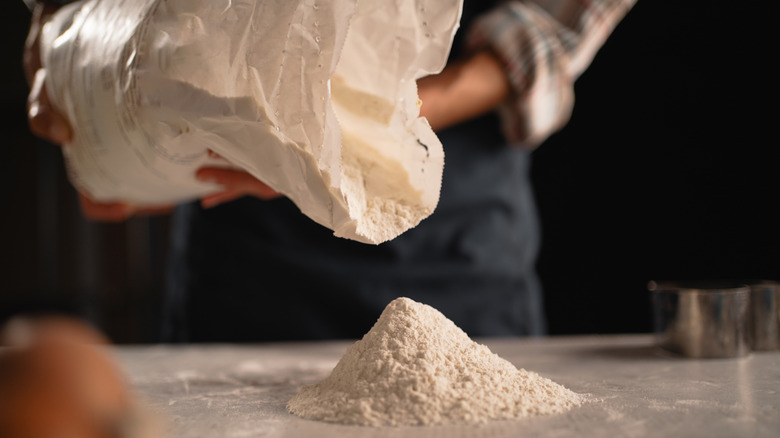
With most normal spills, you could get away with tossing a towel over the top before clearing up the rest with a mop and bucket. With oil spills, though, it's different. Yes, a couple of dish towels would likely stem the flow of oil as it tries to spread. The problem with using towels is that, once they're soaked with oil, they're incredibly hard to clean. They can even catch fire in the dryer, meaning you may need to throw them away.
Instead, reach for your trusty bag of baker's flour. Flour is excellent for absorbing large, unexpected spillages of grease quickly. Simply sprinkle as much as you need to in order to cover the spill, and allow it to soak up the oil. When it's done, just sweep it up, then clean the surface below with a decent, degreasing floor cleaner.
Mop up greasy spills on vinyl flooring with warm water, dish soap, and vinegar
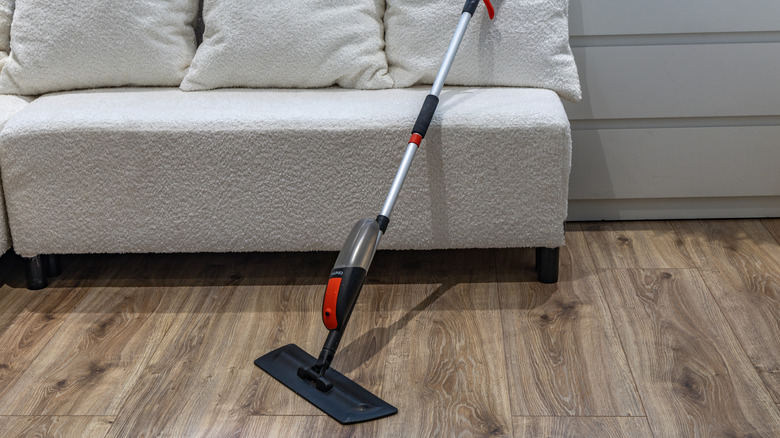
While vinegar is one of the most versatile cleaning tools, it should never be used on natural stone. Vinegar is highly acidic, and it can cause natural, porous surfaces like stone to become dull and even weakened. But if your flooring is made from vinyl, then you'll be amazed by what you can achieve with just some vinegar, dish soap, and warm water.
If you're just performing your usual monthly maintenance mop, then you may find that vinegar and water alone are enough to degrease your floor. But if you're cleaning up in the wake of a serious spill (having soaked it up with flour), or it's been a while since you cleaned your floor, then adding a dash of dish soap is recommended. It'll add a little extra oomph to your mixture, especially if you use a high-quality dish soap with degreaser.
Use ice and a putty knife to clean grease from wooden floors
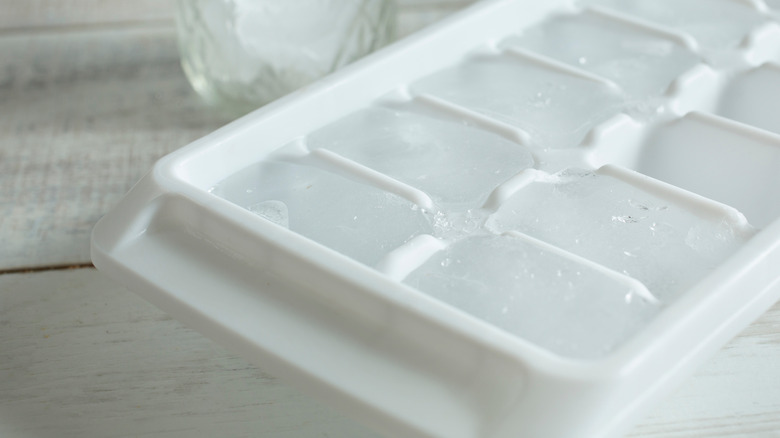
If you have wooden floors in the kitchen, then you have to be extremely careful in how you clean them. Bleach is a big no-no, as it can strip the color from your wood and leave it looking patchy. Similarly, vinegar's high acidity can dissolve your floor's finish, leaving it looking scratched and lacking in luster. Generally speaking, dry-mopping is best, with the occasional damp-mop using a specially-formulated wood cleaner. However, if you spill grease on it, then these relatively gentle cleaning methods are unlikely to solve your problem.
Instead, try spreading some ice around the spill. The plunge in temperature will cause the grease to solidify. Once it's hardened, you can simply scrape it up from your floorboards and sweep it into a dustpan. When you've removed all of the hardened grease, place a piece of cloth over the affected area and run your iron over the top. The heat of the iron will re-liquify any remaining grease on the boards, and the cloth will help soak it up.
Degrease air fryers gently with baking soda and dish soap
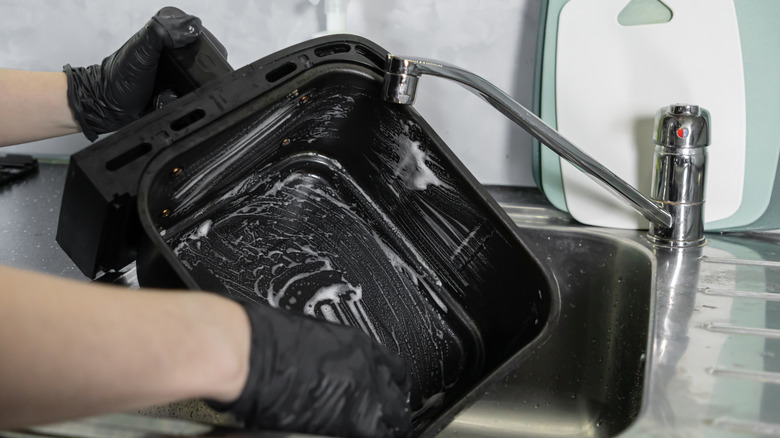
Although they don't use a lot of oil as traditional deep fryers do, air fryers can still get greasy. And while they're not, generally speaking, difficult to clean, they do require a careful approach. Don't forget, you'll be cooking in it again. So, the last thing you want to do is accidentally leave toxic residue behind.
There are various gentle methods you can use to degrease your air fryer. If you clean it quickly after every use, then you might find that a simple hot-water wash is enough to keep on top of things. But if it's been a minute since you've tended to those baskets, then baking soda and dish soap are likely to do the trick. First, mix some baking soda and warm water together until they form a paste, then apply it to the most stubborn areas. Allow it to work for around 15 minutes, then scrub the stains free with a brush. With that done, give the baskets and chamber a final once-over with warm, soapy water, then rinse everything as thoroughly as you can.