

Look For This Valuable Brass Collectible At The Thrift Store
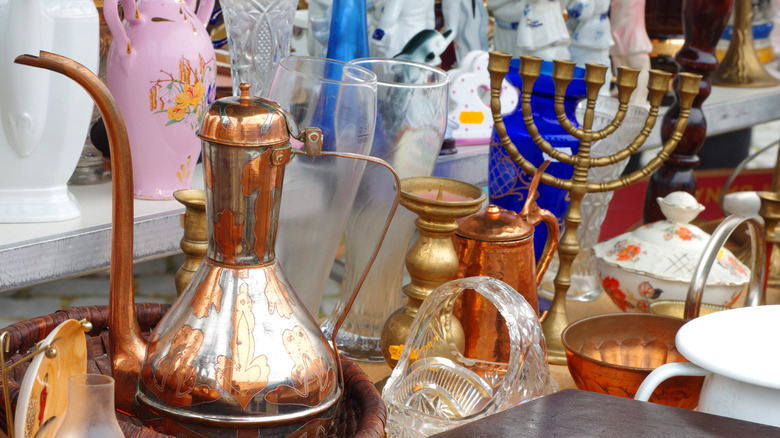
Looking through the cluttered shelves of a thrift store can sometimes feel like a dead end until you spot the golden glow of a heavy brass candlestick hiding behind some old coffee mugs. These solid metal décor pieces are easy to overlook because they're often covered in years of dust or old wax that hides their beauty. While plenty of people toss them aside thinking they're just cheap, faux-gold junk, authentic brass candlesticks are actually a find that holds onto their value. Unlike the flimsy imitations sold in big-box stores today, vintage brass has a lasting appeal. Aesthetically, these candleholders make a room feel warmer. Since brass is an alloy of copper and zinc, it doesn't rust like iron or steel, meaning a piece from fifty years ago can still look good.
Brassware is an unexpected collector's item you'll want to look out for at thrift stores. It was made in large quantities throughout the 1970s and 1980s; as older generations downsize, thrift stores are now full of it. Finding a vintage brass candlestick for a few dollars is a thrift store flip that can make your home look more expensive. Brass is also naturally antimicrobial — a practical reason for the metal's past popularity, though less important today thanks to modern cleaners. Learn the difference between a fake brass candle holder and the real deal, and your second-hand store trips will become more rewarding. For example, high-quality antique brass was usually sand-cast. The process leaves a slightly grainy texture on the inside or underside of the piece that's quite unlike the perfectly smooth finish of modern, machine-made replicas.
Antique brass candlesticks hold their value well for collectors and decorators
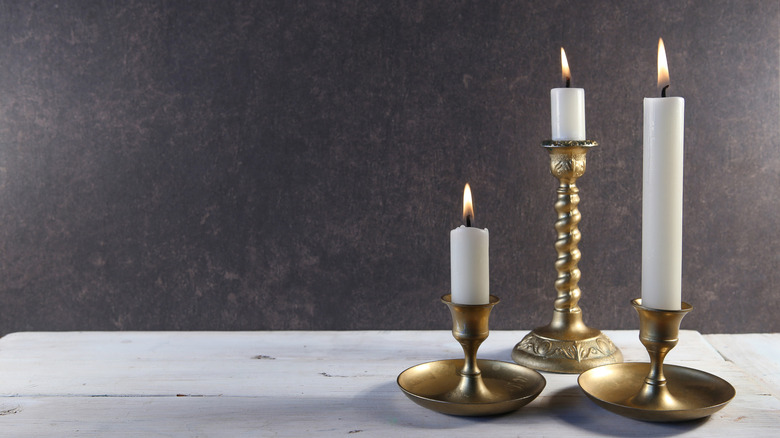
Don't worry if a brass candlestick looks dull, dark, or even a bit green when you pull it off the thrift store shelf. That aged look is called patina, and it's caused by oxidation and dezincification. In fact, many people prefer a little patina because it is yet more proof that the piece is authentic and perhaps also old. If you want to restore the candleholder's bright, mirror-like shine, you can easily clean it up using brass polish.
While finding a single brass candlestick is a great start, the real magic happens when you find a few that you can group together. Two or three of these vintage accessories look great as a balanced set on a mantel or a dining table. Brass is a durable and timeless material, so your candlesticks won't go out of style in a season, unlike cheap plastic seasonal décor. In fact, certain styles — like classic English beehive and barley twist candlesticks or tall, slender designs with traditional turned stems — never go out of fashion. They're neutral metallic accessories that fit into almost any interior.
Brass candleholders by famous designers, such as Jens Quistgaard and Robert R. Jarvie, or companies like the defunct Virginia Metalcrafters, are highly valued. Of course, you'd be very lucky to come across such a piece while thrifting. Even if you're not looking to sell your find, a pair of heavy brass candlesticks often commands a price tag that could easily exceed what you paid for them at the thrift store.
How to test the candlestick you've found to see if it's real brass
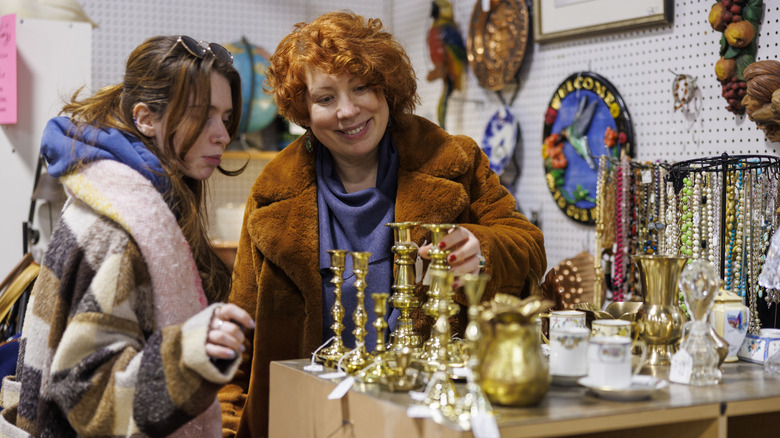
You can use a magnet to check whether the candlestick you've found is worth your time. Carry one in your pocket every time you go thrifting. If the magnet sticks to the metal, you're looking at a piece made of brass-coated steel, which doesn't have much value. Solid brass is not magnetic, so if you don't feel any pull, you could have a winner. You should also pick up the item to test its weight. A genuine cast-brass candlestick will feel surprisingly heavy for its size, while a modern reproduction will have thin walls and feel light. Check that the base of the candlestick has a uniform color, which is a good sign it's solid brass. On some antique candleholders, a threaded rod or a small nut may be holding separate pieces together.
Looking at the bottom can also give you some clues about where your brass candlestick came from. Many sought-after pieces were made in India, Italy, or England and feature maker's marks. Snag this vintage brass décor at the thrift store if you see it, because it has a level of craftsmanship that's hard to find in new products. If the metal is orange to red in color, it might be an alloy with a higher copper content; pale yellow suggests more zinc. If a chip reveals an underlying layer of metal in any other color, it's a sign that the candlestick is plated. Solid brass is yellow all the way through. Checking for all of these details at once will help you identify older brass candleholders from mass-market ones.