

Bathtubs Are Going Out Of Style In 2026 - Here's The Trend Taking Over Bathroom Design
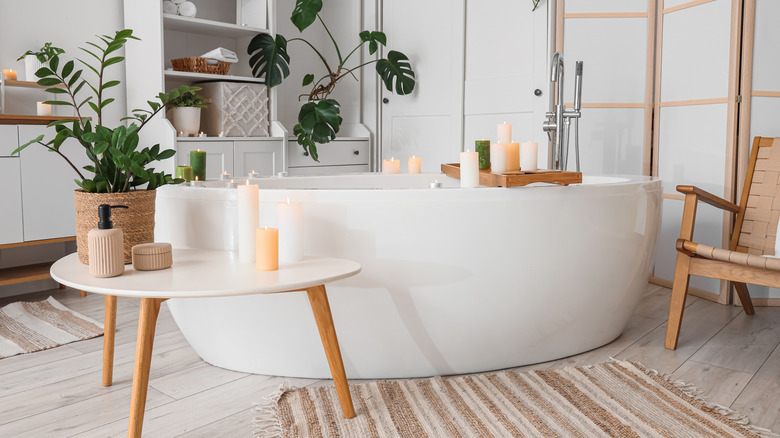
For a long time, bathtubs have reigned as the key to luxurious bathrooms. While they're ideal for relaxing evenings and bubble baths, bathtubs don't always get as much use as they should. They're not convenient for everyday washes, and they take up a lot of space. But until now, switching a bathtub for a shower felt a bit cheap. Well, this is no longer the case. In recent years, designers and homeowners have grown interested in a new, trendy bathroom design: conservatory-style showers. By swapping a soaking tub with one of these, you can turn your bathroom into a modern, functional, and luxurious outdoor-inspired haven.
Forget basic showers, and imagine a glassy garden escape. "Conservatory-style showers take inspiration from mid-19th-century bathing spaces, when showers were often housed within cast iron frames and resembled mini conservatories," Merlyn Showers' design consultant, Alan Harrison, explained to House Beautiful. With metal frames and glass panels, they give a shower an open, airy, and luxurious vibe. Instead of being something hidden away, such a shower becomes a central highlight of a bathroom, the way a bathtub usually is. Because these look like greenhouses, they pair beautifully with greenery. You can accessorize and keep plants in the bathroom by hanging them from the ceiling or placing them on shelves.
UK-based luxury bathroom designers West One Bathrooms expect this bathroom trends to take over 2026. "As we move further into spa-led, lifestyle-driven interiors, this is where bathrooms are heading in 2026: light-filled, timeless and effortlessly indulgent," they wrote on Instagram.
What defines a conservatory-style shower
Conservatories are separate rooms or home extensions with glass walls, and in order to look like one, a shower needs a few elements. First, to give it that "extension" look, the shower needs to be walled off — it's a completely separate room within your bathroom, with a floor-to-ceiling separation and a door to get inside. This differs from showers with partial enclosures that are simply placed within a bathroom, even if they have glass doors. Here, we're really talking about glass walls and a standalone structure that makes the shower feel like its own room, separate but connected to the bathroom through glass.
To achieve this type of walk-in shower, conservatory-style showers have a greenhouse-style metal frame. These frames can be white or black, whatever matches your style. The conservatory-style glass-and-metal walls can run from floor to ceiling, though a common design choice for these showers is to make the lower half of the partition solid. The glass panels then begin midway up the wall and extend to the ceiling, providing a mix of privacy and openness.
And a conservatory-style shower is not just a design feature; it's very practical, too. These showers are roomy and walled off, making them convenient for both quick everyday showers and long, steamy spa nights. They blend luxury with comfort, and they're a perfect upgrade for homeowners who don't use their bathtubs often but still want a bathroom that looks high-end and elevated. "The shower is the most used element in the space. With this emerging trend, I think we will see showers take centre stage and steal the spotlight as they deserve to," interior designer Ryan Wenham at Larsen Architecture told House Beautiful.
Is a conservatory-style shower right for you?
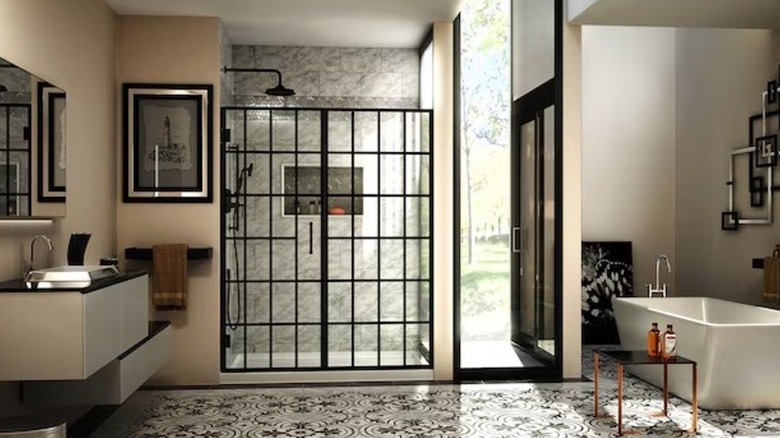
As with any interior design trend, there are some pros and cons to conservatory-style bathrooms. There's no debating that these are particularly charming, with their old-school look and elegant designs, but they're not right for everyone. First and foremost, building one of these in your bathroom requires quite a bit of room. In order to create a separate room in your bathroom, you need more space than you'd need for a typical shower. Small showers typically measure 32 by 32 inches, though roomier ones may measure 50 to 60 inches. A conservatory-style shower, on the other hand, is more comparable in size to a standard bathtub (60 inches and up).
The other thing to consider is cost. Conservatory-style showers with half-walls cannot be bought at IKEA and installed like regular shower enclosures. Instead, they require careful planning and construction. A hybrid option is to order a floor-to-ceiling glass-and-metal conservatory-style shower enclosure. They marry the old-school charm of small glass panels and sunroom-style metal frames with the convenience of regular shower enclosures.
Finally, these showers are ideal for bathrooms that are already breathing old-school charm and vintage flair. They're a great way to get that vintage bathroom look that's reminiscent of a country house, cottage, or summer lodge. They'll pair beautifully with vintage tile trends and luxurious materials, such as brass hardware and ceramic vanities.