

Skip The Bird Feeder, Attract Orioles With This Sweet Shrub
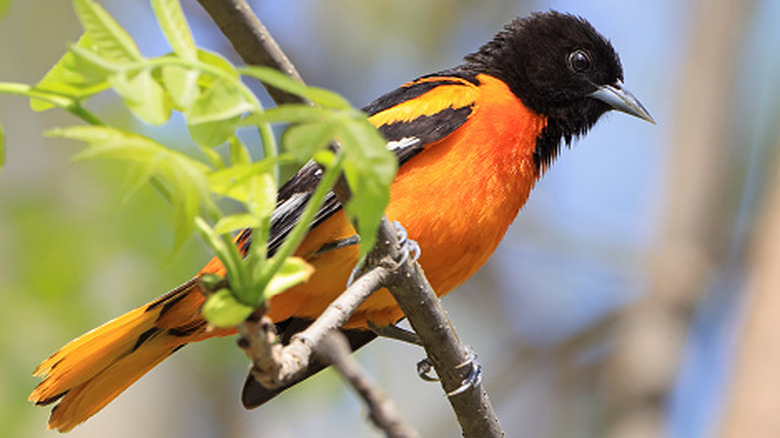
If you're in an oriole's migration path or its winter vacation area, it's thrilling to catch flashes of the bright orange plumage of the male birds and hear their whistle-like calls. Birds delight many gardeners, but not everyone wants to invest in bird feeders. There are also risks involved — if a disease is going around the local avian population, it spreads more in places they congregate and eat together. Plus, they may not even be effective for luring orioles, which prefer privacy over crowded feeding stations. Native fruiting plants are a good alternative, and energy-hungry orioles hunt for sweet berries in the spring. Planting blueberry bushes of both the highbush (Vaccinium corymbosum) and lowbush (Vaccinium angustifolium) varieties is a great bird feeder alternative for drawing orioles to your yard.
Blueberry bushes are perfect for attracting orioles, since the shy songbirds rarely use bird houses and are big fans of both the berries and the nectar inside the flowers that bloom before the berries form. Blueberries provide the birds with an array of nutrients, including the water and fiber they need to recover from a long migration, vitamin C, and stress-relieving antioxidants. The shrubs may even encourage orioles to stick around and nest, as they're host plants for many caterpillar species the birds eat and feed their young while nesting in the summer.
Of course, simply planting a blueberry bush doesn't guarantee you will see orioles at any time. Their migration hits its peak in spring, but routes vary, so the mix of birds will look different depending on your location. Also, the berry bushes take a few years to actually produce fruit. If you're hoping for a quick harvest, buying 3-year-old bushes from nurseries will give you the best chance of attracting birds by spring.
Grow blueberry bushes to nourish orioles
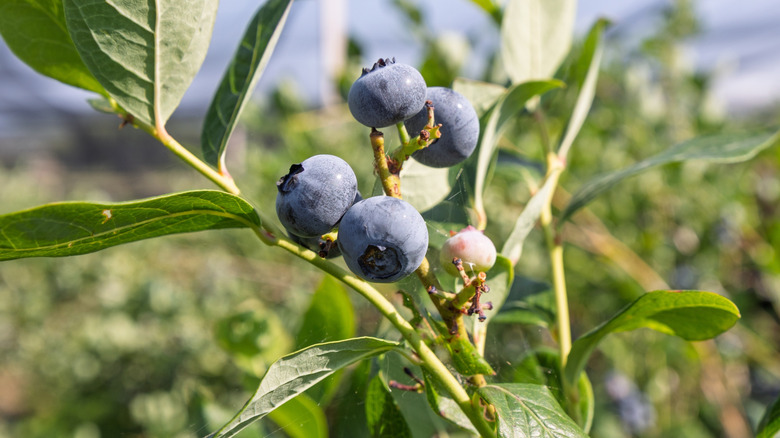
Blueberry bushes will attract birds to your yard for fun feathered sightings, especially Baltimore orioles known to feast on nectar-rich flowers and fruits when they migrate. As you plan your bird-friendly home landscape, consider which varieties of blueberry grow best in your climate. These shrubs thrive between USDA Hardiness Zones 3 and 8. The orioles won't discriminate between the types, but lowbush blueberries, cold-hardy as far north as Zone 2, are better suited to chilly climates. In hot climates, southern highbush varieties such as Biloxi are ideal. Blueberries love soil that's acidic, and you can tell whether your soil is right by testing its pH and adding peat moss or sulfur to lower it (a range between 4 and 5.2 will work). Even though blueberries will pollinate themselves, you may want to aim for a bigger crop to really draw the birds in. For this, it's best to cluster together several cultivars with the same bloom time so you can achieve cross-pollination. You can also plant types that bloom both early and late in the season to maximize the time birds are fed by the fruits.
A key part of growing blueberries to attract birds is timing. If you're adding them to the garden, take home 3-year-old shrubs from a nursery, and plant them by the early spring so their fruit can emerge in time for the birds to arrive. Transplant the bushes from their nursery containers into the soil, but don't bury them too deeply. You should place their root balls a quarter to half inch from the surface of the soil. As you care for blueberry plants, keep them well-watered and regularly pruned to ensure the fruits keep coming, providing consistent nectar for the orioles.