

10 Tips On How To Tell If Thrift Store Dishware Is Valuable
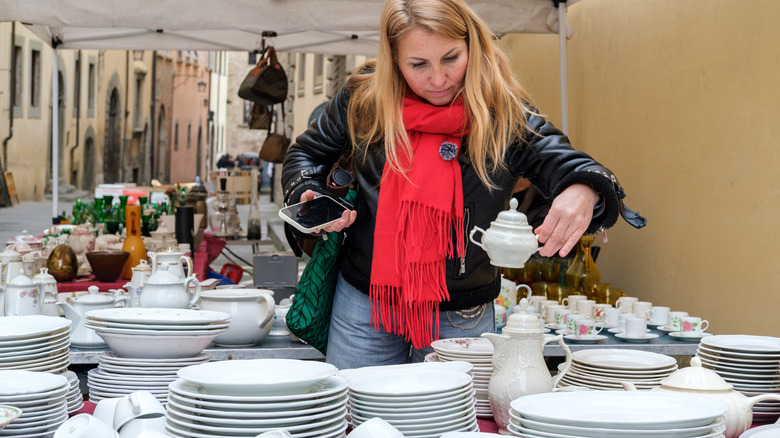
Browsing for dishes at the thrift store, you might come across a piece that you wonder about its value. Dishes are a common item on thrift store shelves, but not every piece is worth more than a few bucks. Short of looking on Google on the phone in the aisles and blocking every other customer, how can you know if the piece you're holding is valuable? There are certain characteristics that let you spot valuable high-end items at the thrift store, but it requires a bit of knowledge. Examining markings, color, pattern, and hand-painted accents can help determine a dish's potential value. Condition is also a big indicator of possible value.
There are definitely dishware brand names to look out for at the thrift store, but they can be mixed in with a lot of duds. Browsing eBay and other auction sites, you might think you have a great find, but unless you check sold prices, you don't know what it might sell for. Because so many dishes have been produced over the years, finding an exact match for a piece can be difficult. Sometimes it might be a bit of a guessing game.
Even if you don't find a gem, it may still be worth buying if you enjoy the design. After all, value can be subjective. The right dishware can elevate your kitchen and add endless style, even if it isn't worth a fortune. But to increase your odds of finding a unicorn that will sell for a few bucks, keep these valuable tips in mind.
Look for any markings
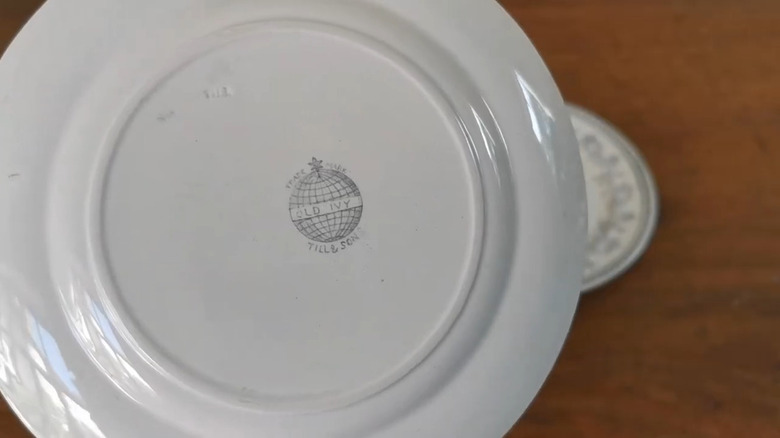
The first way to tell if you have a piece of valuable dishware is to look for any markings on the underside. Many pieces of vintage china feature a backstamp, sometimes indicating the manufacturer and country of origin. Collectible dishware brands, such as Royal Copenhagen or Wedgwood, often have recognizable maker's marks, making identification easier. Because the marks can be replicated in reproductions, Lakeside Pottery recommends paying close attention to the details, especially if they feature cobalt blue or iron red, which were among the earliest pigment colors used in porcelain.
Study the dish's shape and intended use
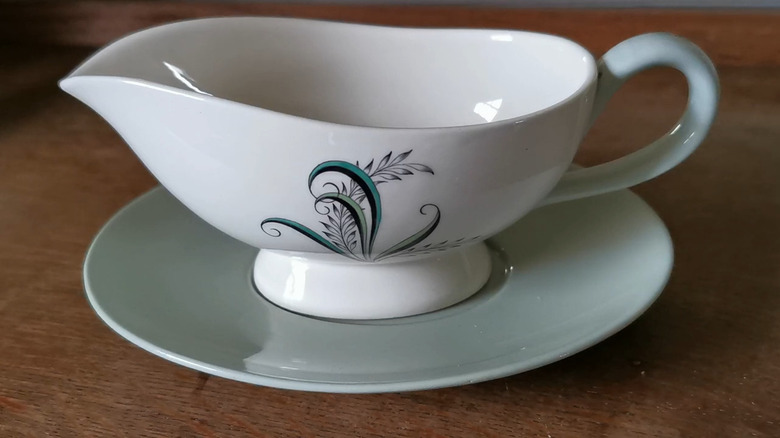
If you're curious about a piece of china at the store, look at the shape of the dish. Some valuable pieces, such as those from the mid-century modern era, have shapes that may stand out compared to other dishware. Distinctive shapes can make a piece more valuable. In contrast, china manufactured before 1950 is often round with a rimmed edge, which can offer a clue to its age. Serving items, such as gravy boats or platters, can attract collectors because they may have had limited production runs.
Research the pattern
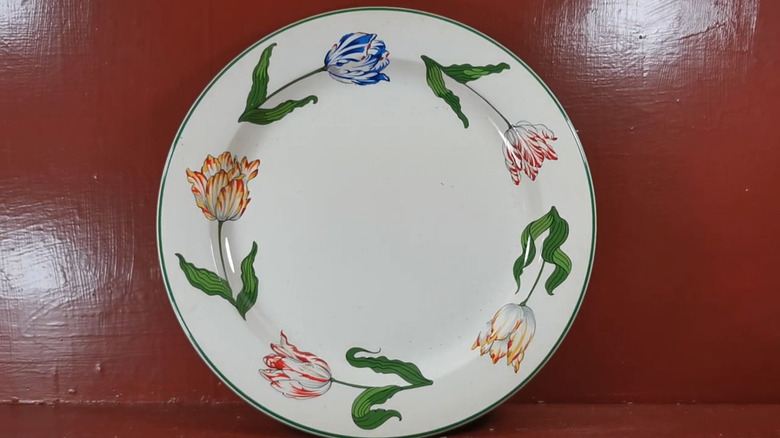
The pattern of your dishes can be a good indicator of whether they hold any value on the secondhand market. Specific, discontinued, or rare patterns can command high prices. Tiffany's Cirque Chinois, for instance, featured a highly sought-after dragon pattern and was sold only at the retailer's New York City location. When the pattern was discontinued in 2014, it became even more valuable among collectors. Other Tiffany patterns are also collectible. Using china pattern databases like Replacements.com helps identify pattern names, while mobile apps like Google Lens can assist if you don't know the maker.
Feel the dish's surface
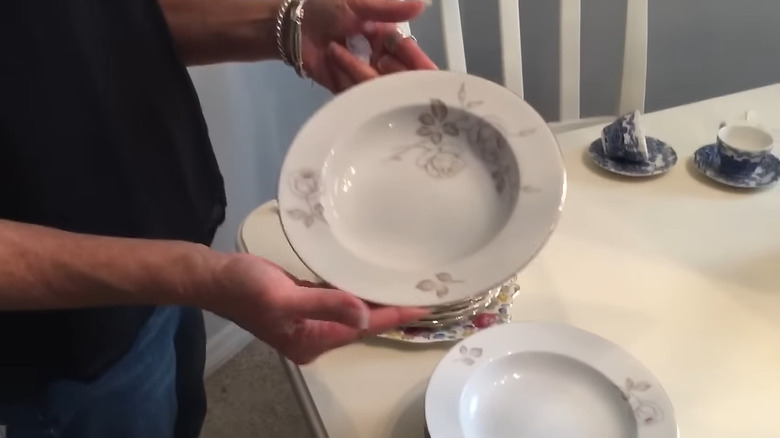
When inspecting secondhand dishes, run your fingertips over the front and back to check for a smooth, glass-like glaze, which often indicates high-quality bone china. Authentic pieces should feel remarkably smooth, without any gritty texture, bumps, or surface irregularities. You'll also want to carefully feel for "crazing" – a collection of tiny, hairline cracks — which can feel like a spider's web and suggests a delicate piece. Check the edges and rims for rough spots, chips, or flakes, and feel for a smooth, consistent surface.
Look for gold or silver accents
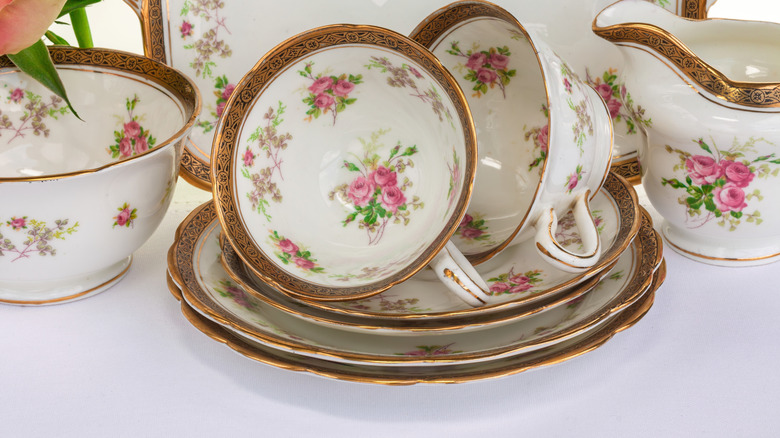
When thrifting, you might encounter metallic detailing, such as rims, intricate filigree, or raised gilding, on the dishes. This can signify fine porcelain or high-end china. Look for 24k gold, sterling silver, or platinum trim, which suggests a premium manufacturer. Be aware that these delicate pieces often require hand-washing to prevent the metallic accents from fading or wearing away. When identifying patterns, these reflective elements often boost the collectible value. However, not all plates with metal details are valuable, so you may need to research further on desired brands.
Check the material
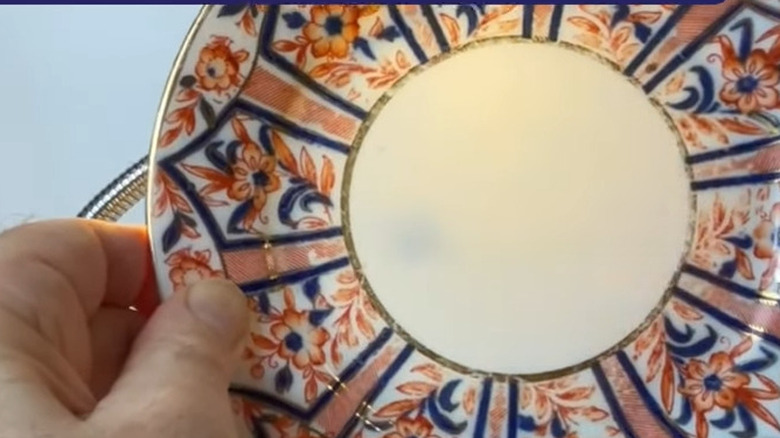
After you've checked the underside of an item for a manufacturer's backstamp, you can also hold the dish up to a bright light to perform a simple test. If it glows with a soft, warm light, it is likely translucent bone china or high-grade porcelain. Another trick is tapping the rim of the dish with a coin. Bone china and porcelain produce a high-pitched, resonating ring, while earthenware produces a dull thud. You can also decipher the material by feeling the footrim – stoneware is usually coarse and unglazed, while porcelain is smooth.
Look at the origin
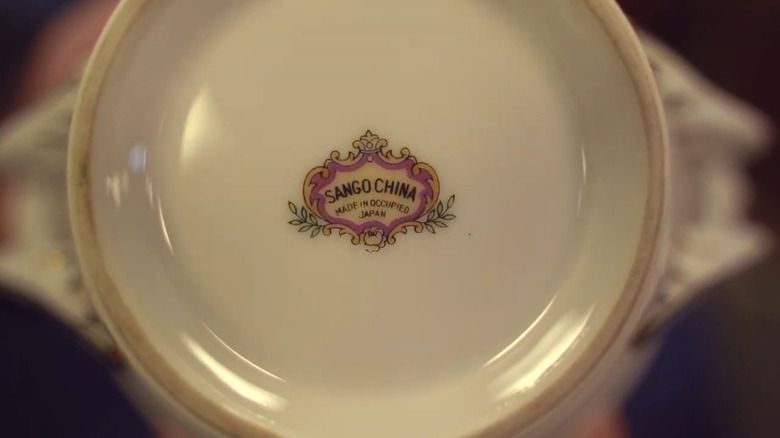
To research the origin of a secondhand dish, start by examining details of the backstamp or maker's mark. Small handwritten or hand-painted marks are commonly found on pieces produced before the 19th century. If the dish has a country name inscribed on it, it could date to after 1891. Dishware with "made in" might date to after the 1930s, as the Tariff Act of 1930 required all imports to be marked with their origin country. Anything marked "dishwasher safe" is likely a reproduction or a piece manufactured after the 1950s.
Observe signs of handcrafting like painted details, etc
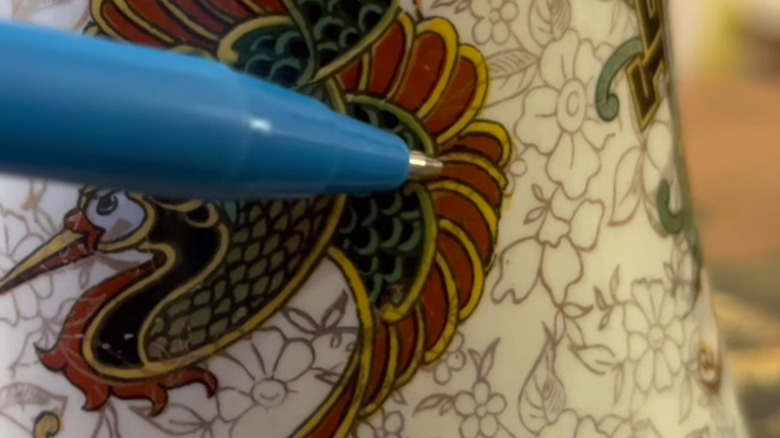
Rather than being perfectly uniform, handmade items often show subtle irregularities that reflect the artisan's touch. You may notice slight asymmetries in the shape, small variations in thickness, or the kind of natural "wabi-sabi" imperfections that come from working with clay by hand. Also look for certain decorative details that indicate the piece was made by an artist, such as brushstrokes, shifts in color intensity, or faint smudges in the glaze from hand-painting. Other clues can include tiny iron spots, faint finger marks, or an unglazed base ring with an incised signature or maker's stamp.
Look for any flaws
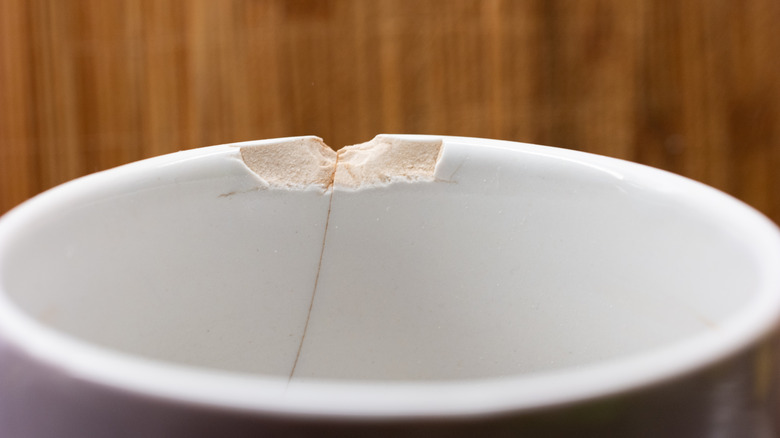
When buying secondhand dishware, a careful inspection can help you avoid damaged pieces. Examine the item under bright, direct light to spot obvious chips along rims, handles, or edges. You should also look for crazing, as it can trap moisture and bacteria over time. Another useful test is gently tapping the ceramic with your fingernail; a clear, ringing sound generally indicates an intact piece, while dull thuds may signal hidden cracks. Finally, check closely for stains, discoloration, or areas where paint or texture looks inconsistent, as these can indicate older repairs.
Pay attention to color
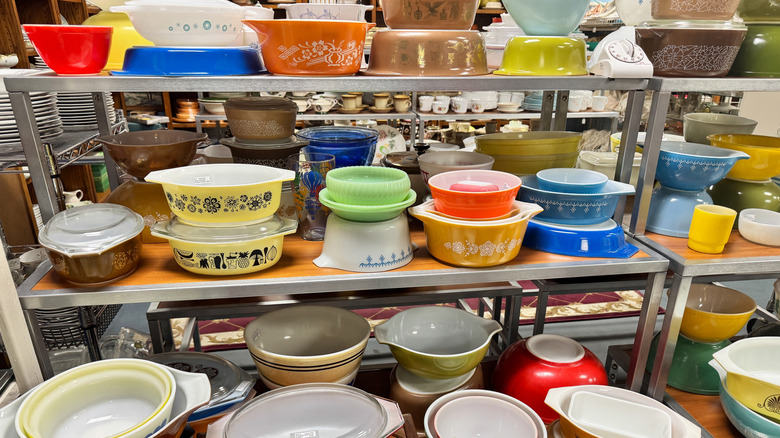
Color can play a major role in determining value and collectibility. Certain brands are associated with specific hues that collectors often seek out. For example, Jadeite dishes produced from the 1940s through the 1970s are known for their distinctive opaque green color, which is highly desirable among collectors. Different patterns were released over time, with some manufactured only briefly, making them rarer. Color is also important for brands like Fiesta and Pyrex, where particular shades or limited runs can significantly increase value. Paying attention to variations can help identify rare and collectible pieces.