

The Garden Design Choice That Gives Your Garden A Soft & Natural Look

If you're one of the gardeners shying away from overly formal-looking outdoor spaces, you're no doubt choosing a more natural arrangement for the perennials, trees, and shrubs in your yard. Naturalistic planting design and hardscaping, a landscaping trend that's bringing timeless appeal to outdoor living spaces, is becoming more common and may feel like a better approach to supporting pollinators and other wildlife in your yard. While you embrace a design aesthetic inspired by the natural world, you'll want to consider the best types of walkways that allow you to navigate your various beds and plantings. Curved paths may help complete the soft, organic look you want in your yard or garden.
There are numerous advantages to making this choice with your landscaping. Straight lines are common in formal designs and can feel rigid, while curves can make your space feel more inviting, adding a sense of mystery and visual interest. Meandering pathways create softer edges compared to straight lines, which form sharp corners. Gardens traversed by bending walkways feel more relaxing because they mimic the lines of natural features, like hills and waterways.
Curved paths are especially effective in small yards because they can make your space feel larger while also helping to connect one area to another. These types of walkways can also help divide the garden into different sections, creating private nooks or areas for different purposes. Plus, they fit perfectly with curved flower beds, an upscale landscaping idea that makes any front yard look more expensive.
Tips for using curved paths for a natural garden look
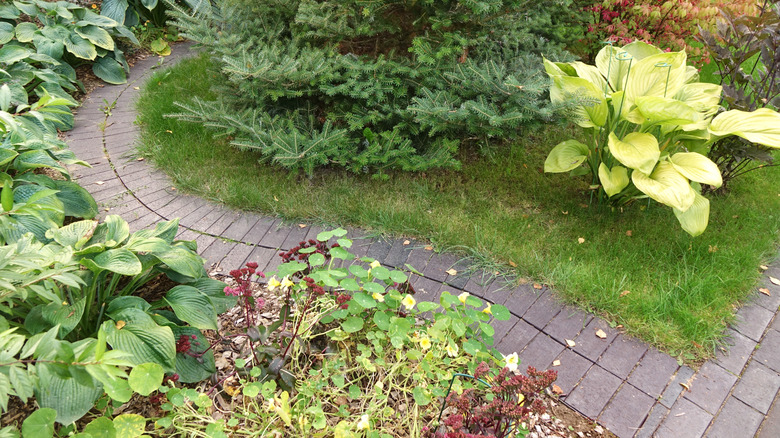
To successfully pull off a curved path in your garden design, there are a few tips you will want to follow. To start with, use gentle bends rather than tight ones to achieve a more comfortable feel when moving between various parts of the yard. However, you'll also want to scale the tightness of the curves to the size of the space — keep in mind that very large arcs are more appropriate for bigger areas. Use borders, such as natural stones, along walkways to discourage people and pets from taking shortcuts. Echo the soft, rounded pathways in your landscaping with a choice of circular elements, such as arches, outdoor furniture, or DIY curved retaining walls. And it may seem silly, but don't forget to think about where your path leads – your garden will feel best if your walkway has a destination.
Once you have contemplated those design elements, it'll be time to consider some practical concerns. For ease of movement in your outdoor space, make the walkways 3 to 5 feet wide — don't forget, you may need to push a wheelbarrow along the path, or you may want to be able to accommodate visitors in wheelchairs. Once you have finished planning your natural-looking garden design and it's time to install the pathway, make sure to mark it off with a hose, rope, or string before laying down your materials, so that you have a clear view of what the finished landscaping element will look like in your space.