

14 Top Home Improvement Gadgets That Deliver Real Results

We may receive a commission on purchases made from links.
If you're into DIY, you probably own all the basics — hammers, screwdrivers, pliers, wrenches. After all, these are the tools every homeowner should have. But even when you have a toolbox full of equipment, some jobs are trickier than they should be. If you've ever asked yourself, "why don't they make something for this part of the job?" you'll enjoy perusing this list of home improvement gadgets that deliver real results. Modern tech has upgraded some tried and true standards, so if you haven't bought a new tool in quite a while, you may be pleasantly surprised at what's available today.
Many of these cool gadgets are digital, most are electric, and some use high-tech elements such as lasers and direct-to-computer displays. For older DIYers, that means less hand strain, larger displays, and less need to memorize measurements. For busier DIYers, it means getting the job done faster and more efficiently, with less waste and greater accuracy.
Not all of the items on this list are low-cost. That's why it's worth your while to consider the projects you want to tackle, and then do some research before making a purchase. If you can't remember the last time you needed to measure something other than a length of wood, for example, calipers may not be especially useful. But if your workshop floor is a multi-colored mess of dried latex, a dripless spout may just make it into your next shopping list!
Cordless nail guns can streamline big jobs

Back in the day, nail guns were for professional carpenters. That's because the nail guns available were pneumatic models that required heavy air compressors. Many a DIYer wound up with a sore right arm because they just couldn't justify the cost or size of a professional nail gun, and didn't like the idea of dragging a compressor around the shop.
Today, battery-operated nail guns are easily available at a reasonable cost — and there's a nail gun for every need. Before making a selection, however, it's important to know that nail guns come in three sizes — and not every nail will fit every nail gun. Brad nailers are ideal for things like trim and baseboards, or jobs like mounting shiplap. Finish nailers fire the larger nails used for bigger carpentry jobs, such as building stairs, or constructing cabinets. Pin nailers are for fine trim and molding.
If you're in the market for a nail gun, look at the length of the nails you most often use. Then, be sure your selection is light-weight and check whether it offers the ability to adjust depth and angle. You'll also want to consider price: The top-rated models can run up to $400 — but some equally highly-reviewed options are well under $200. For instance, Ryobi's ONE+ Cordless AirStrike Brad Nailer is a budget-friendly model, but has good reviews on both Home Depot and Amazon.
Pocket-sized electric screwdrivers are easy, convenient, and lightweight to use
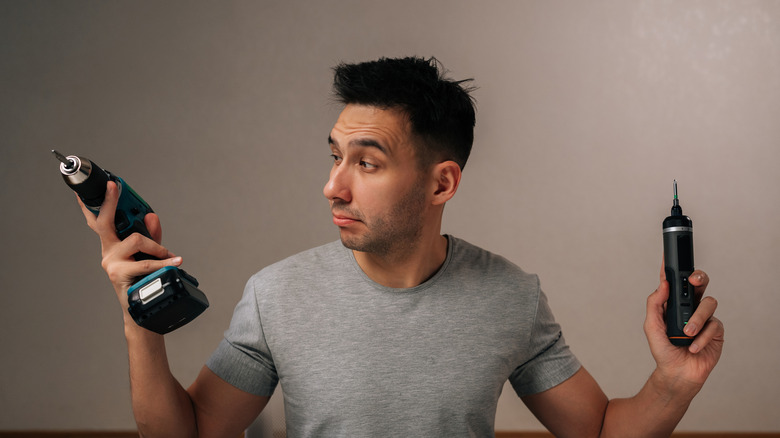
If you've been a DIYer for more than a minute or two, chances are you already have a big, heavy cordless drill. These powerful tools can make life much easier when you're working on big projects. But their size and weight can make them tricky to use in smaller spaces — and it's easy to accidentally strip a screw. What's more, they can be hard on the hands and arms if you use them extensively.
When you're working on something smaller, or operating in a tight or awkward space, you may prefer a pocket-sized electric screwdriver. These handy tools won't be tough enough to build a garage, but they can do a lot that your big, heavy workhorse can't. What's more, many electric screwdrivers are small enough to fit in a pocket, and can be used for anything from tightening screws around the house to assembling furniture to fixing a pair of broken glasses. For light jobs, a compact model, like the Ryobi 4V Cordless ¼-inch Screwdriver will fit into tight places. Alternatively, you can opt for more torque and better grip with a shotgun-style model such as the Bosch 12V Max Two-Speed Pocket Driver. And for very fine work (like fixing electronics or glasses) a precision electric screwdriver is one of many miniature tools worth having around the house. Whichever size you pick, look for a model that comes with a wide range of screwdriver heads for multiple needs.
Electrical test kits to check connections and voltage
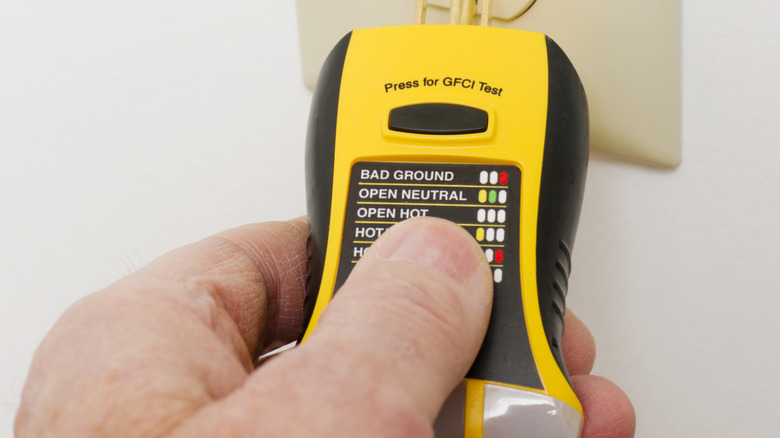
Is this circuit live? Save yourself the cost of an electrician with a non-contact electrical tester. These handy gadgets are generally safe, effective, and won't break the bank. There are several different types of electrical testing gadgets that can come in handy during home improvement projects, but non-contact testers are one of the safest and easiest to use. For instance, multimeters are a versatile tool that can help with home appliance repair. But if you're not an electrician, you shouldn't be getting too serious about electrical work, and that means you probably need something simpler and less expensive.
A basic non-contact voltage tester can tell you that electricity is flowing, and can also measure voltage — probably plenty of information for the casual DIYer. Another option, depending on the type of work you're planning, is a continuity tester. This ultrasafe tool is used when the current is turned off; its purpose is to determine whether there are breaks in your electrical line. Yet another possibility to consider is neon circuit testers. These simple tools tell you just one thing: Whether there is any voltage at all in your circuit.
Paint pouring spouts avoid expensive and messy spills
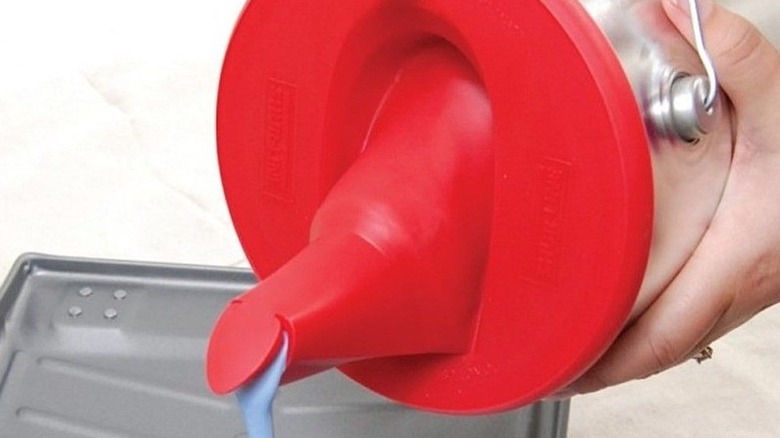
With the price of paint today, who can afford a spill? And who wants to spend hours scrubbing hot pink paint off the floor? You can find handy paint pouring spouts for quart, gallon, or 5-gallon containers, and they make it easy to pour and mix colors for any type of DIY project. Besides reducing the chance of spills and drips on the floor, paint pouring spouts also keep the entire can of paint cleaner by preventing paint from running down the side or pooling in the rim.
Many paint pouring spouts are plastic, sealable gadgets that cover the entire top of the paint can. Pop one on as soon as you've stirred the paint, and pour driplessly. This is ideal for projects that require you to mix paints together — or pour some paint into a tray — and they make it easy for two or more people to share the same bucket of paint. Once you've finished your project you can simply snap the lid and keep your paint fresh. If you've ever pried open a paint can that's been "resealed" with the original top, you know how easy it is to leave gaps that allow the paint to solidify long before its expiration date.
Borescopes can help you see into inaccessible places
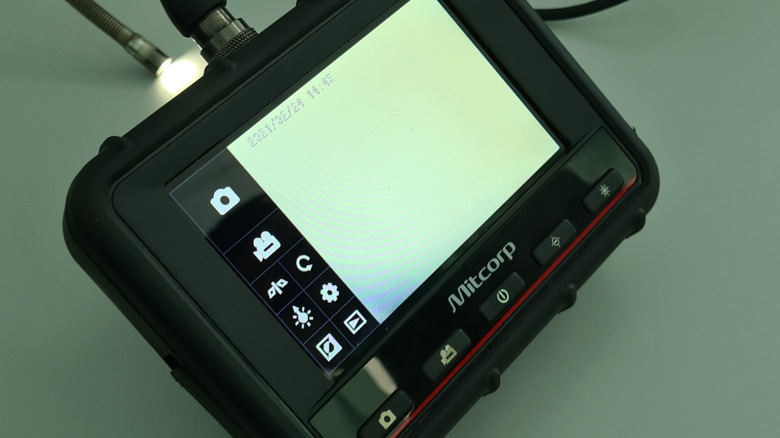
Wise DIYers avoid sticking their hands into holes when they don't know what's inside. Instead, they use these handy borescopes — cameras for seeing into inaccessible places. Some even attach to your phone! These modern tools are uncomfortably similar to the endoscopes doctors use to inspect your colon, and that's because their purpose is the same: They can see around corners, in the dark, and can help you find any lurking dangers or blockages.
Most borescopes allow you to use a flexible arm to see into hard-to-reach places, like drywall cavities. But depending on your needs, you can do even more with these devices. For example, by adding a hook or magnet, you can use your borescope to grab and retrieve lost items. A borescope probably won't see daily use, but when you do suddenly need to inspect inaccessible spaces, they can be a game-changing gadget to have on hand. Nowadays it's possible to pick up quite affordable models, such as this Amazon Endoscope Camera. When comparing options, one of the most important specs to look for is the camera resolution: The image it returns to your phone or pad should be at a high enough resolution to interpret easily.
Wood stain and repair pens for minor repairs
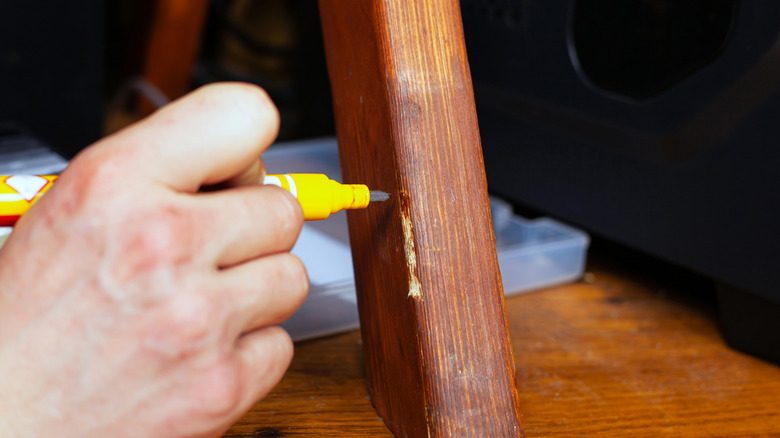
When the damage is minor, why strip, sand and repaint, or stain? Instead, you can buy an individual wood repair pen, or a kit that allows you to select the right color and product for every ding in the furniture. While a "pen" sounds like a tool for restoring color, some of these handy tools can do a lot more than that. For example, some "pens" are wax-based, which means they're ideal for filling in little gouges that may occur when your furniture hits a door jamb (or a family member smacks into the wainscotting with a heavy tray).
For filling larger gashes, you can also purchase kits that contain both putty and color compounds in pen-like tubes, such as the Coconix wood repair kit. After filling with putty, you can then apply the color from the nozzled tubes. Pro tip: If you're struggling to perfectly match a color from a pen kit to a specific wood tone, try blending two of the closest shades together.
A collection of attachments for cordless drills
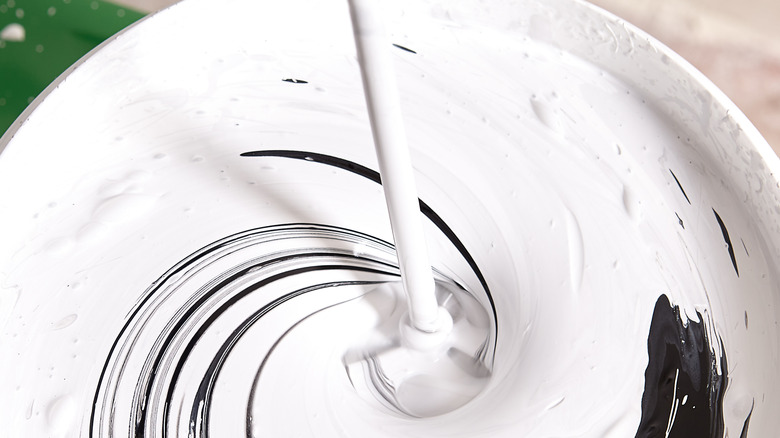
What can you do with your electric drill besides making holes and driving screws home? The possibilities are endless! And the cost of many available attachments is low enough to fit into a Christmas stocking budget. If you don't already have a cordless model, the range of handy attachments they can take is a compelling reason why it might be worth splurging on a good cordless drill.
So what's out there that you might be able to use? Some possibilities to consider include wire brush attachments to clean up rusty metal, paint stirrers for those five-gallon buckets, and dryer duct cleaners that get right into the ducts. You can also get scrubbing pads that can clean up super stubborn deposits, as well as sanders that make it easy to refinish any flat surface. Paint roller cleaner attachments can get rollers extra clean in a fraction of the time it takes to wring the water out by hand. Finally, you can even get firewood splitters for smaller logs, as well as attachments that can turn your cordless drill into a paint sprayer.
Detail sanders get you into all the corners and crevices

If you've ever tried to shove a full sized piece of sandpaper into a tiny crevice or corner, you know it's just not a thing. So how do pro DIYers and carpenters get that perfect finish? They use a tool called a detail sander. These come in various shapes, sizes, and strengths; they weigh between about 1.5 and 3 pounds; and they are available in both corded and battery-operated versions. While power and speed is an important consideration, too much speed can be overkill for this detail-focused tool.
Detail sanders, like larger orbital sanders, require a rotary action to produce an even finish. But they are considerably smaller than sanders used for large, flat surfaces. Some, like the Bosch GSS 18V-10 Cordless Orbital Sander L-Boxx 136, also come with a range of plates and pads in different shapes and sizes including squares and triangles. DIYers are also loving this affordable sander from Harbor Freight: The Warrior 1.1 amp corner/detail sander. Most sanders include dust canisters so you don't have too much cleaning to do after you've finished the sanding process.
Digital calipers offer easy, high-precision measurements
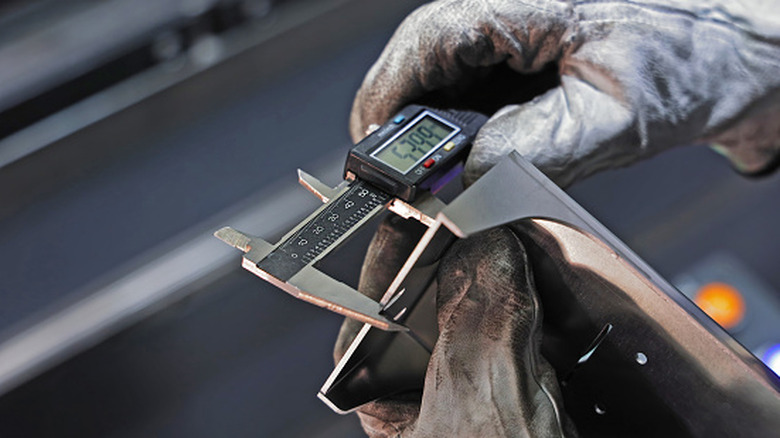
It's not easy to use a measuring tape to figure out the outside and inside diameters of objects, especially when they're hard to reach. Calipers, which have been around forever, help DIYers solve this issue by accurately measuring non-angular or difficult-to-measure objects. Today, digital calipers make it even easier. The best digital caliper for you will depend on your specific needs and budget.
Digital calipers can get very fancy. Some come with calibration certificates which ensure that their measurements are absolutely accurate to 0.0001 of an inch. Others, like the Clockwise Tools Digital Caliper, will output measurements to your computer. Some of these features may seem like overkill if you're not a construction professional.
Fortunately, lower-end digital calipers can be very low-cost. In fact, while you can spend up to $45 on a pair of digital calipers, you can also find acceptable bargains as low as $7. In most cases, a more basic tool will do the job for the majority of home improvement projects.
Dremels for just about everything
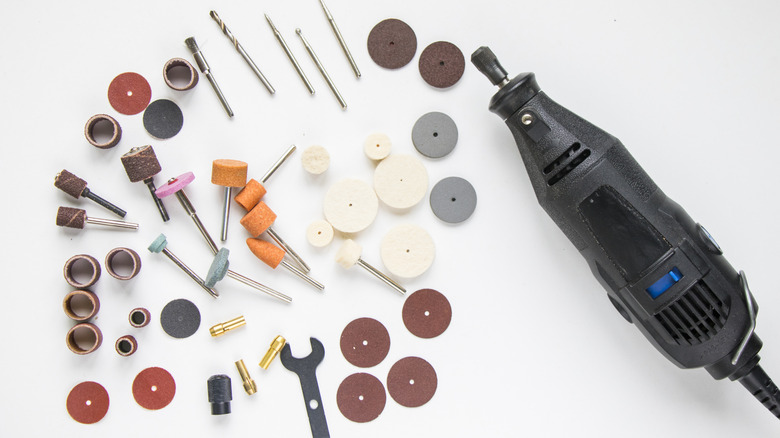
Did you know that Dremel is a brand name as well as a type of multitool? These little rotary beauties are available from other companies, as well as the original Dremel brand, which has a longstanding reputation, and attachments in almost every size and shape — for everything from engraving to grout removal! Some of the genius ways you can use a Dremel tool around your home include utilizing the cutting wheels and bits for precise cuts in a range of materials. Sanding bands can allow you to get into tight spaces while refinishing. Other attachments include bits for engraving and carving different materials. You can also get grinding and sharpening heads for garden tools, chainsaw blades, as well as cleaning and polishing attachments. There are router attachments for fine design and finished woodwork, as well as mini-drill bits for small DIY projects, and specialized heads for grout removal that allow you to remove grout without damaging tiles.
Dremel's multitool lineup varies in size and power, as well as run-time, for the battery-operated units. Choose a smaller, lower-powered version for crafting. Consider one of the bigger, more expensive models if you're serious about cutting, grinding, and other more muscular DIY projects.
Stud finders that can pick up electrical cables and plumbing lines
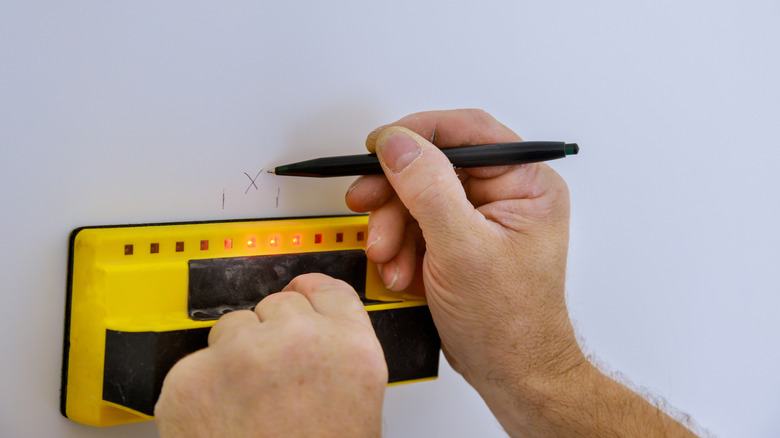
If you're hanging anything bigger than a poster, you'll want to find nice, solid wood to drill into — the studs behind the drywall. And if you're drilling into a wall, you'll want to avoid wiring and metal. Luckily, there's a tool for all that. Old-fashioned stud finders did a good job of finding studs, and nothing else. Newer stud finders can check for multiple hidden items so you can put up shelving without drilling right through your AC wiring.
Digital stud finders and multi-scanners can find studs, pipes, cables, and air conditioning ducts — all potential obstacles when you're starting a construction project. They're made by some of the top DIY manufacturers, including Craftsman and Bosch. Prices range from the very low (under $10 for a Craftsman model) to $100 for models that offer more bells and whistles for the serious handyperson. Only you know how important studs are in your life, but no one wants to start a project by drilling through the WiFi cable!
Electric caulking guns for bigger projects
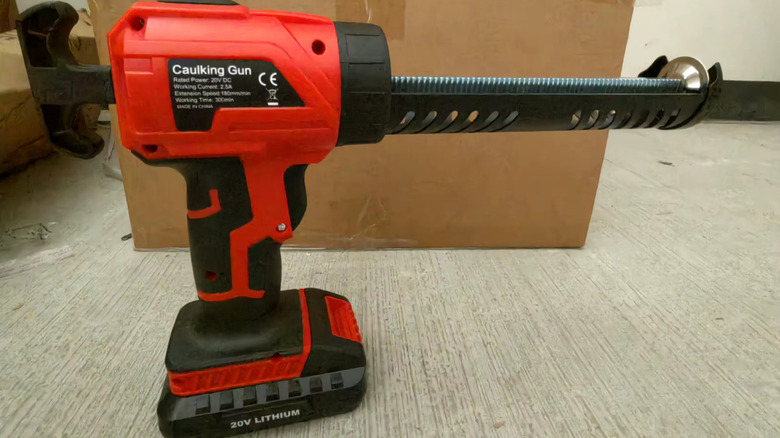
Got gaps? Caulk can save you from drafts and moisture leaks, but caulking by hand is a pain in the wrist, especially for people with issues like arthritis. Electric caulking guns can make the project less painful and a whole lot easier. Even better, they provide greater consistency, flexibly support different consistencies and quantities of caulk, can be set to different speeds, and can get the job done quickly.
Most people buy electric caulking guns because they are starting a really large caulking project. That means they'll be holding the gun for a long time — possibly for hours. Because of this, it's a good idea to shop for caulking guns in person, handling each to determine which fits your hand best. Important features include reinforced plastic or metal construction, long-lasting batteries, and a battery gauge so you won't run out of power in the middle of a task.
Laser measures can be indispensable for solo DIYers
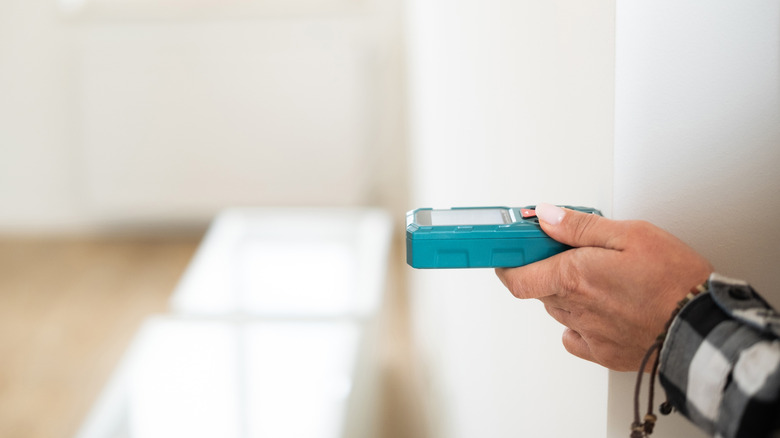
If you've ever attempted to hold both ends of a measuring tape while measuring the height of a wall, you know how tricky it can be. Luckily, you don't have to! Thanks to laser technology and optical sensors, you can use a handheld tool to measure the length, height, or volume of any space — in record time. What's more, laser measures are more accurate than regular tape measures, and some can measure up to 1/32 of an inch.
As with most DIY gadgets, laser measures come in a wide range of prices. The Bosch Green Beam Laser, for example, makes it very easy to see both the beam and readouts, and can be used both indoors and out. At around $120, however, it's not cheap. Other, simpler models from lesser-known brands can cost half or a third of that amount. To decide which model is right for you, ask yourself: Will I use this indoors and outdoors? If so, a green light may be easier to see outdoors. How far am I measuring? Check to be sure the model you're considering can measure the distances you need. What am I measuring? Do you need a feature for measuring volume as well as height and width? Will I want to put this on a tripod? If so, check to be sure your tool is tripod compatible.
Right-angle drill attachments get into every nook and cranny
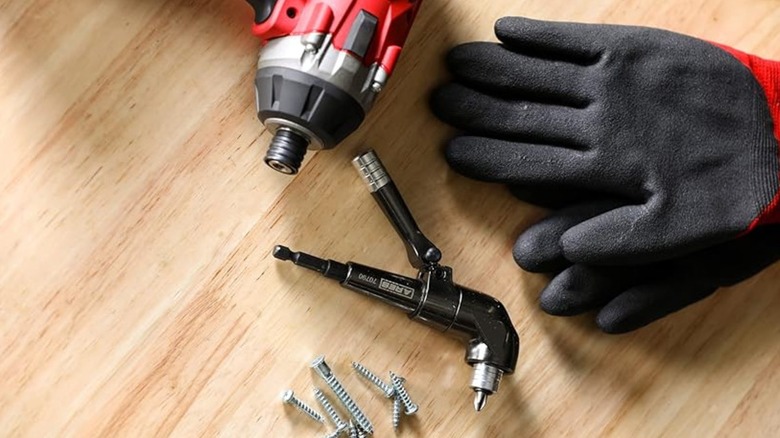
Sometimes during DIY work you end up trying to drill or drive home a screw in a place where the bulk of a drill just won't fit, and you can't even get a hand tool in. In these situations a right-angle drill attachment can be a lifesaver. But not every right-angle drill attachment is right for every project, so it's important to choose wisely. Right-angle drill attachments shouldn't cost you a mint. Most are available for under $60, and some good options cost less than $20.
Start by thinking about the reason you need the adaptor. If you're trying to drill cable pathways, for example, you'll need an attachment with a good amount of torque. If you're looking for flexibility, the DeWalt Right Angle Flex Shaft may be your best bet as it bends in every direction.