

We're All Guilty Of Holding Our Spider Plants Back: One Error To Avoid
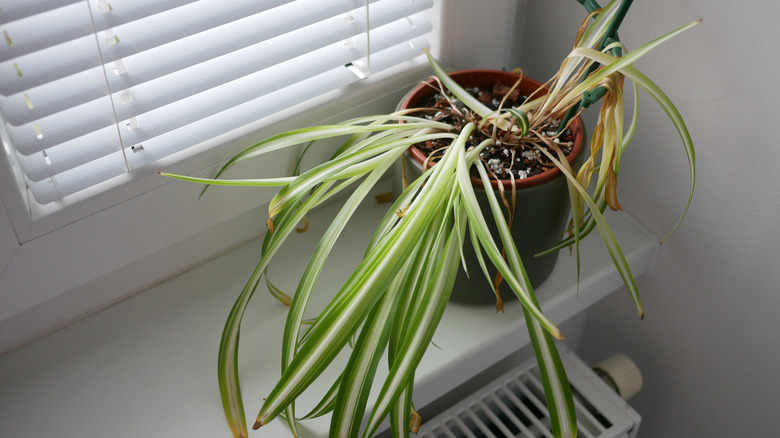
If you are looking for a "set it and forget it plant," honestly, there is nothing better than a spider plant (Chlorophytum comosum). It is easy to grow, requires little care, and thrives in a range of conditions. So, when it starts looking a little held back, it is hard not to take it personally. After all, a plant famous for thriving on neglect should not look like it is done trying when you are doing everything you can. However, the issue is sometimes not neglect but excess. To be precise, an excess of fertilizer. It is something that can make your spider plants weak, reduce their offshoots, and also cause their leaf tips to turn brown. Don't panic, though! If you catch it on time, an over-fertilized spider plant is easy to save.
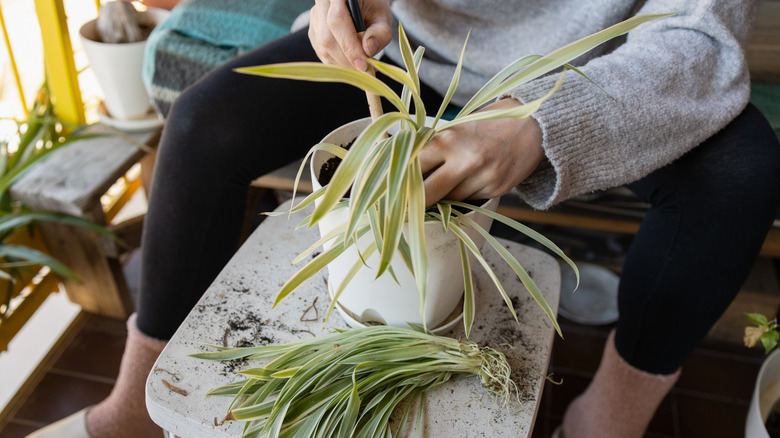
All you have to do is flush the potting soil with running water. You can do this by holding your spider plant under a faucet and leaving it there until water starts running from the drainage holes and continues flowing out for about half a minute. This will wash out all the excess fertilizer from the soil. However, if there is too much damage from excess fertilizer, flushing might not be enough, and you might have to repot your spider plant. Plus, in the future, keep in mind that spider plants don't need much fertilizer. You only need to fertilize them occasionally and at the right time.
How to spot and prevent over-fertilized spider plants
Besides brown leaf tips, there are a few other signs that can also help you identify if you are over-fertilizing your spider plant. A good example is the white crust that sometimes appears on top of the soil. It is a classic sign that shows that either you are using too much fertilizer or you are using it too often. In addition, over-fertilization can sometimes show itself in the form of wilting in houseplants. That is because excess fertilizer in the soil can create an osmotic imbalance between the soil and plants. And when there are too many salts in the soil, it can draw water out of the roots.
The result? The roots shrivel or die, and the plant starts looking dehydrated. Plus, over time, excess salts in the soil can also lead to root rot, which can even kill the plant. Put simply, if you want to keep your spider plant happy and healthy, you must not over-fertilize it. And it is easy! First of all, don't use a quick-release fertilizer. Such fertilizers dump all of their nutrients at once into the soil. And for a plant that is sensitive to over-fertilization, this is in no way ideal.
Instead, use a slow-release formula or liquid fish food. It is a lesser-known liquid that helps the indoor spider plant thrive. Also, fertilize spider plants only once a month during the active growing season and don't fertilize them at all during the winter months. Spider plants are semi-dormant at this time. So, whatever you put in the ground will just stay there and accumulate over time.