

The FBI Warns These IoT Devices Pose Security Risks

It seems like there is a new way to make your home more connected and convenient every day. From high-tech refrigerators and smart thermostats to sophisticated baby monitors, there are endless upgrades. However, while they may be designed to make your life easier and more efficient most of the time, the potential security risks posed by some of these devices could outweigh their benefits. In fact, the Federal Bureau of Investigation (FBI) has even found it necessary to share information about the potential privacy threats posed by Internet of Things (IoT) devices. Basically, these devices can give hackers a path into your network, allowing them to access important private information, even if it doesn't seem tied to the devices you have. So, before you buy the latest home device, make sure you understand how devices can be exploited, which devices are at risk, and what you can do to help prevent issues.
IoT refers to the network of physical devices with software that can connect to the internet. Thanks to the network, devices can communicate with one another and share data automatically. It may sound futuristic, but you probably already have at least a few IoT devices in your home. Any machine, appliance, or other technology in your home that connects to the internet is likely an IoT device. Smart thermostats, home security systems, TVs, speakers, refrigerators, mirrors, lamps, and Wi-Fi systems are just a few examples of IoT devices. With so many of these devices in people's homes today, it is important to understand how hackers can exploit them.
What makes IoT devices security risks?
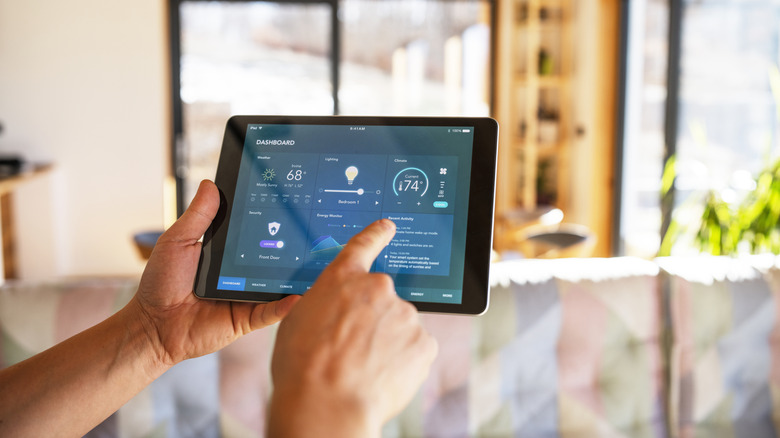
Imagining a hacker gaining access to your smart TV already feels like an invasion of privacy, but it can get much worse. Because all smart devices are connected to the internet, a hacker can enter your home network through a less secure IoT device and move through your home's network to more concerning devices, such as your phone or laptop, which contain more sensitive material. From accessing bank information or getting into your email to digital eavesdropping or receiving data from a sneaky home device that could be stealing it, once a hacker is in the network, they can do serious harm.
Home hacks are pretty rare and often come from people you know, but they could also come from a data thief, an employee, or another entity. There are several ways hackers can get into IoT devices. First, there are brute-force attacks, in which a hacker guesses your password by trying different combinations or using software that automatically tries them. Another type of attack is called a man-in-the-middle attack, in which a hacker impersonates a trusted device to intercept data. Finally, hackers can use viruses or other malware to gain access to your network. Because many IoT devices have unlimited password attempts, default passwords, no encryption, and infrequent or non-existent security updates, they are particularly susceptible to hacking.
Detecting hacks can be difficult, so you may not even know that your private data has been stolen. You won't be able to recover the data after a hack, but you can turn the device off and take steps to better secure your devices going forward.
How to protect your IoT devices

The best way to protect yourself from the threat of these devices is to remove them from your home. But if you love the convenience they bring to your life, there are other ways to improve their security. Changing your passwords regularly and ensuring your devices are running the latest software are two of the simplest ways to start. Passwords should be difficult to guess. Avoid using the same password across devices or accounts. Combining uppercase and lowercase letters, numbers, and symbols makes passwords harder to guess by people or password-cracking software. Two-factor authentication is available on some devices and should be used whenever possible. If your device is no longer supported, doesn't receive updates, or doesn't let you change the password, you should consider replacing it with one that does.
With a bit more effort, you can provide even more security. First, review the device's features and disable any you do not use, such as microphones or cameras. Creating a separate network for IoT devices, especially those with weak security, means that if a hacker gains entry, they can't move through the network to your laptop or other devices containing important information. Separate networks may not help much as far as smart locks, a smart home device, the FBI says, is unsafe, as these could be remotely controlled by hackers. Monitoring network activity for unusual spikes can help you detect potential hacking attempts and let you enjoy your devices with less worry.