

Plant This Stunning Flower In Early Spring To Feed Your Backyard Birds All Summer Long
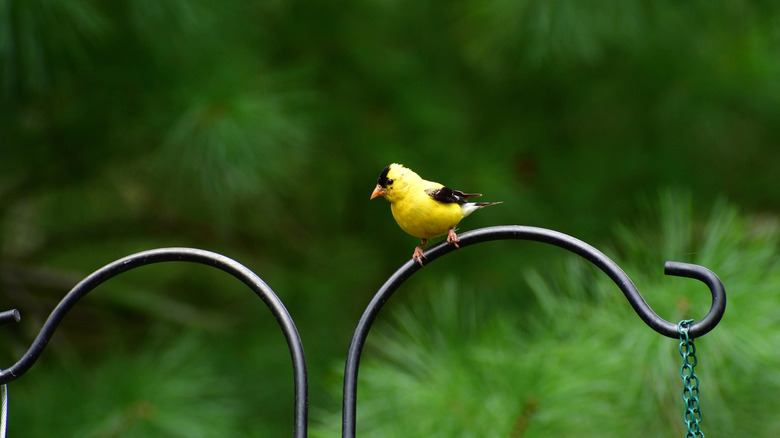
While there are a bunch of mistakes everyone makes when planting poppies, thinking they are only worthwhile for their delicate blooms is arguably one of the biggest. The feathered friends who visit your garden for food know otherwise. If you are looking for an easy, natural way to attract birds to your yard without breaking the bank buying feeders and birdseed, breadseed poppies (Papaver somniferum) are the solution. Not only will planting these stunning flowers in early spring fill your garden with an abundance of blooms all summer long, but they also provide food for a wide variety of backyard birds.
It happens to many of us: we put out feeders expecting to attract birds while we sit back on our porch, sipping our coffee and watching. However, more often than not and despite our best efforts, no birds show up. You're left wondering why your birdseed isn't attracting any birds. Simply put, commercial seed blends are often poorly designed — most species don't care for the seeds included in these generic mixes. That's why planting breadseed poppies is the perfect solution to your bird-watching woes. Not only do these poppies provide a large amount of highly nutritious seeds for your feathered friends, but they are also the kind of seed birds love. It also doesn't hurt that the breadseed poppy blooms, with their delicate petals and vivid colors, are a lovely addition to any flower garden.
How to grow breadseed poppies for a backyard bird food source
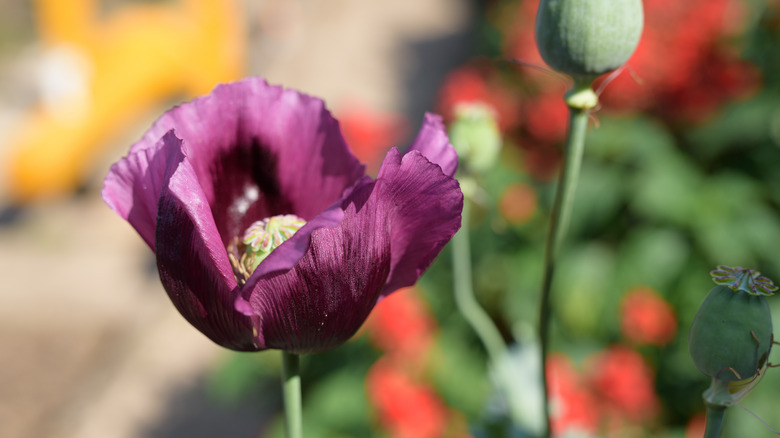
The best thing you can do when growing breadseed poppies for their blooms and their seeds is to not remove the dead flowers after they are spent. Instead, leave the seed heads in place for the birds to feast on; they're a late summer and fall food source. Although breadseed poppies are annuals, they often reseed from any seeds the birds don't eat without intervention from you, the gardener. You can expect your poppies to attract finches (especially goldfinches), siskins, and sparrows, among other species, throughout the summer and into the fall, creating ideal bird viewing opportunities.
There's some confusion online regarding the legality of growing breadseed poppies. While growing these flowering plants in gardens is broadly legal in the U.S., it's still worth checking with your local extension service to make sure it's legal in your area or state.
Breadseed poppies are extremely easy to plant and grow when given the right conditions, provided you plant them in early spring. If you live in USDA Hardiness Zones 3 to 8, sow the seeds in full sun and well-draining soil — they do not do well in boggy or clay soil. Clear your chosen area of weeds and rake it lightly. Then spread the seeds on the soil and mist them. You do not need to cover them. Once the seedlings reach a couple of inches tall, you can thin them out. One of the best tips for growing happy and healthy poppies for a garden full of color is ensuring each seedling has 4 to 8 inches of space. Your plants should start blooming in late spring and continue well into summer.