

The Best Way To Prune Hydrangea Plants Suffering From Winter Damage
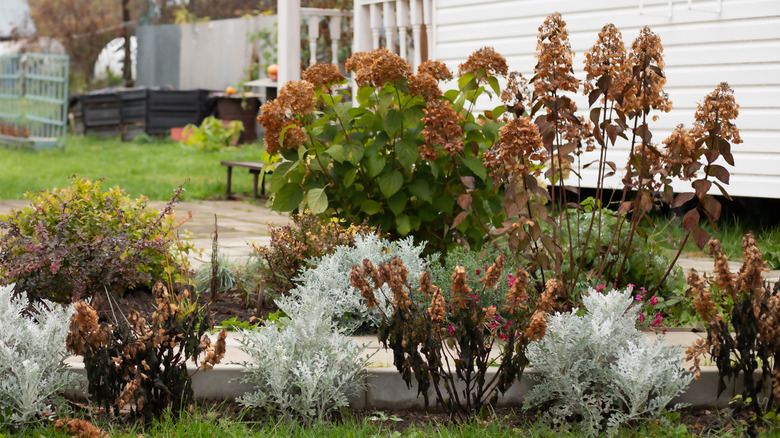
With their dark green leaves and colorful blooms, hydrangeas are ornamental shrubs that make a gorgeous addition to any garden. Taking care of your hydrangeas properly allows you to enjoy their dramatic flower clusters year after year. For example, it's important to prepare your hydrangeas for winter to ensure a healthy summer garden. Otherwise, they can suffer from damage. If that happens, you can prune away the dead branches in spring, leaving just the living stems. With a little luck and patience, your hydrangea should spring back to life as the weather warms.
Some types of hydrangeas, like bigleaf and oakleaf hydrangeas, are more susceptible to frost damage on above-ground plant parts than others (such as hardier smooth or panicle hydrangeas). All species and cultivars can be harmed by sudden temperature drops, late frosts, and sustained low temperatures. The color of the plant — such as tissue that is black or brown — will alert you to freeze injury. You can also gently scratch a stem to look for green inside. If you see brown inside, the plant has not handled the cold well.
Prepare your hydrangeas for winter by putting down some shredded leaves or mulch before covering them to protect the plants. If you're winter-proofing your hydrangeas, avoid this mistake at all costs: do not prune or fertilize them. If they do get damaged, resist giving up hope and pulling damaged plants from the ground. As mentioned, cold-damaged hydrangeas can often be revived with smart spring pruning, even if they look quite dead.
How to properly prune winter-damaged hydrangea plants
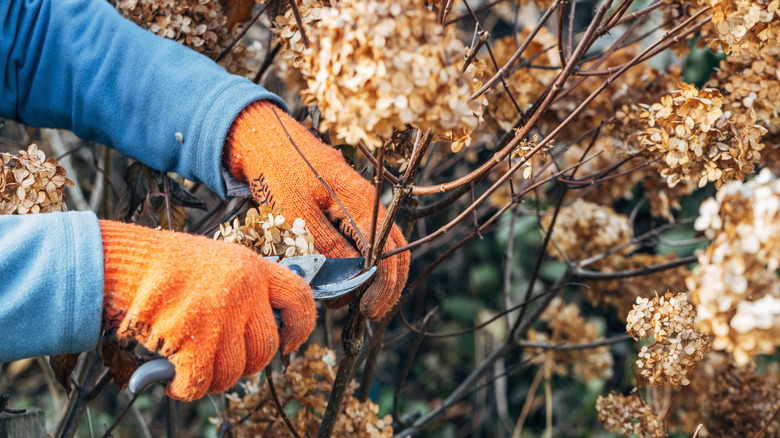
Getting rid of frost-damaged branches on a hydrangea is important for supporting new, healthy growth in future seasons. The plant has to use energy to support dead branches. Plus, they're weak spots in the plant where pest insects and disease could take root, causing further damage to the plant. The best way to prune hydrangea plants that were injured over winter is to wait until after spring growth has appeared. Only then can you determine which branches need to be removed. If you prune too early in the year, you may accidentally remove live parts of the plant. Only stems that stay brown with no signs of green at all are good pruning candidates.
Bypass pruners work like scissors for a clean, healthy cut. They're the best tool for pruning back most of the stems on your hydrangeas that look close to dead after a harsh winter. Loppers are larger, two-handed tools that work in a similar way to bypass pruners. A pair might come in handy for branches up to 2 inches thick. Branches with no green growth at all can be completely removed. They should be very dry and snap easily between your fingers. If you come across stems with green growth towards the bottom, but the top of the branches are brown and brittle, trim away the upper portion. Leave the lower green growth intact so it can continue sprouting as spring turns to summer.