

Avoid Growing Pothos Plants Unless You're Ready For These 12 Downsides

We may receive a commission on purchases made from links.
Pothos is often the gateway plant for many houseplant hoarders. When people become first-time plant parents, it's often with pothos, or Devil's ivy. It's a sturdy, resilient plant that can survive a fair amount of neglect and less-than-ideal conditions, like low light. It also propagates ridiculously easily, so you'll have an ample supply of fresh plants to multiply your own collection or to give as gifts.
I love pothos (Epipremnum aureum) and have a few different varieties, including a couple of gorgeous variegated ones. I'm also a master gardener and, while I can confirm that there are plenty of hacks and tips to keep your pothos thriving, even if you're new to plants, they do require some very specific conditions to thrive. Keeping pothos is also not without its headaches. It's invasive if it gets outdoors in warmer climates, and it's toxic to pets and people. Plus, if you've got variegated pothos, it'll make you work to keep its pretty, multi-hued leaves. So if you're thinking of gifting or getting a pothos, go for it. Just remember that easy doesn't mean effortless.
Pothos leaves and vines get damaged easily
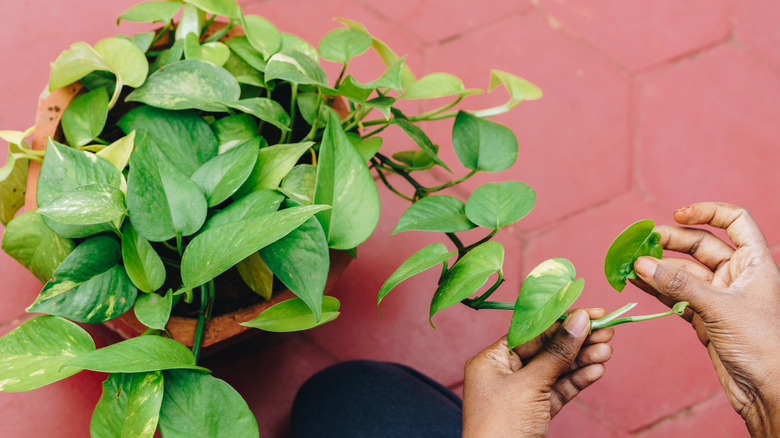
Pothos leaves have a tendency to fall off pretty easily, especially if the plant isn't enjoying the right conditions. They'll also drop leaves if you — or your pets — hit the pot or the plant itself. Vines will also snap, usually at the node points, if you bump the pot hard enough or if you don't take enough care when you're repotting. In a frustratingly short time, your pothos can go from full and lush to sad and scraggly if you're not careful.
You can fix both bent vines and missing leaves, though, with a little bit of know-how. My favorite fix for missing leaves on pothos and other vining plants is keiki paste, also called cloning paste. I like Miracle Lab's Keiki cloning paste. You only need a tiny amount of it, and it works wonders. It's a paste containing cytokinins that stimulate foliar growth. Where you've got a missing leaf on a pothos vine, make a tiny cut or score across the bare node to break the tough outer surface, and apply the keiki paste. Then be patient, as it can take up to 8 weeks to see new growth. If a vine snaps, you can't reattach it, but you can propagate a new plant from it. You can either push the cut end right into the current pothos pot, root the vine in water, or stick it in its own pot.
Pothos is toxic to pets and humans

This is something I wish were disclosed more prominently on plant labels. Not just with pothos, but with all plants — especially house plants. People should be aware of the dangers of any house plants they're bringing into their home or garden if they've got pets or little kids. Pothos is toxic and one of the many house plants you shouldn't grow if you have pets and can't keep it out of reach. It contains insoluble calcium oxalate crystals which are dangerous to dogs, cats, and humans. They cause intense oral burning and irritation, uncontrollable drooling, and vomiting. And, because the crystals physically pierce tissue and don't dissolve in water, the reaction is fast and intense. It's true that it's mostly not life-threatening in small quantities, it's very painful and distressing and can, in extreme cases, also cause respiratory problems.
The devil's ivy is clearly not something you want your pets or littles to consume. I do have a house full of pets, but any plants that are potentially dangerous are in macrame plant hangers and out of the reach of my pesky fur kids. But if you can't keep it out of reach, this is not a plant I'd recommend. Go for something safer, like a spider plant or hibiscus.
It can become invasive if it ever escapes outdoors
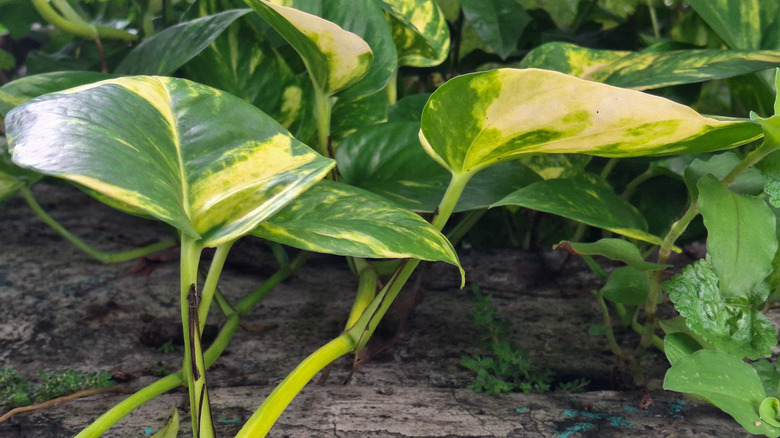
While it's indoors, pothos is a well-behaved, vigorous climbing pot plant. But if it escapes outdoors in warm climates, it becomes an invasive nightmare. Its fast growth, ability to tolerate less-than-perfect conditions, and aerial roots mean it can spread rapidly, smothering native plants and causing damage to buildings and trees as it climbs. Outside in favorable conditions, pothos vines can reach a staggering 50 feet, and leaves can be up to 3 feet across.
It generally escapes because people discard old plants and cuttings improperly. They toss the prunings in the yard or try to compost them, or dump them over the fence and don't think anything more about it. The problem with that approach is that every little node on a pothos vine, even a pruned-off section, can root and produce a whole new vine. If you live in a warm zone, treat pothos as invasive, because it is. Bag any trimmings and put them in the trash rather than throw them outside. Don't try composting, as you won't get your compost pile hot enough to kill the pothos. And, whatever you do, never plant pothos directly in the ground.
Pothos grows fast, so can turn into a tangled, unmanageable mess
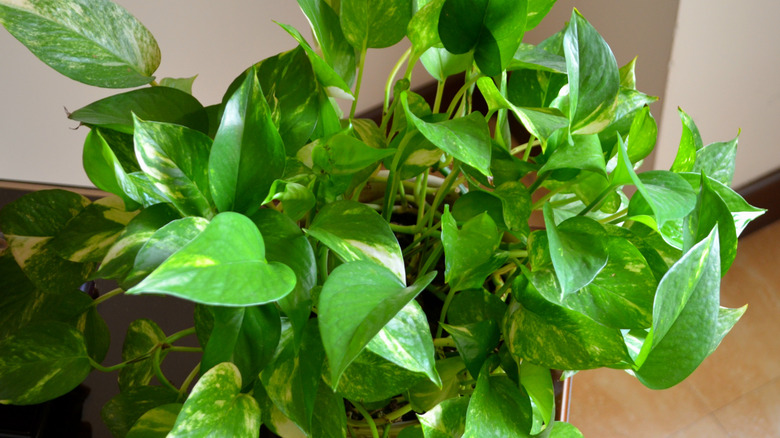
One of the reasons I like pothos is just how fast it grows. If you give it plenty of light, a healthy plant can put off a whole foot of new vine in a month. Obviously, this can get problematic over time, especially in a small space. If you don't keep on top of it, those vines can quickly go from climbing or trailing elegantly to looking like something from "Day of the Triffids" (yes, I love classic horror as well as pets and plants).
To stop your pothos turning into a chaotic indoor jungle vine, you'll need to keep it in check. Train the vines up a trellis or moss pole if you want to keep it really confined. Unfortunately, this is one of the clearest examples of an "easy" plant requiring regular maintenance. You may have to trim back particularly vigorous vines. But you can propagate those and generate new plants to give away or even sell at a yard sale. Some people let is sprawl and climb across a book shelf or up a wall, and they'll even add little anchors, wires, or wood for it to climb. The other option with overly long vines is to curl them back on themselves and plant the end in the original pot. This makes the center look full, thick, and lush as well as tidying the long straggly vines.
Soggy soil makes pothos prone to root rot
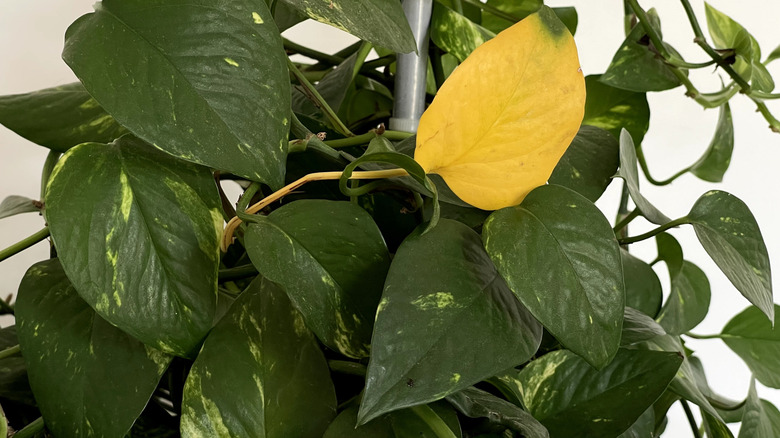
Pothos is drought-tolerant. More than that, pothos prefers drier soil. This plant handles underwatering far better than it does overwatering. Heavy, poorly draining soil, cachepots with too much stale water, or nursery pots without adequate drainage are all problematic for pothos. When water doesn't drain away quickly, the soil stays wet and so do the plant roots. When this happens for extended periods, you get root rot, which can very quickly kill your plant. If your pothos is suffering from root rot, you'll see the leaves yellowing and potentially dropping, and you may find the vines are soft or mushy near the base. The soil will likely start to smell distinctively offensive and, if you decide to repot it to try and save it, you'll find your pothos roots will be dark brown or black, smelly, and mushy.
By the time the symptoms appear on the foliage, the rot is usually well established in the root zone. It may not be possible to revive a dying pothos plant suffering from root rot. However, you can try. Gently take the plant out of its pot and wash off the roots in tepid water — don't use hot water or you'll cook the roots. And avoid cold water so you don't shock the roots. Cut away the black, mushy parts of the root mass and repot the remaining plant back into a fresh, well-draining succulent mix. If you lose a lot of root, you might want to downsize to a smaller pot. Make sure the potting mix is chunky and has plenty of perlite, and that the pot itself drains well.
Variegated pothos easily lose their pretty coloring
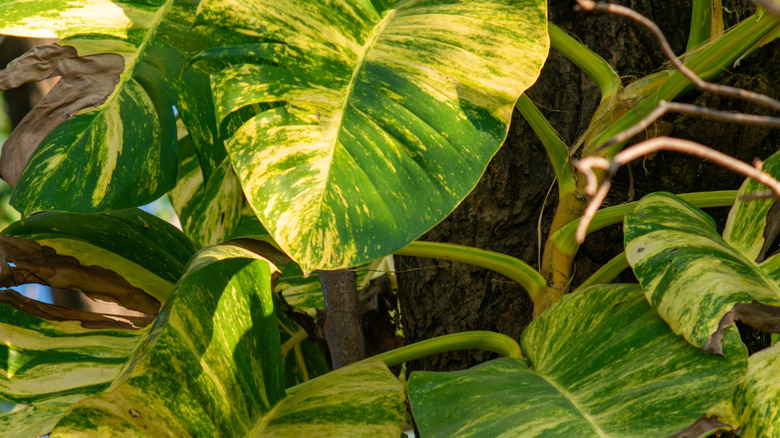
I adore variegated pothos cultivars. 'Marble queens', 'Manjulas', and 'Neon' are among the most popular because of their distinctive, pretty leaves. I was lucky enough to be gifted an elusive 'Harlequin', and I have a lovely 'Marble Queen', too. But, in another example of an easy plant that actually requires effort to thrive, variegated pothos need your help to keep their multicolored leaves. The patterning very easily disappears. A couple of different things can happen to cause a variegated pothos to revert to solid-green. Firstly, lack of light. The variegation in pothos comes from the lack of chlorophyll in the pale bits of the leaves. So, if there's less light, the plant produce more chlorophyll, so the pale patches turn solid green. The other thing that happens is that some new leaves are all green to begin with. Because they have more chlorophyll, they grow faster than their variegated counterparts, and can quickly overwhelm them.
The fix to keep the variegation is to firstly provide ample light. Pothos needs lots of full, indirect sunlight to really hit their full potential. Keep your pothos happy, with stable temperatures, plenty of light, and regular waterings when the plant is genuinely dry and avoid watering mistakes. And, when you get all-green vines, cut them back. You may find that only part of the vine is a solid color, in which case, you cut it back to the node right after the last solid green leaf. It's not a huge job, but it is something that you need to be aware of.
Low light often leaves you with long, bare, leggy vines
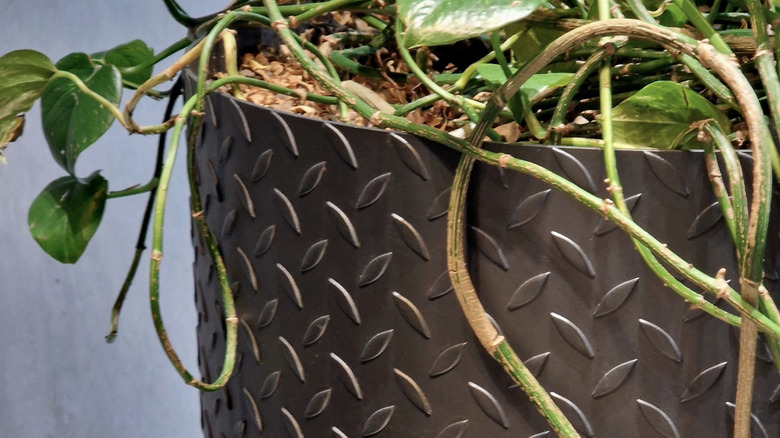
As I already said, yes, pothos will survive in low light, but it won't thrive. If you don't give pothos enough natural light, or supplemental light via a grow light, you'll end up with long, bare, leggy vines. They tend to have large gaps between leaf nodes, as the stems desperately stretch toward any available light. To conserve energy, the plant will also drop leaves from the older end of the vine as it tries to keep growing. Eventually, you get long, straggly vines with hardly any leaves apart from at the tips.
If this happens to your pothos, give it more light. Theses plants need bright, indirect light, such as a sunny windowsill with a sheer curtain over it. This won't fix the already-leggy vines though. It'll just help new growth be fuller and steadier. To fix those gappy stretches, you can cut and propagate them or curl them back into the pot so they can root and put off new vines. You'll lose the trailing or climbing vines for a while, but you'll have a lovely full-looking crown and eventually, healthy, leaf-filled vines.
It's very easy to over- or under-water pothos
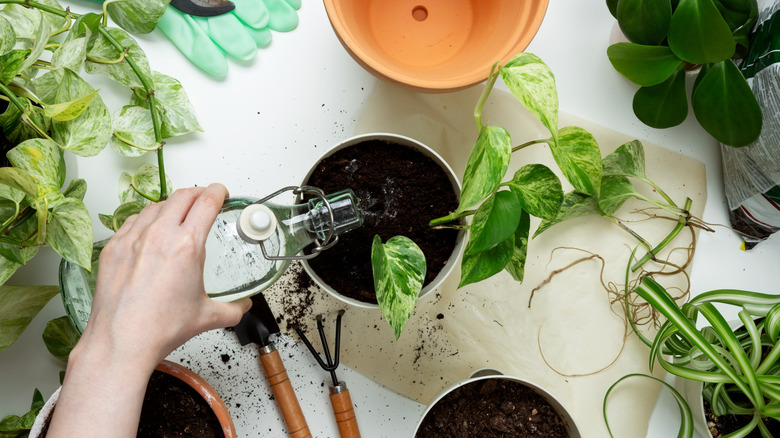
Pothos watering mistakes are some of the most common problems with this plant. It is really very easy to overwater. But it's easy to underwater, too. And it shows its displeasure first through its leaves. They turn yellow, the edges can go brown, and they'll often get sad and limp. With overwatering, you may also see crispy leaf edges and leaves curling inwards as they dry up. Eventually, the plant will start to drop leaves and leave the vine full of gaps and generally struggling. Plus, if you don't water enough, or in the right way, you can get a buildup of mineral salts that further complicate matters.
For pothos, the soil shouldn't be completely desiccated right through. Just the top couple of inches being dry is enough to tell you it's time to water. Watering bottom-up every other time you water helps the plant absorb what it needs right at the rootzone. Then alternate with top-down watering. For my top-down watering sessions, I generally stand the plants in the bath and turn the shower on for them. This flushes the soil and helps to clear any mineral salt build up. It also washes the leaves clean so I don't have to manually dust them.
Clinging aerial roots can mark walls and furniture
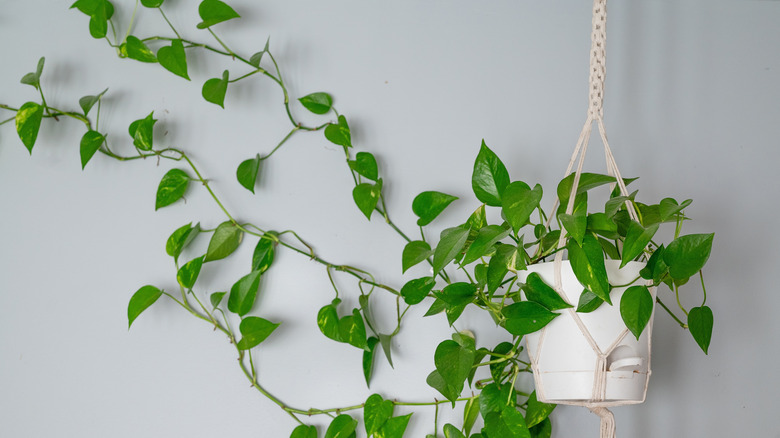
People see pothos climbing up a neat little pole or trailing daintily over the edge of the pot at the nursery and don't really think about what happens as the plant grows. Pothos have aerial roots along the vines. And every leaf node also has the potential to produce roots. And even though the plant is confined in a pot, those roots are functional. The plant uses them to grip or anchor itself to surfaces so it can climb. Obviously the plant can't tell the difference between the moss pole you bought for it to climb and your antique wooden bookshelf. Pothos wants to climb, and it a surface doesn't need much in the way of texture for the plant's roots to grab on. When you try to remove these climbing vines, you'll likely find scuffed or damaged paint, walls, and wood.
I am a permaculture specialist, so I like to let plants, including houseplants, grow the way they're supposed to. Within reason. If you want to let pothos climb and run, do it. Don't just let it run wild though, unless you're okay with it potentially damaging the surfaces it anchors to. You can get moss or coir poles that you moisten lightly from time to time, and up which pothos can clamber as much as it wants. You can also get trellises and frames you can anchor to a wall or in the pothos container to give it something to cling to.
Too much direct sun scorches and washes out the leaves
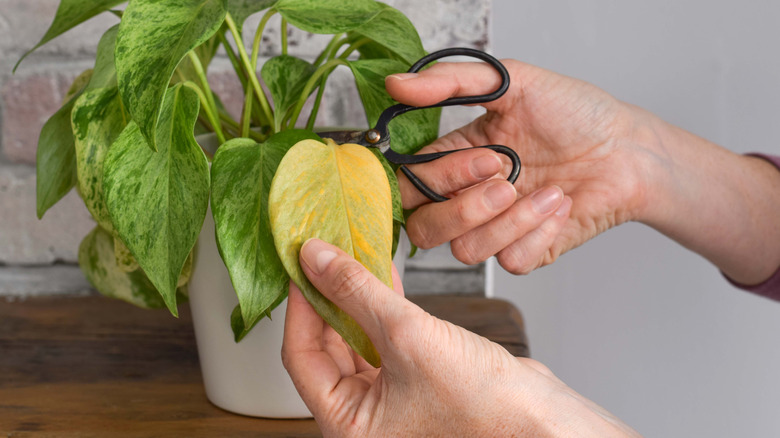
I did say that pothos needs lots of light to survive, and that is true, but it can't handle full, direct sunlight. It can usually cope with early morning sun. It's prolonged exposure to intense afternoon sunlight that does the most damage. If the pothos is right on a windowsill, the heat is magnified by the glass if the glass doesn't have a suitable covering. Leaves get brown edges, curl up, and look bleached, becoming papery as they dry out and die off. Too much sun is also one of the quickest ways to make variegated pothos lose its beautiful multicolored leaves.
How much light the plant can tolerate depends on its overall health. However, generally, pothos like lots of indirect or filtered sunlight. The simplest setup is a sunny windowsill with a sheer curtain between the plant and the glass. Or you can sit the plant on a shelf directly opposite a large window that lets in plenty of sunlight all day. In dark rooms with small windows, you can also supplement natural light with LED grow lights. Energy efficient ones don't cost much to run, and you can hook them up to a timer, if they don't have a built-in one, and set it to turn on during the daytime hours you know the room is at its darkest.
Hydroponic or aquarium pothos setups need extra maintenance
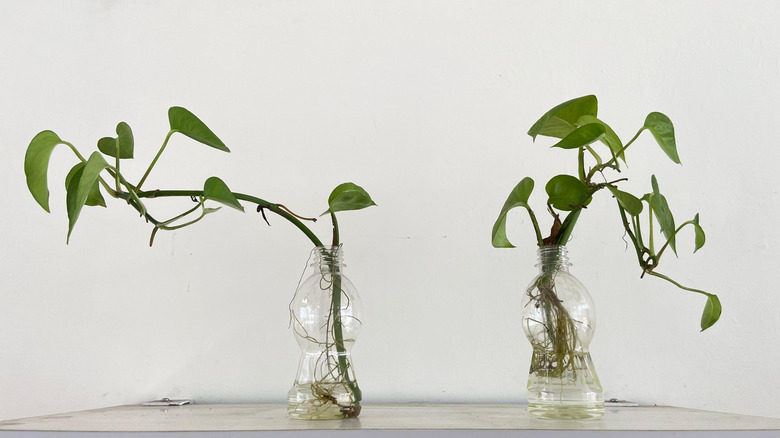
Although potted pothos don't like having wet roots in soil, pothos can actually be grown without soil, in water. The roots adapt to a watery environment. It's a pretty popular choice for aquaponic setups as it's great for absorbing nitrites that build up in aquariums. Whether growing it hydroponically or aquaponically, growing pothos in water is challenging. The water needs to stay fresh and, unless you have an oxygenating and filtration system, as you would in an aquaponic setup, you'll need to change the water frequently. The roots will also grow vigorously and can fill small containers. In an aquarium setup, they can also clog filter intakes, so will need trimming regularly.
If you're growing pothos directly in water, such as in a clear glass container, make sure you change the water every week or so. If you let the water stagnate, it'll lose oxygen and grow algae that can coat the roots and the glass. In an aquaponic system, make sure you keep roots trimmed and regularly remove dead leaves so they don't decompose in the water and change the nutrient balance and overall water quality.
Old crowns look bare and woody
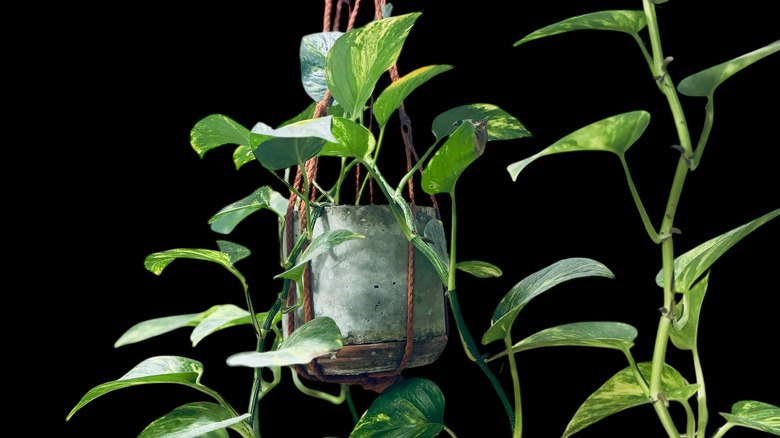
As a pothos matures, it starts to show its age. The central crown, where the vines emerge from the pot, becomes tough and woody. It also gets bare and tired-looking as the plant puts its energy into growing the tips of the vines. You'll end up with a woody crown, and long swathes of vines with bare leaf nodes, because the plant just wants to keep growing rather than filling gaps on old vines.
You've got a few options here. First, you can fill leaf gaps with keiki paste as I described earlier. But with the crown itself, there's no direct cure. It's the natural process, so you may want to mask it instead. To do that, the easiest way is just to curl some of the longest vines back into the pot, around the outside of the crown. Make sure several nodes from each vine touch the soil. You can even pin them in place with little plant staples. It immediately makes the pot look lush and full, while the nodes start to root and produce new vines. Your other option is to take cuttings from a single or several vines. You can root these in water first or just bury each cutting in the main pot, encircling the crown. For cuttings, make sure you take at least an inch of vine that contains a node and leaf.