

The Award-Winning Perennial That Grows Effortlessly In Containers With Zero Fuss
If you're thinking of growing ornamental grasses in containers, you'll want to consider the the 1993 recipient of the Royal Horticultural Society's Award of Garden Merit. The winner is a stunning and dramatic grass that works well in pots and containers: blue oat grass (Helictotrichon sempervirens). This beautiful, low-maintenance grass is a perennial that boasts blue-tinged, long-bladed, clump-forming foliage.
Blue oat grass appears on many lists of perfect ornamental grasses for your yard, largely because of its striking steely blue appearance, versatility in the landscape, and ease of care. As an added bonus, this plant performs exceptionally well in containers. Gardeners appreciate the grass's ability to both grow vertically and spill dramatically over the edge of its container. It's also a plus that blue oat grass suffers from no significant diseases or threats from pests. If you plan to cultivate this plant in containers, however, you should learn a few specific care instructions that differ from those for blue oat grass planted in the landscape.
Grow blue oat grass in containers for an easy-care stunner
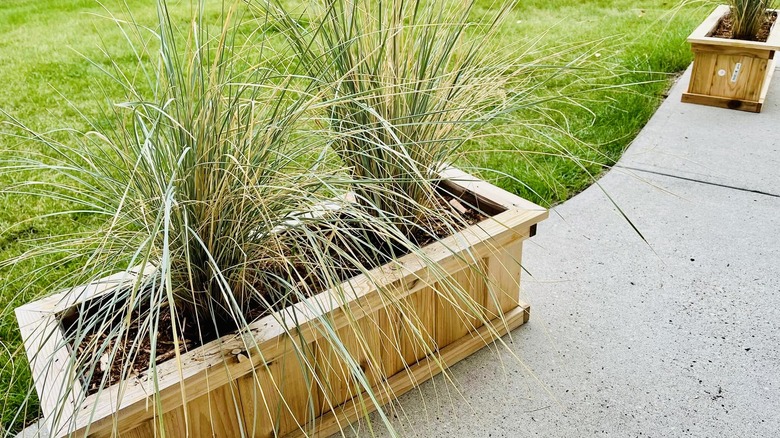
To grow blue oat grass in a container, be sure the pot or container is at least 14 inches in diameter — big enough to accommodate the root ball, plus a little room for extra growth. It should have three to four holes in the bottom for drainage. Unglazed terracotta works well for this task. Use dry, well-draining soil, not garden soil; a mix of 50% cactus/succulent potting soil, 30% pumice, and 20% coarse sand is recommended. Drainage is critical to avoid the crown rot that can occur when this plant is left in consistently damp conditions. Blue oat grass can weather winters in USDA Hardiness Zones 4a to 8b, but in colder climates, leaves drop off and should be raked up. Consider adding a few other plants in the container, such as low-maintenance companion plants that make blue oat grass look even better, like Russian sage (Salvia yangii).
You'll want to give your container-grown blue oat grass more attention than you would one grown in the landscape, especially in the summer. As a cool-season grass, blue oat grass grows the most in spring and fall, but slows down in the warmer months. During this period, check the soil's moisture level daily, and only water once it feels dry and crumbly.
Give your blue oat grass a good watering when you pot it, but be sure not to overwater during regular maintenance. Poke your finger a few inches into the soil to see if the plant actually needs water. Dry conditions result in optimal blue foliage, so underwatering is certainly preferable to overwatering in this case.