

20 Water-Loving Plants That Will Thrive In Your Bog Garden
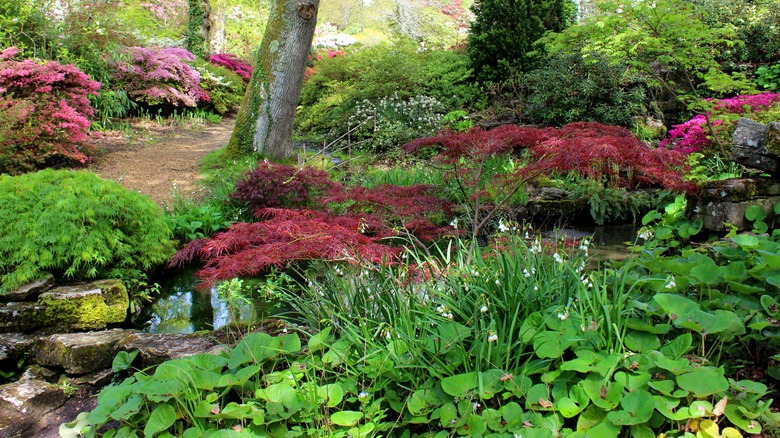
Bog gardens are beneficial landscape features that create a safe habitat for local wildlife, and are a low-maintenance alternative to traditional gardens. They also help you to take advantage of a pesky yard feature you may already have — a low-lying wet spot. However, though they are useful, the term 'bog' isn't a pleasant one. It conjures images of unpleasant, stagnant water and chaotic plants.
But that isn't the way bog gardens have to be. Since you are making them yourself, you can maintain the water however you like and add eye-catching flora — the type that thrives in a wet, boggy environment. The kinds of plants that can tolerate these conditions are pretty varied and include a mix of bold flowers, unique carnivorous plants, and lush greenery. While many on the list below are classic bog plants, others simply thrive in wet soil conditions.
Those on the list are just the tip of the iceberg of bog-loving plants. With so many choices, it's easy enough to make your garden mimic a natural bog, especially if you choose between a mix of shrubs, grass-like plants, flowers, and floating species. Depending on where you live, you may want to include a few carnivorous options as well to keep biting pests like mosquitoes under control.
Horsetail
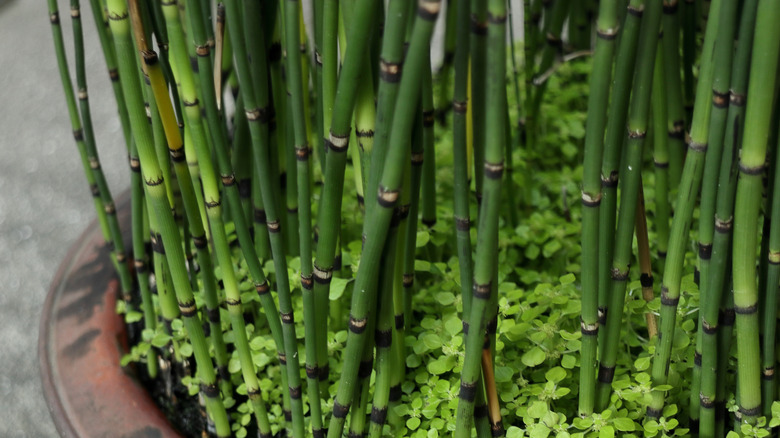
One of the best ways to pick plants for your bog garden is to choose those native to your area. Horsetail (Equisetum hymale), for example, is found throughout the United States, and thrives in USDA Hardiness Zones 3 to 9. It can add a lot of color and texture to your bog garden. Plus, it's perfectly happy in wet soil and can thrive in up to 4 inches of water, making it a great choice for the deeper areas of your bog. It grows quickly once established and can reach up to 20 inches tall in ideal conditions.
Swamp milkweed
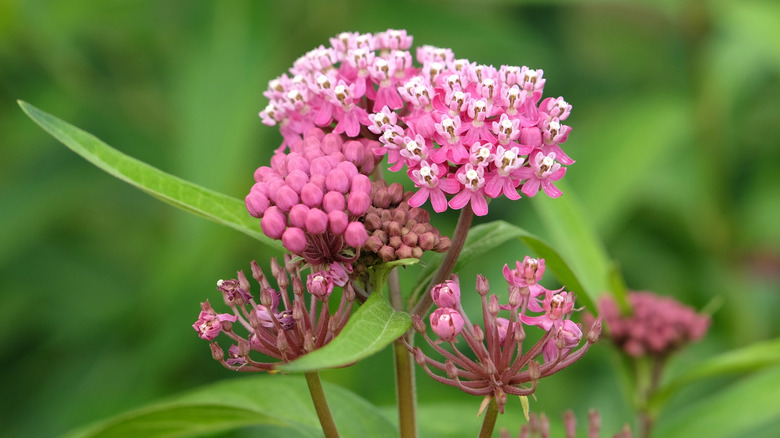
Swamp milkweed (Asclepias incarnata) is a plant that loves wet soil or even a bit of standing water. It boasts beautiful little pink clusters of flowers, sure to catch the eye in your bog garden. It's pretty low maintenance — not needing much care after establishing itself — and attracts butterflies. In fact, it's so well-liked by these pollinators that it's one of the best fragrant plants to include in a butterfly garden and supports endangered monarch populations. Like horsetail, it does best in USDA zones 3 to 9.
Marsh marigold
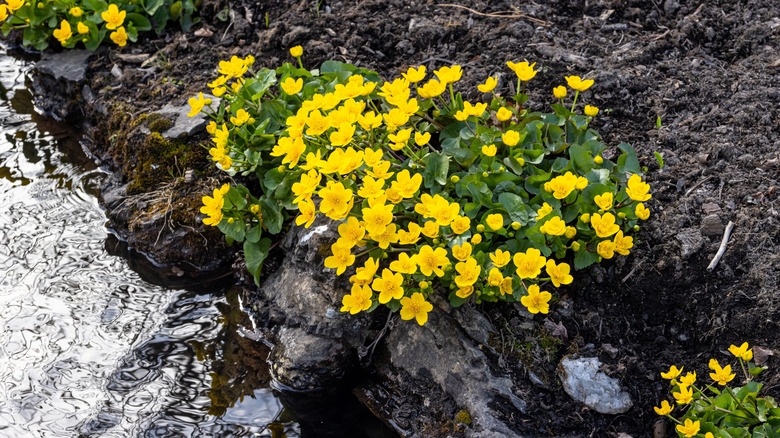
Another great option for cooler zones is the yellow marsh marigold (Caltha palustris). Despite its name, it is actually part of the buttercup family. These flowers thrive in zones 3 to 7 and prefer marshier, wetter spaces. This plant likes afternoon sun, is low-maintenance, and is even deer-resistant, making it ideal for someone trying out bog gardening for the first time. However, it does easily take over a space and may crowd out nearby plants if it isn't cut back, so you will have to corral it a bit.
Red hibiscus
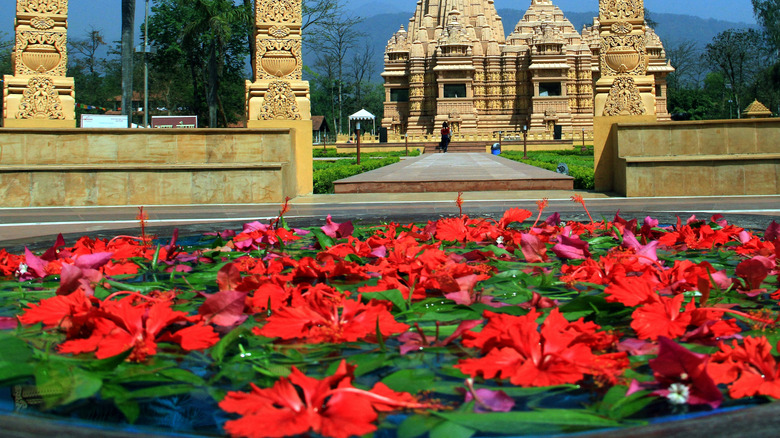
Red hibiscus (Hibiscus coccineus) is also known as scarlet rose mallow. It produces large red flowers, grows up to 8 feet tall, and is perfect for adding bold color and height to your bog garden. It prefers full sun and water up to 4 inches deep. This hibiscus is hardy in zones 7 to 11, but can handle cooler temperatures with a bit of care. They are also one of several vibrant red flowers to plant and grow if you want to attract hummingbirds, thanks to their big and beautiful blooms.
Common cattail
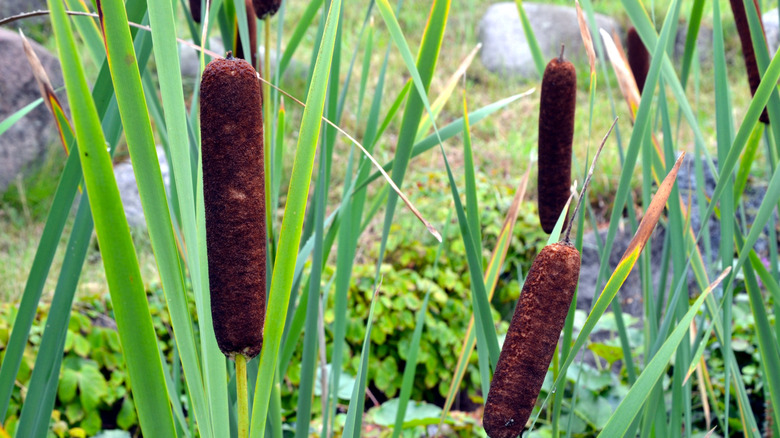
For a classic pond or bog feel, you can't ignore the common cattail (Typha latifolia). They are perfect for gardens in most of the United States, as they are hardy in zones 3 to 11. They like wet areas and can handle water up to a foot deep. They are pretty durable in terms of sun requirements and can reach up to 7 feet tall. They are low-maintenance as well. If you're feeling particularly adventurous at dinner time, the roots and many parts of the young plants are edible.
Irises
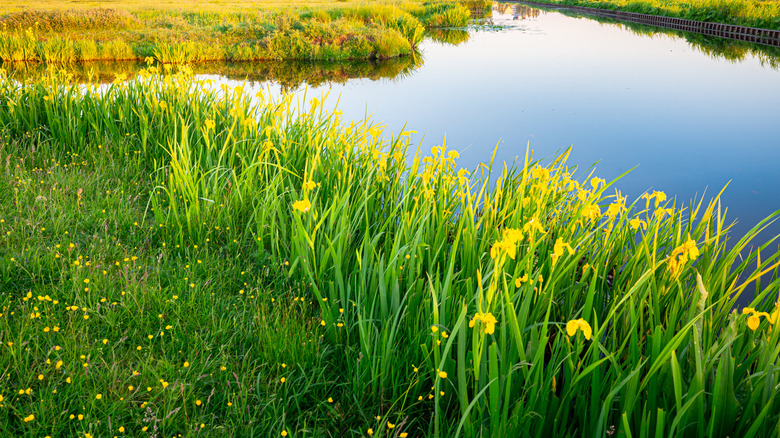
There are many species of irises (family Iridaceae), specifically bog irises, that are perfect for a bog garden. These plants not only thrive in wet conditions but can also help you filter your bog, making it cleaner. Some species of irises can even handle water up to 4 inches deep, and depending on the variety, most are hardy between zones 3 and 9. Some can be invasive in certain states, however, such as yellow flag irises (Iris pseudacorus), so do plenty of research before picking out ones that work for you.
Forget-me-nots
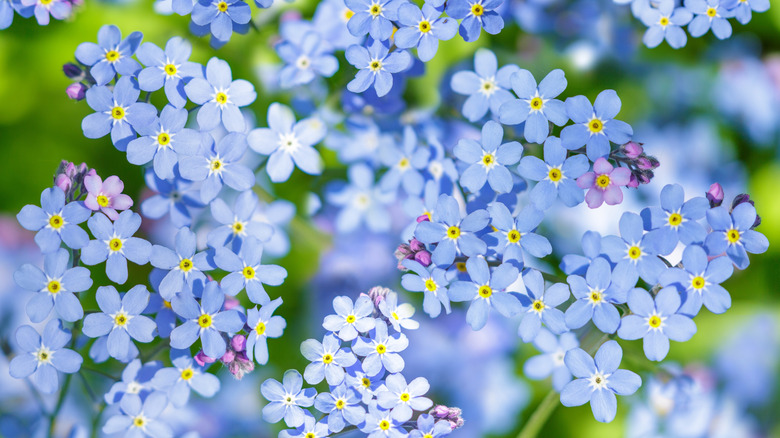
Forget-me-nots (Myosotis sylvatica) may not live long, but they are beautiful bog plants that produce charming blue flowers. The plant stays pretty low to the ground, rarely reaching more than a foot tall, and loves moist soil. It's another excellent filtering plant to help keep your bog clean. Since they are so low, they do better with wet soil, even under a few inches of water. These little plants are simple to care for, and you can successfully grow forget-me-nots with a bit of research, like knowing they are hardy in zones 3 to 8.
Pitcher plants
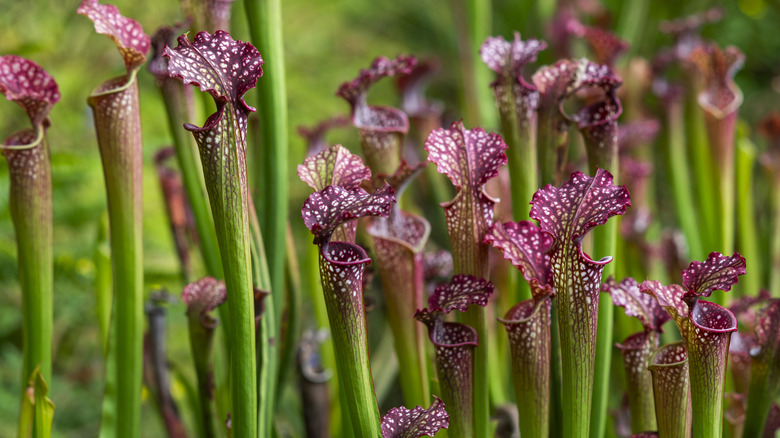
Pitcher plants (Sarracenia spp.) are a group of plants that thrive in bog environments. There are several types of pitcher plants you can care for in your bog garden. All are carnivorous, catching insects for nutrition, which is ideal for a wet area sure to attract annoying pests like mosquitoes. They are a unique plant that adds a little extra visual interest to your garden. They are found across much of the United States, from the East Coast to parts of the West, though they do best in zones 6 to 8.
Sphagnum moss
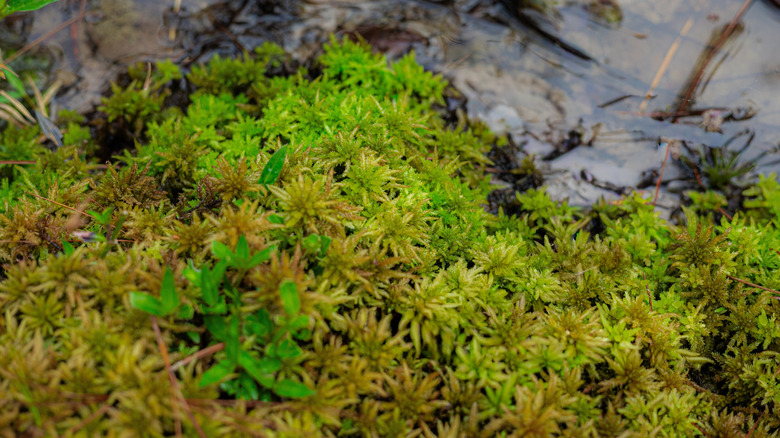
Sphagnum moss (Sphagnum spp.) is not only a good plant for your bog garden, but it's almost a necessity. Many kinds of orchids and carnivorous plants grow much better and more easily with the assistance of moss. It gives plants a surface to cling to. It also provides decaying matter for nutrition. This moss grows in zones 3 to 9, so you can add it for support in bog gardens in these areas. Generally, you just place the moss on the surface around your plants and let it grow to fill in the gaps.
Orchids
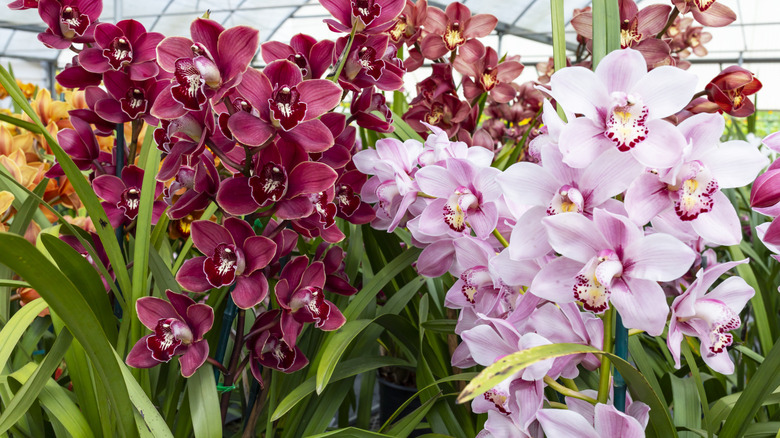
Orchids (family Orchidaceae) are beautiful flowers, but they can be a bit complicated to grow. However, if you provide the right conditions, they will be a beautiful addition to your home or garden. If you are looking to build a bog, then bog orchids are a great option. They enjoy wetter soil and high acidity. Every orchid is a little different, but most grow well in zones 3 to 9. You can choose from a lot of native kinds, but the grass pink (Calopogon tuberosus) is one example of an easier species to grow.
Swamp sunflower
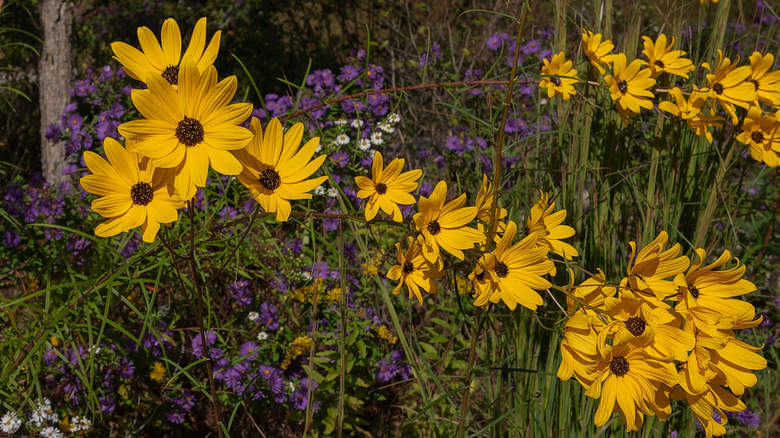
Swamp sunflowers (Helianthus angustifolius var. planifolius) are perennial and help to provide you with a bit of sunny cheer in your bog garden. These flowers do well around water and are often native to ditches or poorly drained areas. They are hardy in zones 5 to 9, which means these plants are a cheery perennial flower that can handle sizzling summer heat and humidity. The flowers are 2 inches in diameter, but they can grow around 5 feet tall. They are easy to care for, durable in many climates, and attract pollinators.
Bladderworts
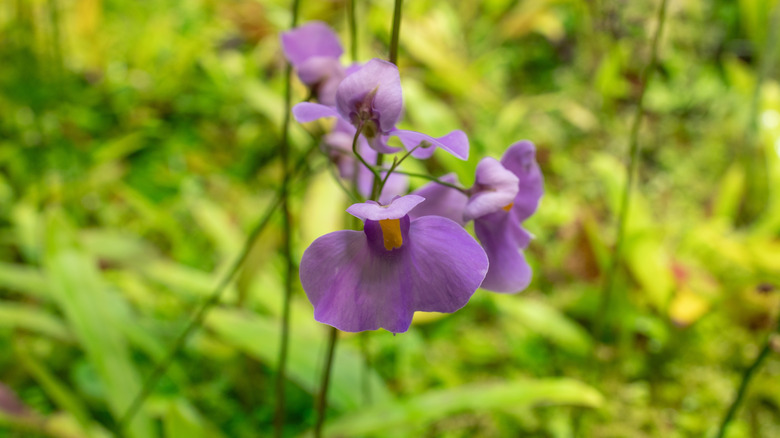
Bogs are known for being a little low on nutrients, especially wild ones, which is why they are such a great breeding ground for carnivorous flora that get their nutrients from somewhere else. In addition to pitcher plants, bladderwort (Utricularia spp.) is also a common choice. These generally float on top of the water and catch insects. Because of this, they are excellent at catching mosquito larvae before they can fully mature into annoying pests. They are hardy in zones 5 to 10, making them ideal for much of the United States.
Lilies
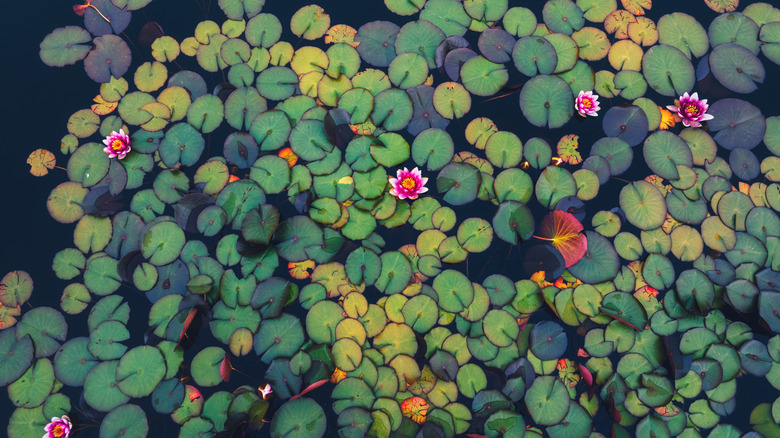
Several different kinds of lilies, including spider (Hymenocallis spp.), calla (Zantedeschia aethiopica), and water (Nymphaea spp.), do well in boggy conditions. Lilies like still bodies of water, which is why it's such a great plant for a bog. Though they can grow in deep areas, they tend to prefer keeping the crown of the bulb dry. It's easy to find lily varieties that will grow well in zones 3 to 10. While beautiful, many liy types are toxic to kids and animals, so caution should be taken when adding them to your bog garden.
Bog bean
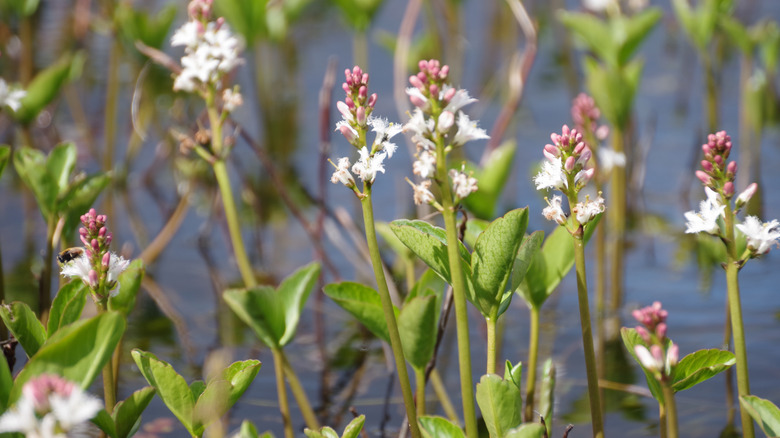
Known as buckbean (Menyanthes trifoliata) or bog bean, this plant enjoys shallow water and environments similar to what you would see in a bog. It's hardy in zones 3 to 10 and enjoys peaty or acidic wet soil. Bog bean does best in shallow areas at the edge of ponds or bogs. It's a low-growing plant, reaching only about a foot in height, and it produces delicate white flowers that attract pollinators. It's found across the United States, making it an excellent native plant for your bog garden.
Duckweed
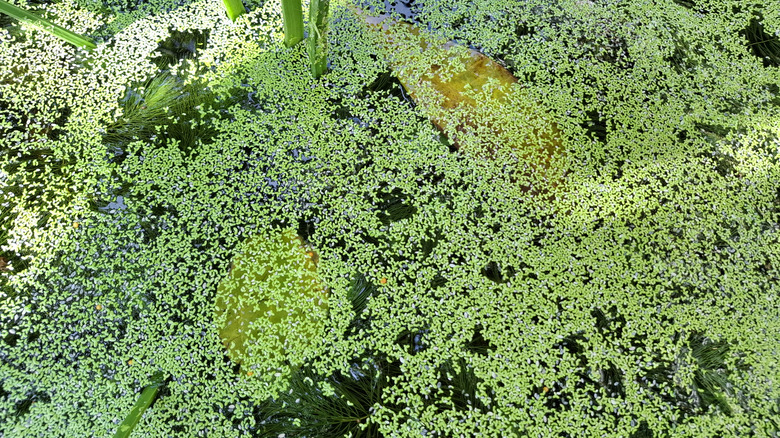
Duckweed (Lemna spp.) is a free-floating miniature plant that sits on the surface of still water. It's found across the US and is hardy in zones 4 to 10. It has roots, but they float freely. While duckweed isn't an invasive species, it is sometimes considered a nuisance because it can spread quickly and take over an area if not monitored closely. In fact, it can easily double its mass in just four days. So this might only be a plant worth growing if you don't mind it covering your garden or if you're willing to thin it out regularly.
Water celery
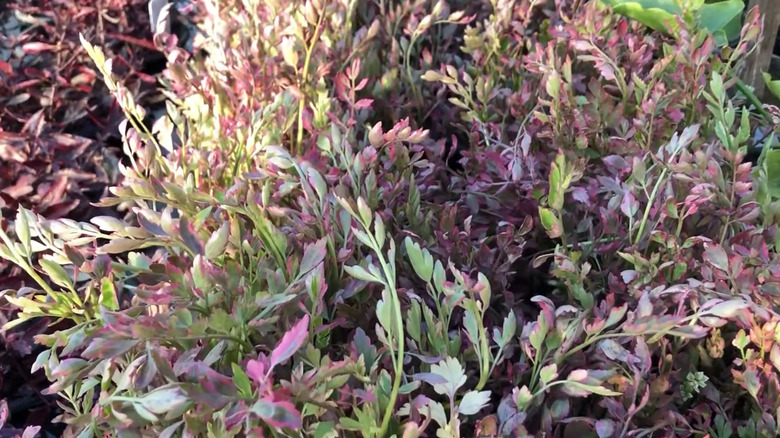
Water celery (Oenanthe javonica) and variegated water celery (Oenanthe javonica 'Flamingo') are beautiful plants. Both grow little white flowers, but for the variegated, its real beauty comes from its leaves, which are usually a mix of green, cream, and pink. It's a great bog filter plant, and it's pretty forgiving. It can even bounce back after a frost, which is why it does well in zones 4 to 9. It prefers to grow in soil underwater, though it needs at least a couple of leaves above the surface.
Hornwort
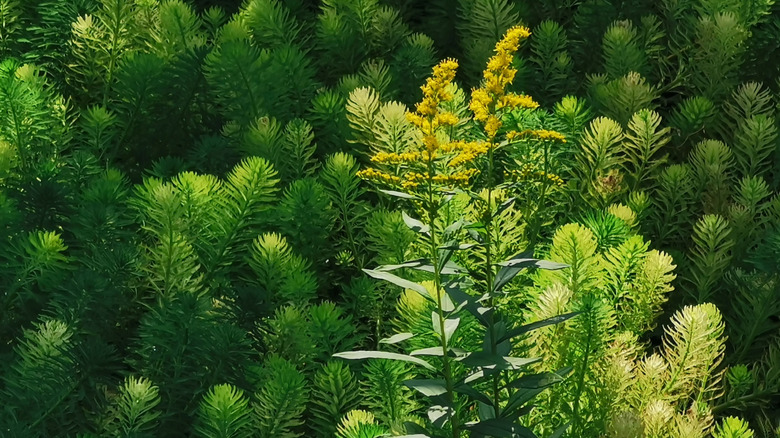
Hornwort (Ceratophyllum demersum) is a fully aquatic plant. It can grow completely underwater and helps add oxygen and keep algae away. It's not a flashy plant, and its appearance is often compared to a juniper bush, but under water. It can survive a pond being completely frozen over. As long as you live in zones 4 to 11, you can easily grow this plant in your bog. It's charming and can be found in water nearly 7 feet deep. However, it is invasive in some states, so be sure to check before growing it.
Water plantains
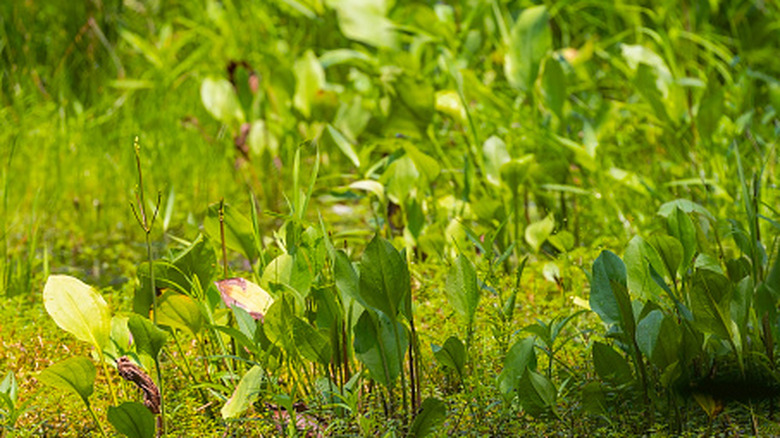
Water plantains (Alisma spp.) are one of those aquatic plants you should add to your natural water features, especially in the shallower areas if you live somewhere in zones 5 to 9. It enjoys slow-moving or still water and produces small, colorful flowers in the summer. It's a great plant if you're looking to make an aquatic habitat, as it can provide shelter for small insects. Larger animals, like geese, ducks, and beavers, eat parts of the plant, and the roots can help prevent erosion if that is an issue in your boggy area.
Common rush
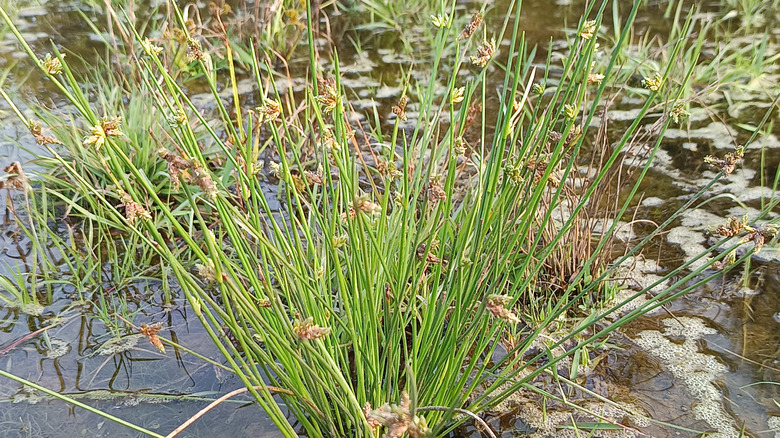
Common rush (Juncus effusus) thrives in zones 4 to 9 and loves being in shallow water or alongside a shore. These plants don't like to be fully underwater, but they can thrive in areas with up to 5 inches of standing water. They're naturally found in all but three states in the US. The plant is a self-seeder, so you don't have to worry about replanting it all the time. This isn't the most remarkable flora, as its thin stalks and brownish flowers don't catch the eye, but it can provide contrast for a more natural-looking bog.
Pondweeds
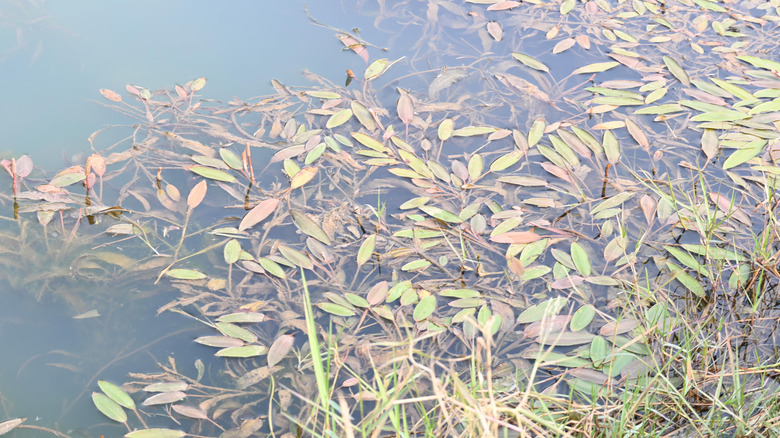
Pondweeds (Potamogeton spp.) enjoy acidic and still water with little to no nutrients, which is exactly what a bog has to offer. This plant grows mostly underwater, though some of its tallest leaves may sit on the surface. It's a native plant to the United States, and the various species are hardy in zones 3 to 10. Some pondweed can get up to 15 feet tall, while others only get up to 3 feet, so do research and get the species that best fits your bog garden.