

Stunning Ways To Style A Simple Spider Plant Into A Showstopper
We may receive a commission on purchases made from links.
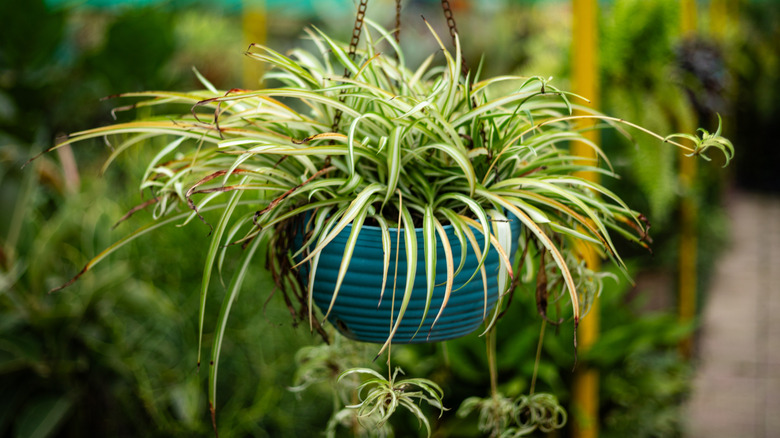
Spider plants (Chlorophytum comosum) make great houseplants for a variety of reasons. They are relatively easy to care for and are non-toxic to pets. However, the classic spread-out look of this South African native plant's green and white foliage isn't necessarily suited to everyone's needs. For example, if your home is short on available space, you likely don't want an unwieldy spider plant taking over your surfaces or walkways. Luckily, spider plants can actually be trained to create a variety of alternative shapes. This is a wonderful way to turn a simple indoor spider plant into a beautiful statement piece.
The spindly little offshoots of the spider plant, or plantlets, are the inspiration for its name and can be encouraged to grow in certain patterns. Their long, thin stems can be carefully bent into circles or hearts, or even braided into tall, thick columns. Once you have chosen your preferred style and shaped the plantlets accordingly, you can place the spider plant in a position of honor, such as on a dining table, bookshelf, or nightstand, and watch as the offshoots grow and strengthen your new design. Or, if you live in hardiness Zones 10 or 11, you could even display the plant outside as long as the temperature is above 55 degrees Fahrenheit.
How to train a spider plant into a fascinating shape
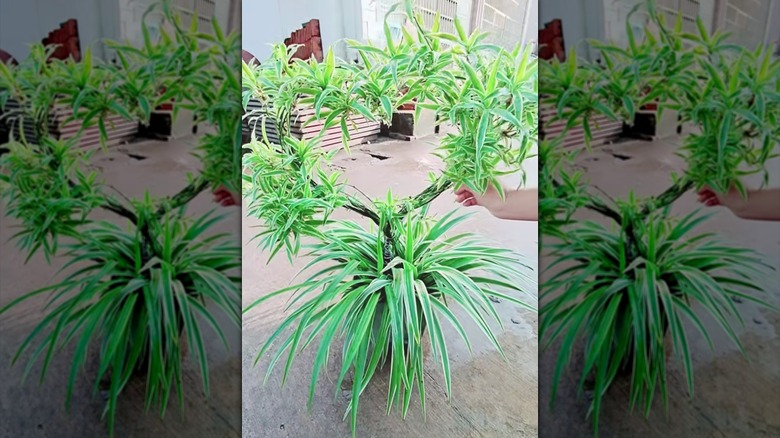
There are two methods for training a spider plant. The first is to use a base structure to create a shape for the plantlet vines to be gently tied to. You can do this using some aluminum wire, like Bolsdoic 9-gauge aluminum craft wire. Aluminum can be easily bent into the desired shape, is light enough not to weigh down the plant, and is less likely to rust. You can then spiral or weave the vines around the metal. If you have too many plantlets, you can trim some off and either plant them in a different pot to create a new spider plant, or next to the existing one to create a bushier base. After training the plant, you may want to add some liquid fertilizer to give it extra nutrients for its new growing path, or try a simple two-ingredient fertilizer to keep the soil healthy.
The other way to shape a spider plant is to braid its leggy plantlets together to create a thick column. This can be stood upright using a wooden stake, giving your plant more height and allowing the bushy ends of the plantlets to create bulk along the length of the column. This is a great option if you'd like a taller plant to dramatically fill empty spaces in your home. Whether you're braiding the stems or training them into a shape, make adjustments gently to avoid damaging the plant.