

Beware Of These Common Fire Hazards In Your Bathroom

While the bathroom is typically associated with water, it's actually a space where hot styling tools and electricity can combine to create hidden fire hazards. Getting ready in front of the bathroom mirror is usually a standard part of the day, but using high-heat styling tools near moisture requires a bit of extra caution to keep your home safe. Many people find that their bathrooms don't have enough wall outlets, which often leads to habits that put stress on the home's electrical system. To stay safe, extension cords should never be used in bathrooms, and hair styling tools should always be unplugged immediately after use.
Modern bathrooms use ground fault circuit interrupter (GFCI) outlets, which are designed to trip the circuit instantly if they detect an electrical current flowing through water or a person. If your bathroom outlets lack "test" and "reset" buttons, the risk of shock or fire from a short circuit increases. Updating outlets is a simple way to prevent the risk of a bathroom fire.
Allowing your hot styling tools to sit on a heat-safe surface until they're cold to the touch is a simple way to prevent a fire from starting in your bathroom. Keeping heat tools far away from the sink and the tub is just as important, since water can cause a short or spark even if it's turned off. If a hair dryer is left plugged in, water splashing into the vents can draw the electrical current out of the wiring and onto the wet surface of the tool. Taking a few extra moments to clear the counter of towels and tissues also makes sure that if a tool is still warm, nothing nearby will catch on fire.
Extension cords in the bathroom creates a major electrical risk
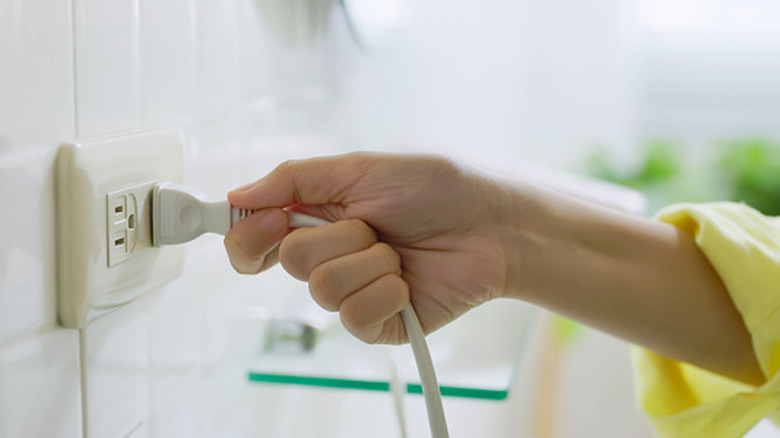
Using an extension cord in the bathroom might seem like a quick fix for a poorly placed outlet, but it can increase the risk of an electrical fire. Lightweight cords are rarely built to handle the massive amount of power a hair dryer or curling iron pulls. When you force that much electricity through a wire that isn't heavy enough, the cord starts to overheat from the inside out. This heat builds up without any warning, especially if the cord is hidden behind a hamper or under a rug, where airflow is limited. This is just one of the mistakes you're making with extension cords that can lead to disaster.
Because bathrooms are naturally damp, moisture can act as a bridge for electrical current, allowing it to travel across wet surfaces, which increases the risk of shocks. While most extension cords are only built for low-power items like a lamp, they're often used in bathrooms where they get stepped on or pinched in cabinet doors. This constant wear and tear breaks down the internal wiring and can cause the cord to overheat, which is why the bathroom is one of the places you should never use extension cords. Safety experts suggest always plugging in heat-producing tools directly into the wall to keep the circuit stable and keeping them away from damp countertops to prevent a sudden short.
Plugged in hair styling tools can ignite flammable materials
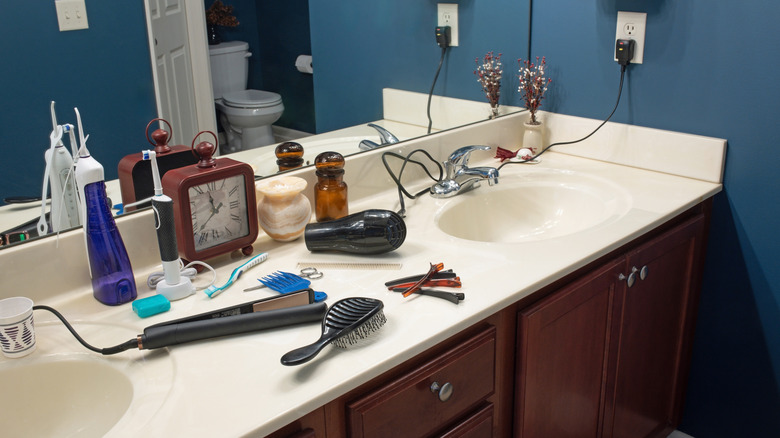
A flat iron can hit 400 degrees Fahrenheit in the time it takes to brush your teeth, and that heat doesn't just disappear the moment you hit the off switch. It's easy to finish your hair and rush out the door while leaving the hot tool resting on a laminate counter or a towel. Many modern hair tools include an automatic shut-off feature, though it can occasionally fail and not turn off, even when you think it has. When that hot metal sits against a wooden vanity or near a stack of toilet paper, it can slowly char the surface until it finally catches fire. This doesn't always happen right away; it might smolder for a while while you're away from the house.
Wrapping the cord tightly around the handle of a styling tool also causes the wires to fray, leading to sparks that can jump onto bottles of hairspray or dry shampoo. These pressurized cans are basically fuel, and a single spark can turn a messy countertop into a fire. Resting your tools on a silicone mat and pulling the plug are the best ways to be certain you're doing the most to prevent a fire.