

How HGTV's Drew Scott Mixes Metals For A Well-Layered Design

Even as the realtor half of the Property Brothers, Drew Scott shares tips for adding a wow factor to home renovation. His insight can help people figure out some of the more value-based details of the project, including what finishing touches appeal to most people. On social media, Scott has a series called "Drews and Don'ts," where he talks about things like picking the right paint for a kitchen or how to mix metals in your designs.
If you're interested in mixing metals in your interiors, Scott shared some tips in a video on his Instagram profile, @mrdrewscott. His advice might help you create a layered look, whether you're pairing side tables and light fixtures in the living room or cabinet hardware and faucets in the bathroom. While Scott said that you absolutely can mix metal colors in a single room, you need to make sure that the finishes don't clash or look a little tacky together. As Scott explained in the Instagram video: "Don't be afraid of having some fixtures with black frame and then having a faucet that has a gold or a brushed nickel look or whatever it might be. That's totally fine. The main thing is just don't have two things right next to each other that can compete." For example, don't install a shiny chrome fixture right next to something brass-finished.
Color isn't the only thing you need to consider when mixing metals in home design. Scott also advised against combining metal fixtures of different styles or aesthetics. A sleek, contemporary metal accent likely won't pair well with something ornate, traditional, or antique. "It has to be purposeful," Scott said.
Practical tips for mixing metals in your home design
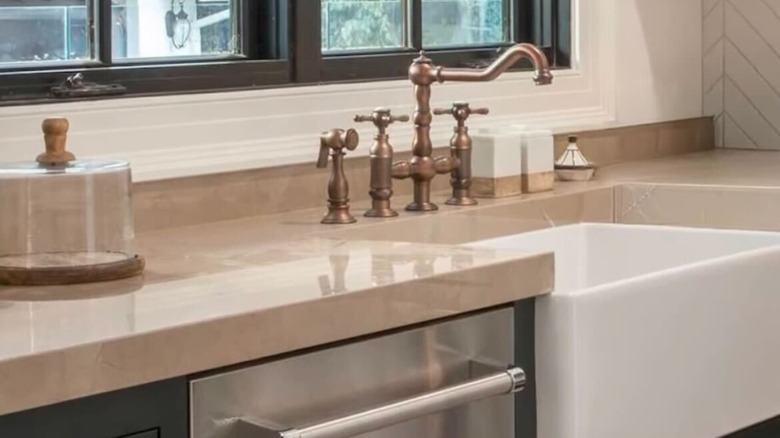
Drew Scott of the Property Brothers points out that you can mix metals in your home décor as long as those metals don't clash color- and style-wise. However, you also want to limit how many types of metal you're using in any one space. In a small room, like a bathroom, it's best to stick to just two metal tones for a more cohesive look. To do this, first choose a primary metal for the room, such as a matte black- or a chrome-finish metal, and then choose another metal that pairs well with it as an accent. You can go a little dramatic with the accent metal — its purpose is to draw the eye since it will complement or contrast with your primary metal. When mixing and matching metals to give your space depth and dimension, it also helps to start with a cool tone for the primary metal in the room, then choose a warmer tone for your accent.
If you're fitting out a new kitchen with stainless steel appliances, you could replicate the metal in the cabinetry hardware. Then install a black, a bronze, or brushed brass faucet for a more layered look. If your appliances have a black metal finish, opt for a chrome- or gold-finish faucet and cabinet pulls. In the bathroom, you could offset classic chrome or stainless steel faucets with a black metal-framed mirror or a matching bronze-finish towel bar and toilet roll holder set. If you opt for gold faucets in the bathroom, you might want to choose matte black metal accents or even warm copper accents. At the end of the day, you have all the freedom in the world to pick the metals you prefer, as long as you follow a few guidelines to ensure the final look is coordinated, not chaotic.