

The Fast-Growing Perennial That Flourishes In Pots And Butterflies Can't Resist
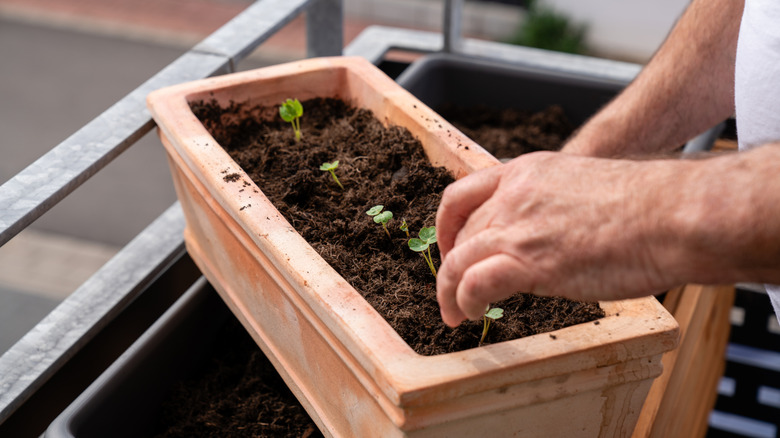
Growing flowering plants in pots on a porch or balcony is one of the quickest ways to bring flocks of beautiful butterflies right to your back door. To get lots of insect action quickly, you want a plant that grows fast. Plus, if the area sees lots of foot traffic or is close to nature, you need greenery that's non-toxic to dogs, cats, and kids and disliked by pests like deer and rabbits. Lamb's ear (Stachys byzantina), with its thick, soft, silvery-green leaves, is the perfect choice.
While many people think of lamb's ear as a garden plant, it actually does quite well in containers where its explorative rhizomatic root system has a firm boundary. It's perennial in USDA Hardiness Zones 4 through 9, so it can handle cool winters and hot summers without much trouble. In many areas, this plant stays evergreen or semi-evergreen throughout the winter, providing some contrast of color when other potted perennials have gone dormant.
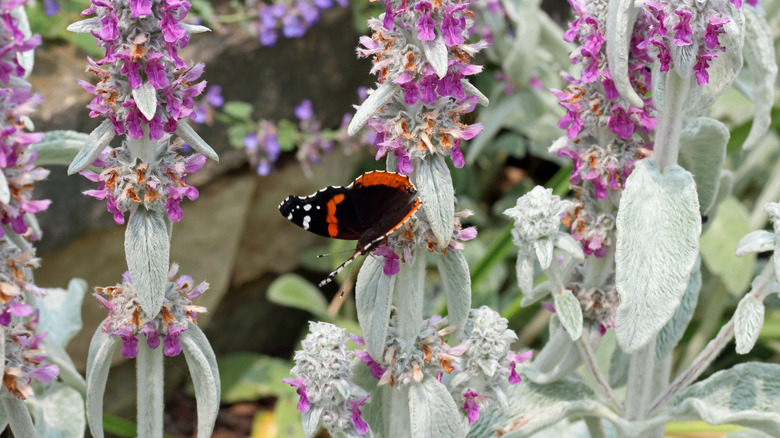
The pale, velvety foliage looks great next to darker green plants and looks fresh even when the sun's beating down. In summer, it sends up tall spikes with tiny purple flowers that attract more hummingbirds to your yard — not to mention butterflies, bees, and other pollinators. Since it grows so vigorously, a small plant from a nursery should fill a large pot and even start spilling over the edges in the first season.
Growing lamb's ear in containers requires the right soil and good drainage
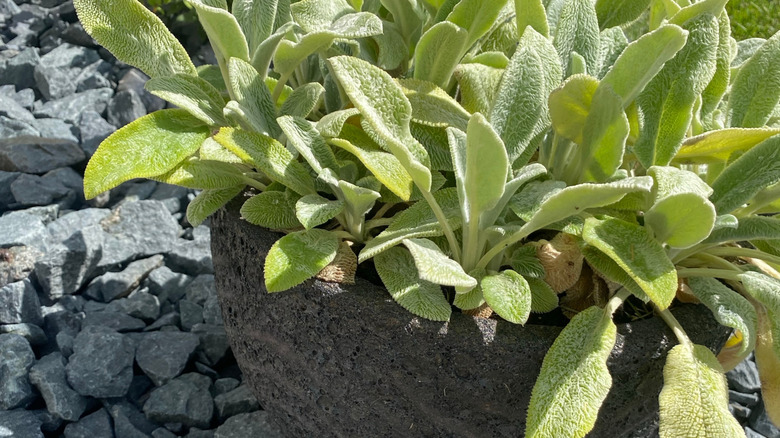
Understanding how to successfully grow a lamb's ear plant in a pot starts with the right drainage. You have to make sure the roots aren't sitting in water. This plant originally comes from dry, rocky areas in Turkey, Armenia, and Iran, so it's used to soil that dries out quickly. If you use regular potting soil straight out of the bag, it might hold onto too much moisture and this can cause leaf and root rot. Adding a few handfuls of perlite or coarse sand or grit to the mix helps the water run through much faster. Using a terracotta pot is another smart move because the clay is porous and lets the soil and roots breathe better than plastic.
Lamb's ear works as a filler plant in container gardening, helping to fill that gap between tall thriller plants or vines trained up a trellis in the middle of a large planter. It's also important to situate your potted lamb's ear in a spot with plenty of sun. If the plant stays in the shade too long, the leaves lose their silver color or get too damp and start to deteriorate. At least six hours of sun keeps the foliage dry and that distinctive fuzzy gray hue intact. While they're drought-tolerant once established, a newly planted lamb's ear will need moderate moisture early in life — at least until the root system grows substantially.
Proper pruning and watering keeps potted lamb's ear flowering for butterflies
Maintaining the look of lamb's ear mostly involves keeping the center of the plant open. Because the fuzzy leaves grow so close together, the older foliage at the bottom eventually dies off and turns brown. If you don't remove the dead leaves, they trap moisture in the crown, which can cause the whole plant to rot. Take a minute every few weeks to clear out any browned growth. It keeps the air moving, helping the plant stay dry and healthy.
As mentioned, lamb's ear is a flowering plant that will bloom all summer long. As the weather warms, tall stalks with little flowers filled with nectar pop up above the foliage. They typically attract smaller butterflies; it's rare to see large butterflies visiting this plant. If your potted lamb's ear starts to look a bit messy or stretched out after blooming, trim the flower stalks back to the base. It's also good practice to regularly check the undersides of the thick leaves at the same time, which can hide common pests like aphids.
If the plant starts to outgrow its container, you can easily pull it out and divide the root ball into smaller sections with a sharp spade. Lamb's ear is a light feeder, so you shouldn't need to fertilize it. In fact, too much nitrogen can weaken the plant. Water when the soil feels dry, but only the base of the plant. The tiny hairs on the leaves are great at catching water, but if they stay wet for too long, they can be vulnerable to infection.