

Keep Your ZZ Plant Thriving With 14 Smart Tips And Hacks
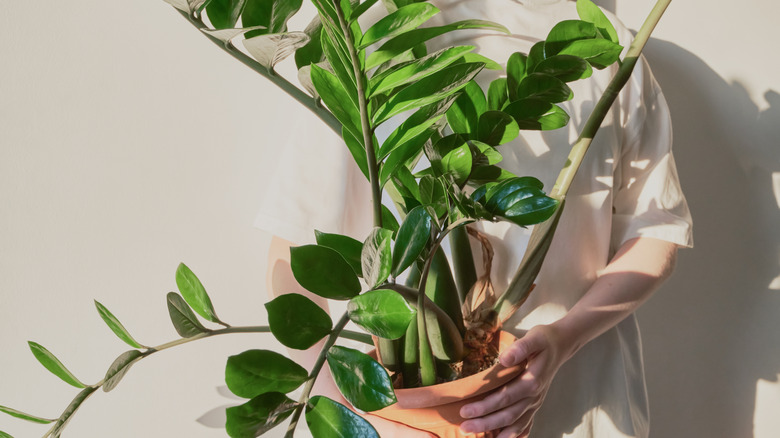
Even though ZZ plants are promoted everywhere as "unkillable," they still need specific conditions and care to thrive. They're also often mis-sold as succulents. But they are, in fact, aroids, and are the only member of their genus. They can survive in pretty dire conditions, including super-low light and going months between waterings. But they won't thrive like this. And, eventually, they may well die.
Because of the ZZ's slow growth habit, people think there's something wrong with their plant and rush to water or feed it, causing problems for what a perfectly healthy ZZ. The plant also, therefore, reacts equally slowly to stress. So even though they may look okay for a while, the damage may already be done. They don't like constant fuss and attention, but you can still help them thrive by giving them their favored conditions. The right soil, ample light, and consistently warm temperatures help ZZ plants stay healthy and actually grow.
Choose a snug pot even when up-sizing
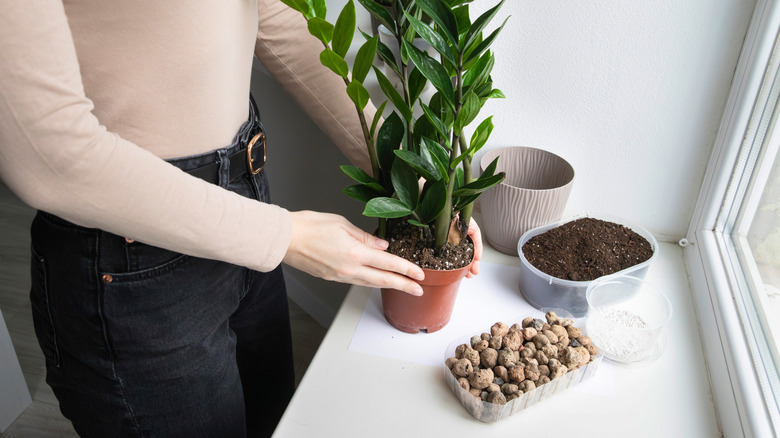
It is true that ZZs don't like to be repotted often and need gentle handling when you do repot. However, they also don't like too much space around their rhizomes. Lots of people make the mistake of thinking the bigger the better when it comes to pot size. The misguided theory is that if you give the plant an extra-roomy pot, the plant will eventually grow into it — like when your mom used to buy you sweaters three sizes too big so they'd last longer.
ZZ plants don't actually like too much room. A large pot that has a huge amount of spare soil doesn't help a ZZ, because they are slow drinkers. So excess soil just holds water against the roots. The water goes stale, starves the soil and the roots of oxygen, and leads to rot, which will turn the leaves yellow, eat away at the rhizomes, and eventually kill the plant. ZZ plants prefer a slightly snug pot, so only go up one or two sizes, and only repot them when the existing pot is clearly too full or when the rhizomes are distorting the shape of a plastic pot. You won't need to repot often, as these plants have fat, slow-growing rhizomes that store water and nutrients.
Sit the rhizomes high instead of burying them deep
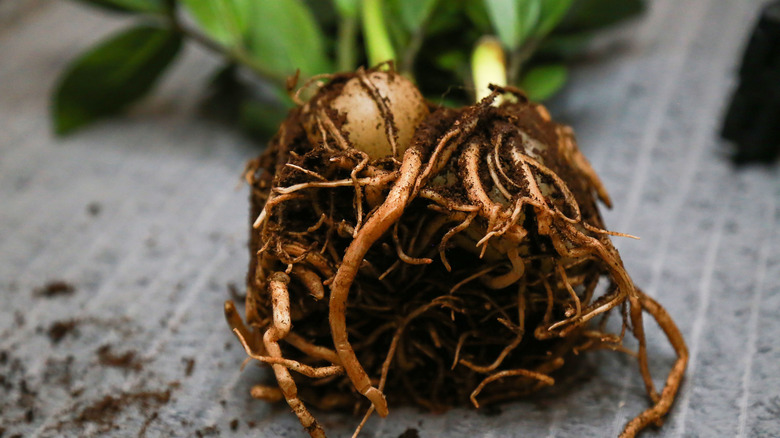
Don't treat the potato-like rhizomes of a ZZ like a regular bulb. Normally, you repot with bulbs or rhizomes near the bottom of the pot, but these aroids like to sit just below the soil surface. If you bury them too low, the water has to pass through all that soil before it reaches the roots. The result is often sneaky rot. The top inch or two of soil feels dry, so you add more water. But in reality, because ZZs are such slow drinkers, the rhizomes will still be moist from the previous watering. Then, you're just adding more water to already wet roots. If you rinse and repeat, you'll get yellow leaves and soft, mushy, rotting rhizomes.
So, when you pot up your ZZ, lay out the rhizomes like a single layer of pebbles, with just a thin layer of soil over the top. This way, the water doesn't tend to stay around the rhizomes, and they can fully dry out between waterings. But do still avoid overwatering, as you don't want the soil lower down to stay wet for too long.
Use the lift test to decide when to water
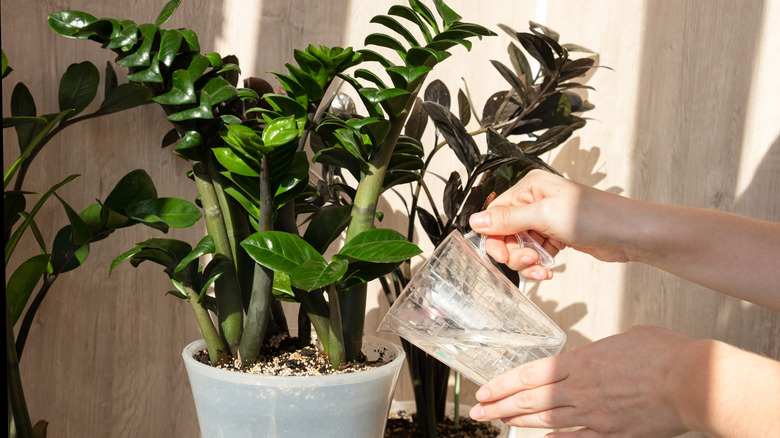
As I mentioned, ZZ rhizomes store water, so they don't need loads to drink. In fact, overwatering is the most common reason I see for ZZs dying. These plants naturally come from an arid climate, so they've evolved to store water when it's available, and to slowly use that store during droughts between the sparse rainfall. Your job is to mimic that as closely as you can.
Get to know your plant. One great tip when watering ZZ plants is to pick up the pot right after you water. You'll notice that it's reasonably weighty. In time, when you're pretty confident the soil is now mostly dry, and it's just about time to water again, lift the pot again to compare the weight. Now it should be significantly lighter. You can also push something like a bamboo or wooden chopstick carefully into the side of the pot. If it comes out clean or with a few dry crumbs clinging to it, you know it's safe to water.
Give your ZZ enough light, but don't shock it
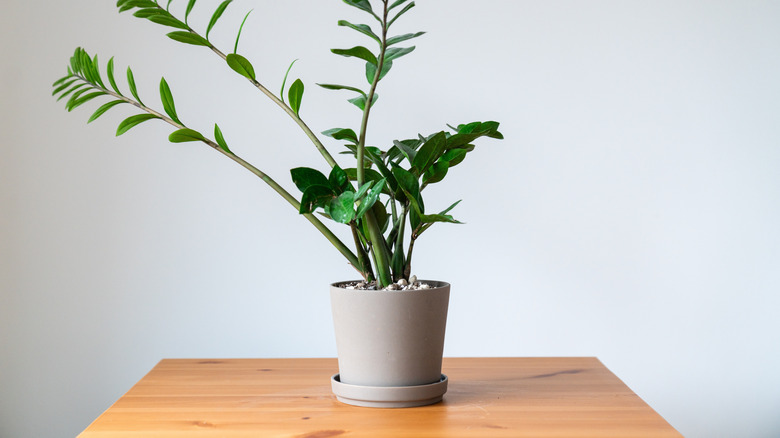
There's loads of info out there about how ZZ plants can grow with minimal light or in deeply shaded rooms. And it's partially true. But getting the light wrong is one of the biggest mistakes people make with their ZZ plant. In very low light, if other conditions are right, a ZZ plant will most likely stay alive, but growth will basically stall. Any growth you do get will be super slow, and it'll be spindly and sparse. These plants love light, even though they can cope with less. Adequate light maximizes their growth and vigor.
But don't move them from deep shade to bright light all at once. You'll shock them, and the leaves will bleach. They need time to adjust, so do it slowly. If your ZZ is struggling away in low light, move it partially into the light for a week, then shuffle it into a brighter spot for another week before finally moving it to its new permanent home. Light should be bright, but filtered or diffused. So, don't put the plant right in a scorching hot window without a sheer curtain or something similar to take the edge off.
Rotate the pot so new stems don't all lean one way
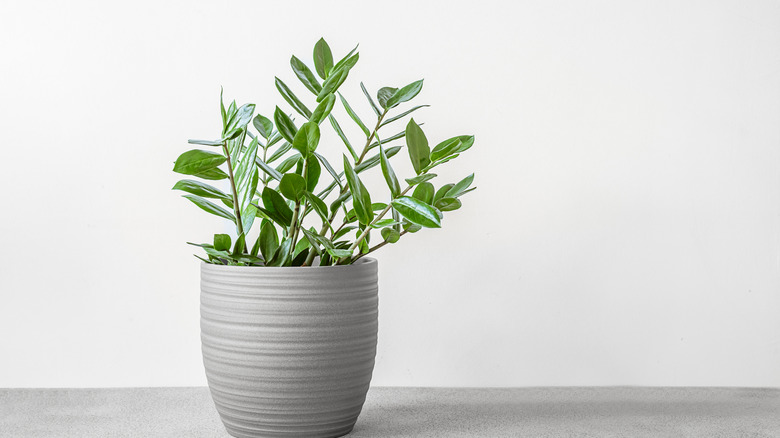
This tip applies to pretty much every houseplant, but it's worth mentioning here, too. If you forever leave your ZZ plant in one place, it'll get lopsided. The leaves learn toward the light, as if they're reaching for the sun. Over time, this can affect weight distribution and cause the pot to fall over as the whole plant lists one way.
Periodically, just rotate the pot a quarter turn. Remember which way you did so, and always move it in the same direction or you'll end up just rotating it a quarter turn back and forth. This will keep the ZZ growing more or less upright and evenly. If you struggle to remember to rotate it, then just pair rotation with watering.
Clean the leaves, but avoid leaf shine products
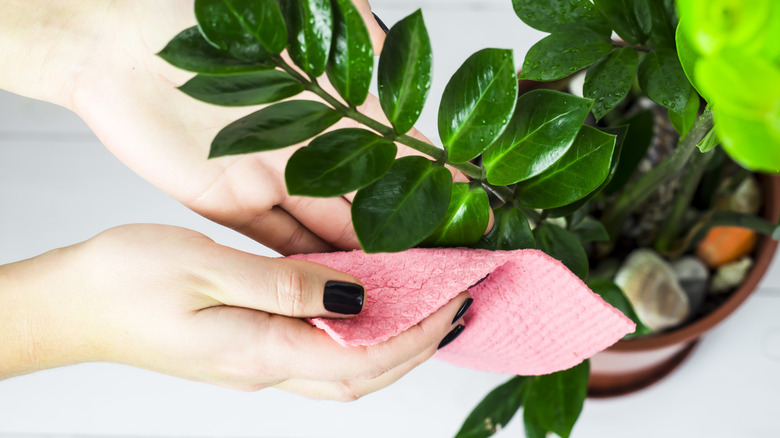
ZZs photosynthesize and grow slowly. And, because they don't want or need a lot of fuss, their leaves get dusty. When leaves get coated in dust, the plant struggles to photosynthesize properly. And dust on the underside can clog the stomata, or pores, and inhibit gas exchange. But please do not use leaf shine products. As a master gardener, I find these vanity products very strange. Yes, they make the plant leaves shiny, but they also form a film and block pores.
Your ZZ plant doesn't need to be very glossy and shiny. Just wipe the leaves over with a soft cloth from time to time. You can also mist the plant occasionally, which boosts humidity and helps deal with dust. Removing dust makes sure the plant can absorb and use the most amount of light and that it can, and exchange oxygen and carbon dioxide effectively.
Prune out yellowed or problematic leaves, but don't cut too freely
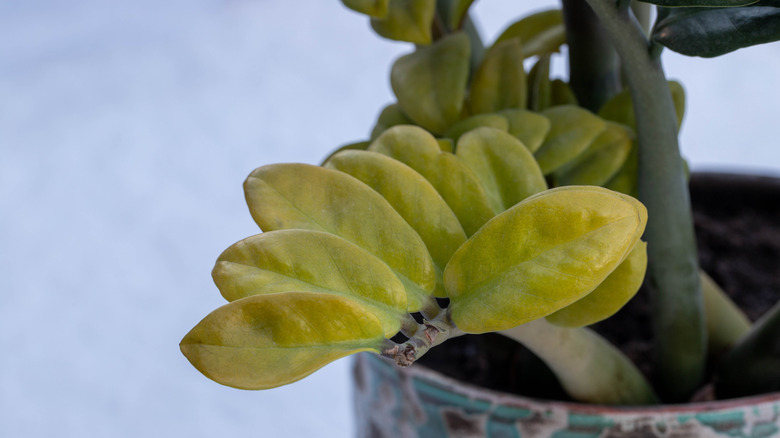
As I've already said, ZZ plants grow slowly, so they don't really like or need to be pruned very often. I only ever prune ZZ plants if they are showing signs of ill health, like yellow leaves. And even then, only if I don't think they can be saved. If you really don't want a large, tall plant, go for a compact variety like ZZ 'Zenzi' or a dwarf type like ZZ 'Zamicro.'
Make single, clean cuts, and only take off the leaves that absolutely have to go. Don't take more than 30% of the overall plant, either, or you'll severely set it back. You can also prune if your ZZ is very lopsided or has leggy, spindly growth that you need to revise. But don't be too enthusiastic, and only prune back what you really need to. The slow growth means recovery is also slow.
Feed lightly and only when you see fresh shoots emerging
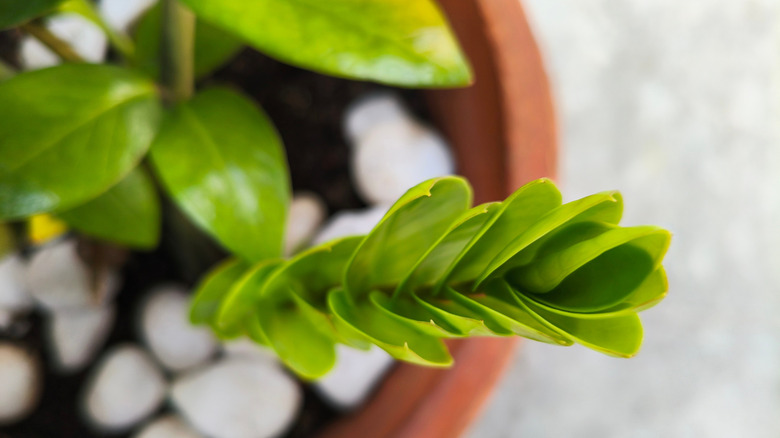
Plants with chunky rhizomes store lots of nutrients, as well as water. Therefore, ZZ plants don't need huge amounts of feeding. In their natural habitat, soils tend to be thin, so they take up and store nutrients when they're available and then use them slowly. If you over-fertilize, you'll scorch the rhizomes and end up with a high concentration of mineral salts building up in the soil.
If you see new growth emerging, once a year or so, you may want to fertilize with a very diluted succulent fertilizer. But don't fertilize in winter, as the plant simply won't use it. And don't add fertilizer for at least a month after repotting, because the rhizomes need time to recover and get established in their new home. Lastly, don't be tempted to fertilize just because your plant doesn't appear to be growing, as it won't solve the issue. Look to light, climate, and soil conditions before you think about adding more nutrients.
Check rhizomes during repotting and cull any soft spots
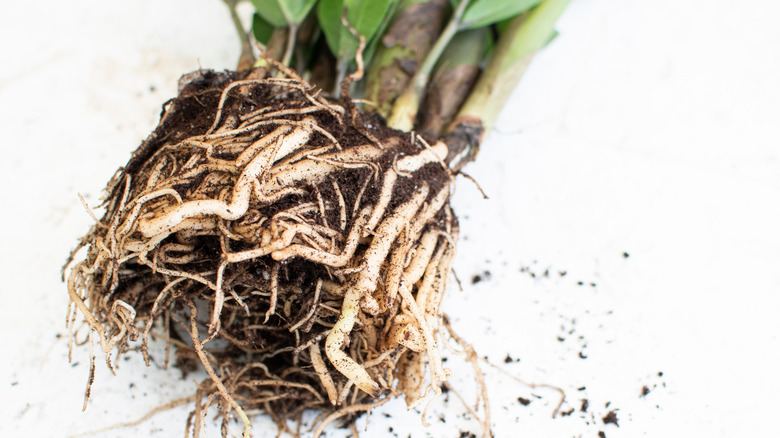
Unless your ZZ plants show signs of ill health or they need repotting, don't mess with the rhizomes. However, during repotting, definitely take the opportunity to examine the rhizomes. When the plant is all tucked up in its pot, you can't see what's happening below the soil surface. Because ZZ plants are slow to show their issues, everything could look fine from above, but there could be rot setting in from below.
Brush off as much soil as you can and examine the rhizomes. You're looking for black, soft, wrinkled, and mushy spots. Be ruthless here. If you've got any soft bits, that's root rot, and you need to get rid of it. Cut away the affected rhizomes and leave clear margins, so take a little bit of healthy tissue, too. This will make sure you've removed all the rot. If you leave even a small amount, even if you correct the soil conditions, the rot will keep eating away at the rhizomes.
Split crowded clumps to make fuller pots or backup plants
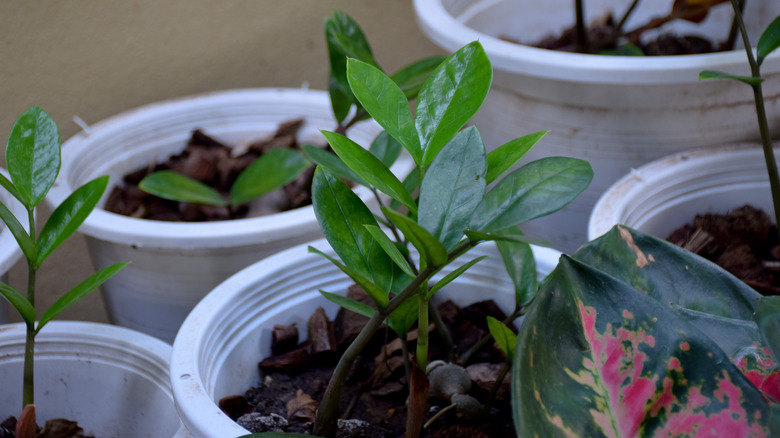
Sometimes when you go to pot up a mature ZZ, you'll see that actually the rhizomes are really crowding each other. This can stunt future growth and weaken the plant, even if you increase the pot size. But there's a good opportunity here to multiply your stash of plants and improve the health of your original ZZ at the same time.
ZZ plants take forever to grow from cuttings. The best and most reliable way to multiply them is to divide large plants — it gives more room for the original plant to keep growing. To divide a ZZ plant, look for natural clusters and division points. Each cluster of rhizomes should have a few stems attached. For best results, don't cut through rhizomes or natural clusters. Replant the divisions in small, snug pots or group a few together in a larger pot for a full-looking container. Treat them gently, keep them fairly dry, and don't feed them until they establish themselves.
Support top-heavy stems with low, hidden rings
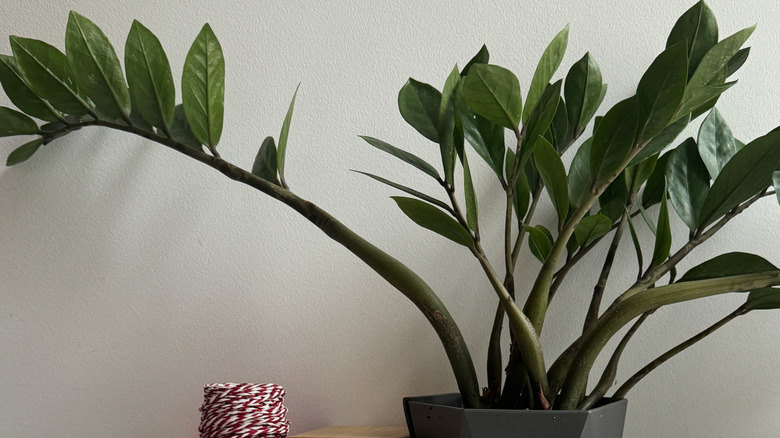
Mature ZZ stems can get pretty tall and top-heavy. Particularly if they spent a while growing in low light, so have some weaker, stretched, or leggier growth toward the base. Some people try burying leaning or weak stems deeper in the soil, which sounds like a good solution in theory, but it's more likely you'll get rot at the base.
I'm not overly fussy, so I will happily use a small bamboo stake to support stems. But you can get more discreet or decorative plant supports suitable for ZZ plants in the form of plant rings. Be gentle, though. Set the supports in the pot, being careful not to damage the rhizomes. Then gently gather the leaves, being careful not to bend or snap them. If you're using a stake or cage, you'll need to tie stems lightly to the supports. If you're using rings just to gather the stems and stop them flopping outward, you won't need to add ties.
Use a nursery pot and a decorative pot to reduce the chance of overwatering
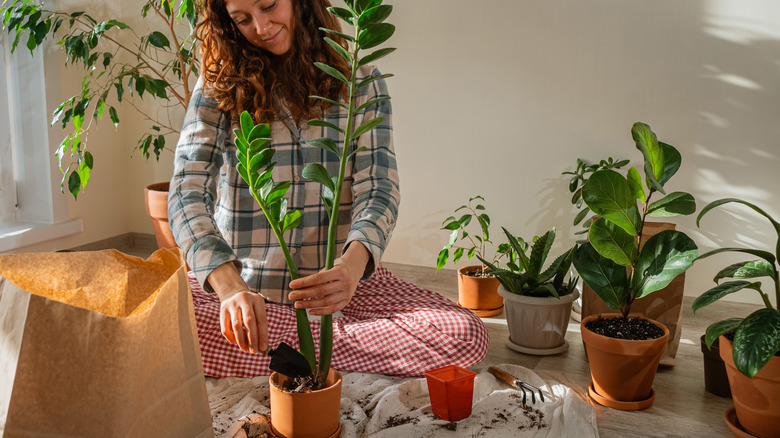
As with any houseplant, never put a ZZ in a pot with no drainage holes. With no drainage, excess water can't escape. Therefore, your ZZ plant will stay constantly wet and will quickly rot. And, you likely won't know until it's too late, because ZZs are tough and they don't show symptoms until there's already a significant problem.
I keep my indoor plants in large, unglazed terracotta pots on little risers, standing in a terracotta plant saucer. My choice is terracotta because it breathes, unlike plastic. This helps with airflow and reduces the likelihood of overwatering. But you can use decorative pots, too. You'll just need to make sure that you use a nursery pot inside. I also recommend standing the nursery pot on pebbles or risers inside the outer pot, so that it doesn't sit in stale water. Just remember to empty the decorative outer pot every time you water, or it'll end up smelling bad and growing green, slimy algae.
Protect your ZZ from cold floors, drafts, and AC vents
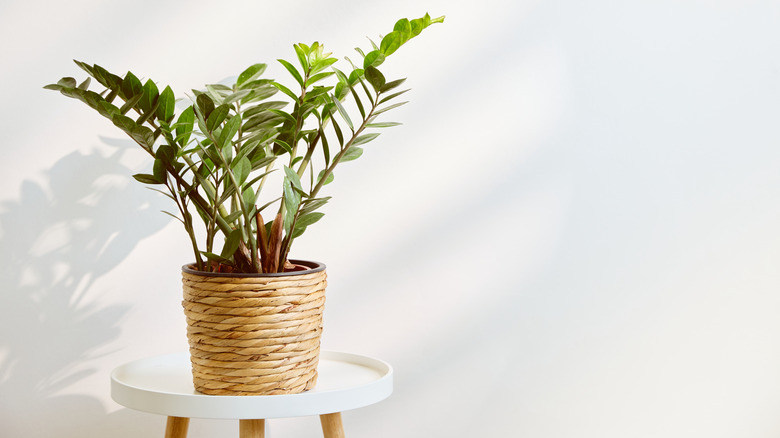
ZZ plants are tolerant of many things, but not the cold. Taking care of your ZZ in winter, especially, means being mindful of cold spots and drafts. They'll cope with dry air, low light, and thin soil. But ZZ plants do not do well with fluctuating temperatures and cold drafts. Even things like cold floors can damage a ZZ plant, as can drafts from doors and leaky windows. Sitting in the path of an AC vent will also harm a ZZ.
Many people overlook just how cold their floors get, especially in winter. Tiled floors in the kitchen, for example, will just suck all the warmth out of a plant pot. If you have a large ZZ plant that really can't comfortably fit on a counter or windowsill, you do need to keep it elevated. But you can use a decorative plant stand. Think about where your AC blows, too. Even though ZZ plants can tolerate dry air, it's still a good idea to keep them out of the way of direct warm air, too. Aim for sitting your ZZ in a space where temperatures remain pretty consistent all the time. Ideally, between 60 and 70 degrees Fahrenheit, to give it the best chance of continued growth and health.
Treat fancy ZZ plants a little differently than the classic type
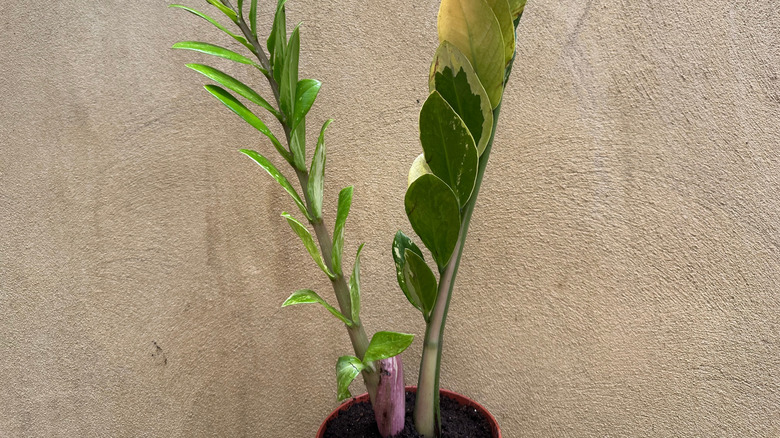
There are so many types of ZZ plants. And, although they all share the same basic needs and habits, fancy and variegated types need slightly different treatment. If you stick a variegated ZZ in low light, it'll stall and either bleach or lose its variegation and turn regular glossy green. These fancy ZZ plants need lots of light to maintain their unique coloring.
I love my beautiful ZZ raven. Its new leaves come in bright lime green and, with time and plenty of light, they turn almost black. But they won't do that if I don't provide enough light. And the same applies to true variegated varieties like ZZ 'Chameleon' and ZZ 'Variegata.' These alternative types need more light because they have less chlorophyll to work with, so they have to work harder to maintain their coloring. Keep these plants somewhere with as much full, but filtered, sunlight as possible.